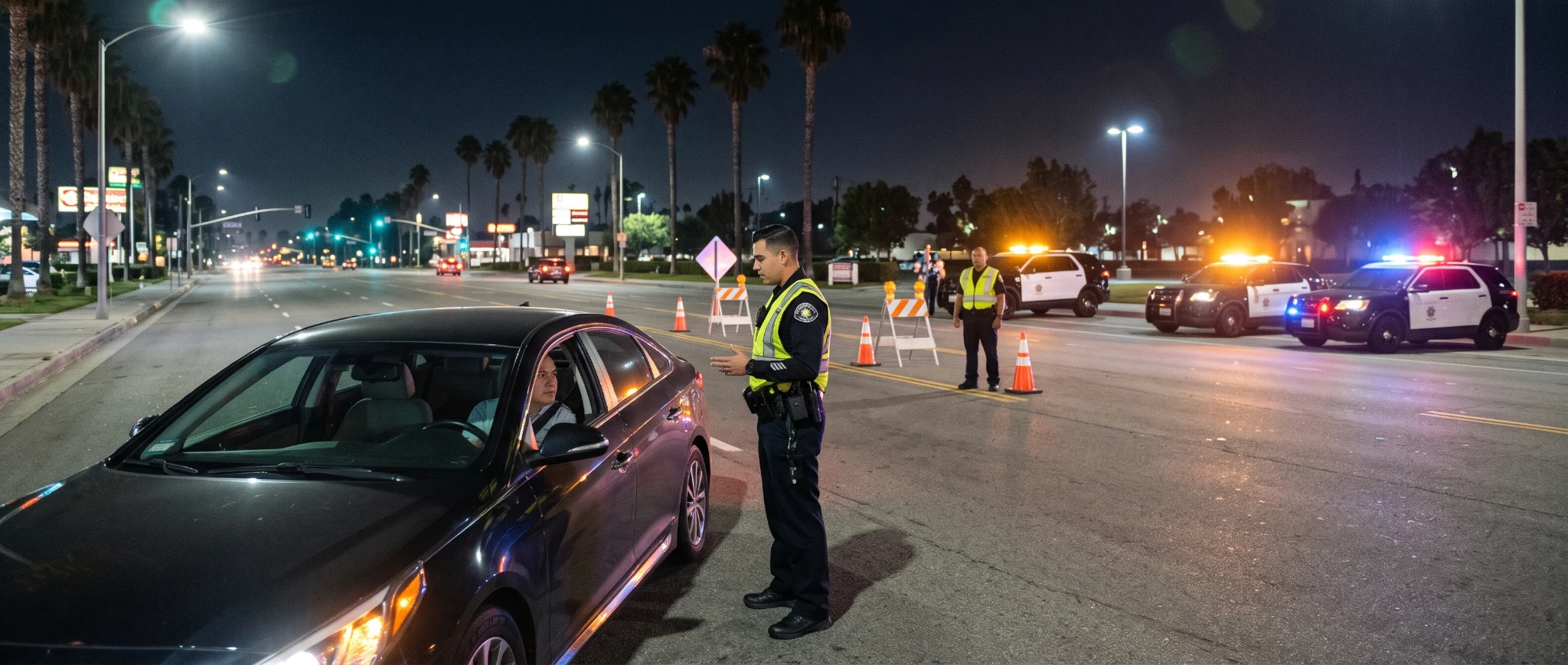
Every few months a checkpoint map goes around a group chat; someone posts the intersection, and the thread becomes an argument about whether sharing it is clever or illegal. The answer is stranger than either side expects. In California, the location is usually publicized on purpose, and the reason has nothing to do with being sporting.
In California, police must follow specific guidelines when conducting DUI checkpoints. Those guidelines reflect the Fourth Amendment’s protection against unreasonable searches and seizures. The stop does not require individual suspicion. Courts weigh the public safety purpose against the intrusion on drivers, looking at supervisory planning, neutral stopping rules, clear signs and the length of the detention. An officer cannot simply invent a checkpoint and stop whichever cars look interesting.
The Design Is the Legal Justification
The state Attorney General addressed this in a 1984 opinion requested by the Highway Patrol Commissioner. Its conclusion was that California agencies may lawfully use checkpoints to detect impaired drivers when safeguards keep the intrusion on motorists to a minimum.
The opinion describes a balancing test: the public benefit of the stop has to justify the intrusion. Where individual suspicion is absent, rules limiting officer discretion become particularly important.
That means supervisors plan the operation rather than leaving its basic rules to officers at the roadside. A neutral selection pattern, such as stopping every vehicle or a predetermined group of vehicles, limits arbitrary decisions. The overall operation still has to be reasonable.
Why the Location Gets Announced
Advance announcements can reduce surprise and reassure drivers that a checkpoint is an official operation. The Attorney General opinion also discussed the value of warning signs near the checkpoint. A map shared online may simply repeat information the agency has already released.
So the crowdsourced map is not a loophole. Publicity is part of why the stop is allowed to exist, and avoiding one intersection is never the part that matters. The questions that decide these cases come later, at the window, which is why attorneys handling DUI charges in Santa Ana, CA ask about the order in which things happened rather than about the app.
There is a limit to the publicity point. In People v. Banks, the California Supreme Court held that advance publicity is not a constitutional prerequisite. A missing announcement does not, on its own, make a checkpoint unlawful.
The Handheld Device Is Not the Test You Think It Is
The gadget an officer holds at the roadside may be a preliminary alcohol screening device, usually called a PAS device. For an adult driver in an ordinary DUI investigation, the manual states that this screening test is voluntary. The important qualifications are that the driver is at least twenty-one and is not subject to a separate testing requirement, such as DUI probation.
For the ordinary voluntary PAS test, the officer must explain what is being requested. The CHP manual sets out four points, which can be read or explained in other words:
- The screening test helps the officer investigate possible alcohol impairment.
- You can decline this preliminary test.
- It does not satisfy the separate implied consent testing requirement.
- After an arrest, another chemical test is required: blood, breath, or urine where applicable.
Each point matters. A voluntary screening test and a required chemical test are different steps. Taking the PAS test does not replace testing after a lawful DUI arrest. Declining a voluntary PAS test does not prevent an officer from arresting someone when other evidence establishes probable cause.
Drivers under twenty-one face different rules when an officer has grounds to investigate a zero tolerance violation. A PAS test, or another chemical test when PAS is unavailable, can be required. Drivers on DUI probation also face separate testing duties and license penalties for refusing. Age alone does not settle whether a test is optional.
After an Arrest, the Rules Invert
After a lawful DUI arrest, implied consent rules apply. California’s motor vehicle department explains that you are required by law to submit to chemical testing for alcohol or drugs. Blood and breath are the usual tests; urine is available only in specified circumstances. A driver does not have an unrestricted choice among all three.
Refusing a required test can bring a separate license penalty. DMV lists a one-year suspension for a first refusal-related offense, a two-year revocation for a second qualifying offense within ten years, and a three-year revocation for a third or subsequent qualifying offense within ten years. Relevant history can include earlier DUI convictions or administrative actions, not just earlier refusals. DMV proceedings and criminal charges are separate, although the result of a court case can affect a DMV action in some circumstances.
The officer must give the required warning about testing and the consequences of refusal. The details of that warning, the request itself and the driver’s response can matter in a later hearing. Asking to speak with a lawyer does not create a right to delay a required chemical test.
What You Actually Say Gets Written Down
The CHP manual directs officers to record relevant responses during the investigation. A roadside conversation is therefore more than small talk. What was asked, what the driver said and when the officer changed from screening to an arrest may all appear in the report.
You generally do not have to answer investigative questions about where you have been or how much you drank. You still have to provide required driving documents and follow lawful instructions. Remaining silent and refusing a legally required chemical test are separate choices with different consequences. For a Santa Ana driver, the useful distinction is between routine checkpoint contact, further investigation and testing after a lawful arrest.
For a broader look at the possible aftermath, see CriticalHit’s guide to what happens when you get caught drunk driving. Procedures and penalties vary by state.
Last Updated: November 19, 2026