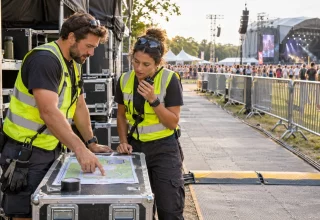
Working at a large music festival can offer extra income, travel and a chance to help put on a show you would otherwise watch from the crowd. It can also mean long shifts around heavy equipment, loud speakers and thousands of people. The dangers of working at large music festivals depend on your role, the site and how well the event is managed.
A technician building a stage faces different risks from a bartender or a steward at an entrance. Even productions using digital performers, as our look at hologram concerts explains, still need physical staging, sound and lighting crews. The work starts before the audience arrives and continues after the final act.
Pay varies by location, experience, hours and contract. Before accepting a day rate, ask what it covers and whether travel, accommodation and overtime are included. A promising fee tells you little about the conditions on site.
Before deciding on an event job, consider:
- The duties you will perform and the training they require.
- The expected crowd size and how people will move around the venue.
- The weather, ground conditions and length of each shift.
- The company’s safety record and what previous workers say about it.
- The arrangements for breaks, drinking water, toilets and medical help.
- Who employs you and who supervises your work.
Dangers and Risks of Event Work
Well-planned festivals recognize potential hazards and prepare for them rather than relying on workers to improvise when something goes wrong. A well-known artist on the bill is no substitute for a site briefing. You need to know the risks around your own work area and how to raise a concern.
Crowd pressure and blocked routes
Workers at gates, bars and stage barriers can be exposed to crowd pressure. A congested entrance or a sudden movement towards a performance can leave people trapped against barriers or other people. Crowd pressure can cause life-threatening crushing injuries. Dangerous crowd conditions do not require a fight or deliberate disorder.
The UK’s Health and Safety Executive includes surging, crushing, falls and obstructed routes in its guidance on assessing crowd safety risks. Those hazards can affect event staff as well as visitors.
Ask how concerns reach the event control team. Know the designated staff routes, and report blocked exits or barriers that appear damaged. If you have not been trained for crowd control, do not assume that taking another shift makes you qualified to manage a dense crowd.
Noise, heat and long hours
For a worker, loud music may be an exposure lasting an entire shift rather than a single set. Sound checks and work near speakers add to that time. Hearing damage can be permanent, so ask what noise controls and suitable hearing protection apply to your role. Protection also needs to work with the way you receive safety instructions.
Outdoor shifts bring weather exposure. Heat, physical effort and heavy clothing can combine to make work harder. Rain can turn a service route into slippery mud, while cold conditions can make an overnight shift uncomfortable and hazardous.
Find out where drinking water, rest areas and shelter are before work starts. Agree how breaks are covered. Report illness promptly and follow the site’s medical procedures. A worker should not have to choose between leaving an unattended post and getting help.
Lifting, falls and moving equipment
Loading vehicles, moving barriers and carrying cases put demands on the body. An awkward load can cause a strain, while a poorly lit route makes cables and uneven ground harder to spot. Forklifts and delivery vehicles create another hazard wherever their routes cross pedestrian areas.
Use the handling equipment and assistance provided for the task. Do not operate machinery or work at height without the necessary training and authorization. Damaged electrical equipment, unstable structures and exposed moving parts need competent attention; they are not jobs to squeeze in between other duties.
The pressure to finish a build or clear a site can be considerable. Establish who can pause an unsafe task before that pressure arrives. Someone should be able to give a clear answer when you ask how a heavy or unfamiliar item is meant to be moved.
Assault, harassment and emergencies
Public-facing workers may encounter threats, unwanted contact or aggression. Intoxication can complicate an interaction, but harassment should never be treated as a routine part of the job. Ask how to call security, report an incident and obtain support.
Emergency planning also matters. Workers need instructions for evacuation, severe weather and security incidents, including a usable way to receive updates. Organizers should plan how staff will respond to security threats, including serious violence. Follow the event’s emergency procedures and contact emergency services when needed.
Protective equipment and employment status
A high-visibility vest does not replace safe working arrangements. Protective equipment should suit the task, fit correctly and be accompanied by instructions on its use. Ask who supplies it and how damaged items are replaced.
In the United States, OSHA’s rules on paying for protective equipment generally require employers to pay for PPE needed to comply with OSHA standards, subject to specific exceptions. Some everyday clothing and certain footwear fall within exceptions, so check the requirements for your role.
Temporary agency employees and genuinely self-employed contractors are not interchangeable legal categories. Staffing agencies and host employers can share safety responsibilities for temporary employees. Genuinely self-employed workers are not covered by the federal OSH Act. Other duties, insurance arrangements and possible claims depend on the jurisdiction and circumstances, so clarify your position before signing.
Event Work: Is It Worth It?
Festival work can be rewarding when the role fits your skills and the organizer takes safety seriously. Ask practical questions before committing: who is your supervisor, what briefing will you receive, and how do you get help during a shift? Read the contract and check the payment terms. Talk to former workers if possible.
If you are injured, get appropriate medical care and report what happened through the site’s procedure. Keep your contract, shift details and relevant correspondence. A local work injury lawyer or qualified adviser can explain whether compensation may be available. An injury happening at a festival does not, by itself, establish who is legally responsible.
For more information about workplace safety, Work Injury Advisor can be an excellent resource.
Last Updated: November 19, 2026