
Artificial intelligence is no longer a futuristic concept lurking on the horizon of information technology. It is actively redefining the daily operations of help desks and service centers worldwide. For anyone looking to break into the IT field, this shift changes everything about how you prepare for a career.
The traditional image of a tech support agent spending hours digging through dense manuals to solve a single ticket is fading fast. Modern technical support roles demand a blend of foundational troubleshooting skills and the ability to navigate advanced automation systems. Understanding this relationship is the key to thriving in the current employment landscape.
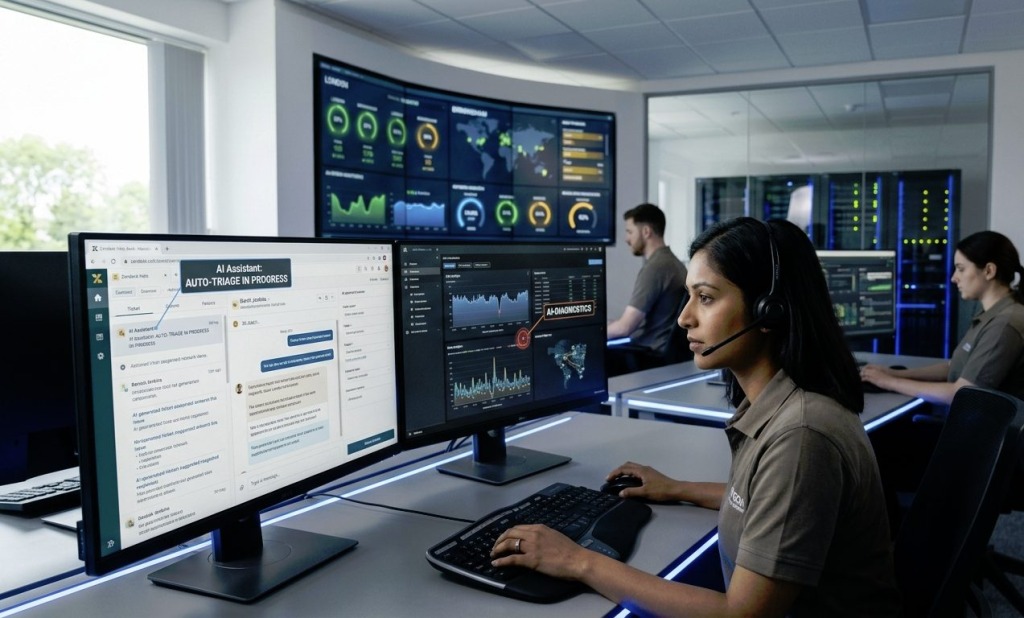
How Automation Alters Daily Troubleshooting Workflows
AI tools are cropping up in many contexts, from digital entertainment to healthcare, and they’re also fundamentally altering the speed and nature of daily IT service operations. The leap in efficiency means that repetitive issues like password resets, software installations, and routine network pings are handled instantly by software bots.
The concentration of technical issues often puts immense strain on support teams during peak business hours. On an average workday, 31% of daily ticket volume occurs between 10 am and 1 pm, so when automated systems absorb the initial wave of these inbound requests, human technicians are shielded from becoming overwhelmed. You can focus your energy on complex network anomalies and nuanced hardware failures that require genuine critical thinking rather than getting buried under repetitive inquiries.
This shift does not mean human technicians are being replaced. Instead, your role becomes elevated to that of a system supervisor and high-level problem solver. When routine fixes are offloaded, the tickets that escalate to human desks are invariably more complex. This environment rewards technical professionals who possess deep, analytical troubleshooting capabilities and a strong grasp of how automated workflows function.
What Modern IT Programs Teach Tech Support Students
To keep pace with these corporate realities, educational institutions are completely restructuring their curricula. Students can no longer rely solely on legacy hardware training or basic command-line memorization to secure a job. Modern technical training must bridge the gap between traditional networking foundations and cutting-edge machine learning applications.
Enrolling in an AI-integrated online IT technician program at an institution like Unitech Training Academy ensures you learn to collaborate directly with intelligent software. These specialized tracks prepare you to manage the automated infrastructure that major enterprises use to maintain uptime. You learn the core principles of operating systems and cloud architecture while mastering the digital tools that drive modern corporate environments.
Forward-thinking educational tracks focus heavily on deploying and maintaining automated ticketing systems. Students gain hands-on experience configuring routing rules, managing machine-learning diagnostics, and interpreting automated log analyses. This comprehensive training ensures that when you step into a modern enterprise environment, you view automated systems as powerful administrative tools rather than confusing obstacles.
The Rising Standard for Customer Service and Ticket Management
The integration of machine learning into help desk environments has raised consumer expectations to an all-time high. Clients and corporate employees expect immediate answers and seamless interactions whenever a digital system fails. Current benchmarks indicate that by 2029, roughly 80% of routine customer and IT support interactions will be fully handled by AI without requiring direct human intervention.
This level of automation places a premium on the remaining human interactions. When an end-user finally reaches a human technician, they are likely already frustrated by a complex, non-routine technical issue. Tech support specialists must develop exceptional communication and empathetic listening skills alongside their technical acumen.
Modern help desk professionals utilize artificial intelligence to streamline their communication workflows rather than replace them entirely. Specialized software assists agents by drafting responses, summarizing long ticket histories, and suggesting potential solutions based on historical network data.
Navigating the Workforce Trends of Modern Help Desks
The professional landscape for technical support specialists is dividing into two distinct categories. Technicians who rely solely on legacy support methods are facing stagnant wages and fewer opportunities. Conversely, those who understand how to leverage automated infrastructure are seeing rapid career advancement.
Entering the workforce with a specialized skillset offers a distinct competitive advantage in the current hiring market. Employers are actively seeking out professionals who can immediately manage AI-driven service desks without requiring months of remedial training. PwC tracking indicates that professionals possessing specific technical AI fluency command significant wage premiums of up to 56% compared to their non-certified peers.
The career trajectory for technical support specialists has expanded significantly. Starting at an automated help desk provides the perfect foundational knowledge for advanced career paths. The visibility you gain into system patterns and automated workflows naturally prepares you for specialized corporate roles.
Enterprise IT departments rely on skilled professionals to oversee their automated ecosystems. Technicians frequently transition into high-paying corporate roles based on their help desk experience.
- Help desk managers coordinate the balance between automated tools and human staff
- Cloud architects design the infrastructure that keeps support tools connected
- Systems analysts fine-tune the machine learning models that categorize incoming tickets
Preparing for Next-Generation IT Support Roles
Succeeding in the modern technology sector requires a commitment to continuous learning and technical adaptation. As software tools become smarter, the human technicians who operate them must become more strategic. True professional security comes from understanding how to manage, interpret, and optimize these automated systems for large enterprises.
For more insights into optimizing your career path and staying ahead of emerging technology shifts, check out more of our posts.
Last Updated: May 18, 2026