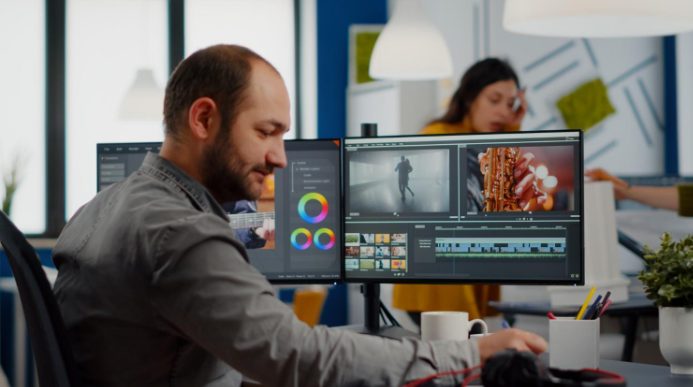
A first video editor should let you finish a project without turning the process into homework. Beginner video editing software works best when the layout makes sense, the timeline is readable, and common jobs take only a few steps.
The best software for beginner video editors also depends on where the video starts. Some new creators record on a phone. Others cut gaming clips, edit family videos, make YouTube intros, or prepare social media videos for a small business. The right app should match that habit from the start.
Here are five easy video editing tools that give beginner editors a practical way to learn.
1. Movavi Video Editor
Movavi Video Editor is an intuitive video editor with customizable video templates, one-click AI tools, and hundreds of drag-and-drop effects. It runs on both Windows and macOS, and the workspace feels clear from the start: you add clips, place them on the timeline, cut the parts you don’t need, and watch the video come together step by step. Hovering over any effect shows an instant preview on the clip, so there’s no guesswork.
That flow lets beginners focus on the creative part. Bloggers and YouTubers can cut a vlog or an intro, family creators can put together a birthday or travel video, and marketing teams can make social media promos while feeling in control.
A feature that beginners will find especially useful is templates. Movavi Video Templates is a multi-style library of customizable, pro-looking, modular templates for any kind of video. Each one is made of Blocks, short pre-edited parts like an intro, a countdown, or a quick-cut sequence, with music, transitions, and text already in place. Blocks can be added, moved, removed, or restyled, so a template works as a starting structure rather than a fixed design.
Movavi also includes one-click AI tools for common beginner problems: auto subtitles, background removal, motion tracking, video denoise, auto-tracked cropping, audio noise removal, and silence removal. They take care of the jobs that would otherwise slow a beginner down, all while helping them reach a good result. Movavi Ideas, a free tutorial hub of short editing techniques updated every week, adds new editing tricks to try once the basics feel easy.
Movavi makes the most sense for beginners and everyday creators on Windows or Mac who want an easy start and a good-looking result from their very first projects.
2. Microsoft Clipchamp
Clipchamp’s biggest advantage is access. It runs in the browser and also has a desktop version, which makes it especially convenient for Windows users. The program includes recording options for webcam and screen-based videos.
A beginner can start a project without installing a large editing suite, then move to the desktop app when that feels comfortable. That makes it useful for students, remote workers, and creators who often need to record something before they edit it.
Templates also make Clipchamp easier to approach. They give a new user a ready structure for a short promo, intro, or social post. The editor still has a timeline, so users learn the basics of arranging clips instead of relying only on preset layouts.
Clipchamp is a good pick when the browser matters, Windows is your main system, or recording is part of the job.
3. iMovie
iMovie is the easiest starting point for many Apple users. It’s already tied to the devices they use to record. A clip shot on an iPhone can be edited on that same device, then finished on iPad or Mac when a larger screen is useful.
Storyboards give users a starting structure for common video types, and Magic Movie can assemble selected clips into a first cut. Those features are useful for people who freeze at an empty timeline; iMovie gives them a path into the edit without forcing every decision at once.
The app also teaches pacing in a simple way. Users can cut a clip, swap the order, add music, and test how the video feels. That’s a useful skill for any editor, especially a novice one. The controls stay limited enough to avoid long setup time.
iMovie makes the most sense for Apple users who want to learn by finishing short personal videos, school projects, or simple YouTube uploads.
4. CapCut
CapCut is built around the way many people now make short videos. It’s especially comfortable for vertical edits, captions, quick music timing, and social-first formats.
For new creators working mainly on TikTok, Instagram Reels, or YouTube Shorts, CapCut feels more natural than a traditional desktop editor. It puts many short-video tasks near the surface: text, stickers, speed changes, and caption tools are easy to reach, which helps users edit videos quickly from phone footage.
CapCut also has desktop and web options, so users are not locked into a phone-only setup. That matters once a creator starts handling longer clips or wants a larger screen for timing cuts more carefully.
Pick CapCut when it’s more about making social media videos at the pace those platforms expect.
5. OpenShot
OpenShot is the open-source option, that’s also free to download, works on major desktop systems, and gives beginners a standard timeline editor.
Its value is in learning the structure of video editing. OpenShot uses tracks, clip placement, audio controls, and export settings in a way that helps beginners understand how desktop editors work. The interface may feel less guided than Movavi or Clipchamp, but that can be useful for people who want to learn the mechanics.
OpenShot also gives users room to experiment without paying first. A hobbyist can test editing before choosing a paid app and someone using Linux has a beginner-friendly option that doesn’t force them into a web-only tool.
Choose OpenShot when cost, open-source software, or Linux support matters more than templates and guided editing.
Which beginner editor should you choose?
The best first editor is the one that helps you complete a video this day. Pick the tool that matches your device and video type, then make a short project from start to finish. That teaches more than testing a dozen of apps without exporting anything.
Last Updated: October 8, 2026