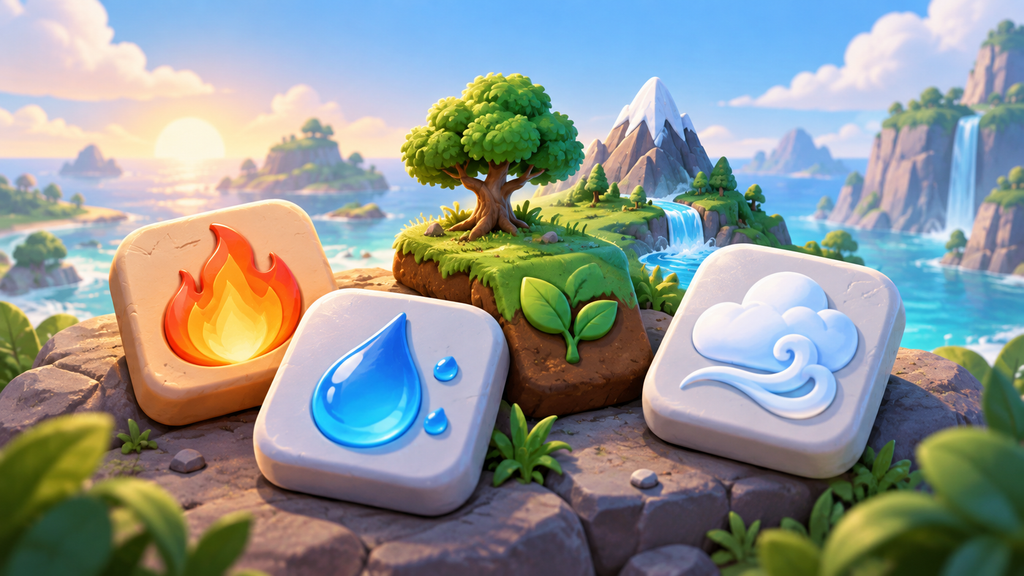
For years, the studio Recloak’s Little Alchemy 2 has attracted a fan base with a very simple premise. A sequel to the first game, released in 2010, it arrived in 2017. Players are given four elements (earth, air, fire and water) and drag one over another to create more than 700 different items. The attraction is experimenting with the combinations.
Four Elements, Hundreds of Results
The design works because every discovery feeds the next. Four starting pieces become a tree of hundreds of results, each new item opening fresh combinations. It is the same idea that Little Alchemy players still comb through guides to master, hunting the rarer recipes and the more elaborate creations buried deep in the tree.
That loop has proven durable enough to outlast any single hit. When Infinite Craft arrived in 2024 from developer Neal Agarwal, it spread quickly across Twitch and YouTube and overwhelmed its own servers, all from the same four-element starting point.
Critics placed it squarely in the same lineage, grouping it with earlier combination games such as Little Alchemy and Doodle God. The difference is that Infinite Craft leans on generative AI rather than a fixed recipe list, but the core hook is unchanged.
Games Like Little Alchemy 2
Much of what these games share comes down to their format. These are all free; they can be played by loading them in a web browser with no need for an application installation. And it is this simplicity which has allowed players to convert a basic rule into hours of fiddling around. The combine-and-merge style has also spread beyond any one title. It now sits among the familiar types of casual puzzle games, alongside jigsaws, word games and number puzzles.
For anyone who runs out of combinations, that whole strand is gathered in one place. Web gaming website Poki keeps more than 250 browser puzzle games sorted into six types, and its puzzle shelf runs from merge puzzles like 2048 to element-combining games such as Doodle God, the nearest relatives to what Little Alchemy 2 does.
The appeal of this small browser-game format from 2010 has survived changes in platforms and trends. Taking basic elements and creating something new and unexpected still offers a reason to play. Little Alchemy 2 remains a clear example, though there are now plenty of others.
Last Updated: September 9, 2026