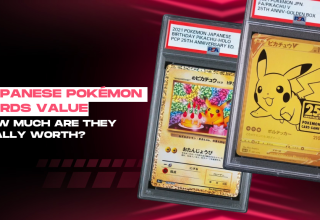
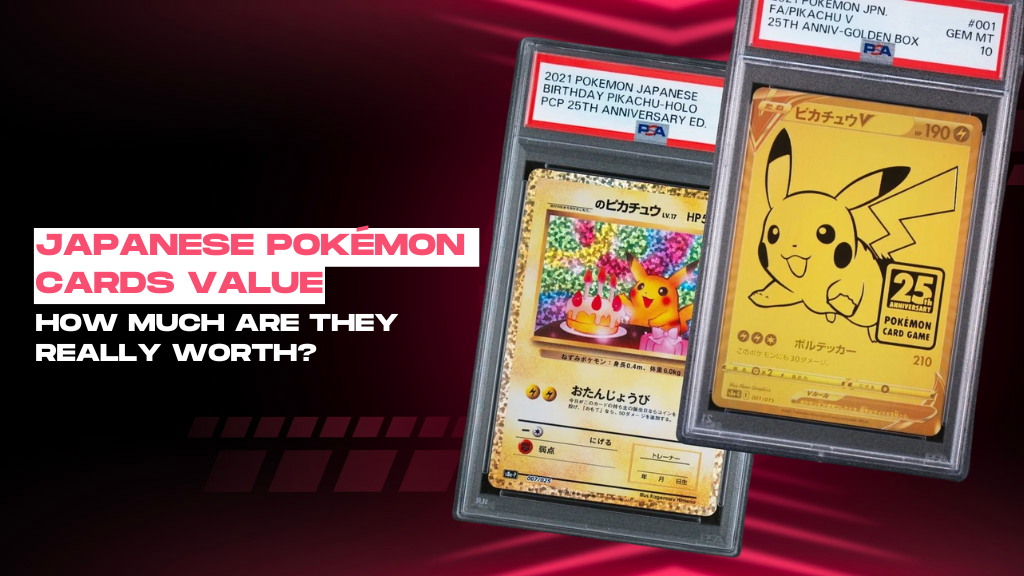
Checking Japanese Pokémon cards value often starts with a confusing set of numbers. A scanner gives you one price, an eBay listing gives you another, and the English card with the same artwork seems to be worth something else entirely. Sometimes the scanner has even picked the wrong printing.
There isn’t one useful price range for Japanese cards as a whole. A recent common and a scarce tournament prize have very little in common as collectibles. The printing, rarity, condition, grade and number of interested buyers all matter. Many modern cards cost very little; a desirable vintage card or limited promo can be worth hundreds, thousands or more.
To work out what yours is worth, start by identifying it. Then check what people have paid for that exact Japanese card. The steps below explain how to make that comparison without mistaking a hopeful asking price for a completed sale.
How Much Are Japanese Pokémon Cards Worth?
Japanese Pokémon cards cover everything from inexpensive commons to scarce collectibles. An average across all of them wouldn’t tell you much about the card in your hand. A modern SAR, a vintage holo and an event promo each need their own comparison.
The language tells you where to begin looking. The set, card number, rarity, release method and condition are what narrow the search enough to produce a useful estimate.
Typical Japanese Pokémon card value by type
Before looking for a price, work out which kind of card you have. This gives you a sensible starting point for choosing comparable sales.
| Card type | Best way to estimate value | What matters most |
|---|---|---|
| Common modern cards | Recent raw sales | Set, demand, condition |
| AR / SR / SAR cards | Recent sales of the exact card | Pokémon, artwork, rarity, demand |
| Vintage cards | Exact printing and comparable condition | Variant, wear, scarcity |
| Japanese-exclusive promos | Recent sales and release history | Distribution, scarcity, demand |
| PSA 9 / PSA 10 cards | Sales in the same grade | Grade, demand, population |
Grading can account for a large price difference on a desirable card. PSA describes its 10 grade as virtually perfect, with attention to the corners, focus, original gloss, staining and centering. That is a much narrower standard than a seller simply calling a card “nice.”
What makes a Japanese Pokémon card valuable?
A card needs buyers as well as scarcity. A hard-to-find card may still be inexpensive if few people want it, while a more widely available card can sell well because plenty of collectors are looking for a copy.
With modern cards, labels such as AR, SR and SAR identify rarity categories within a set. They don’t give every card in that category the same value. The Pokémon, artwork, illustrator and popularity of the set can all affect how much collectors are willing to pay.
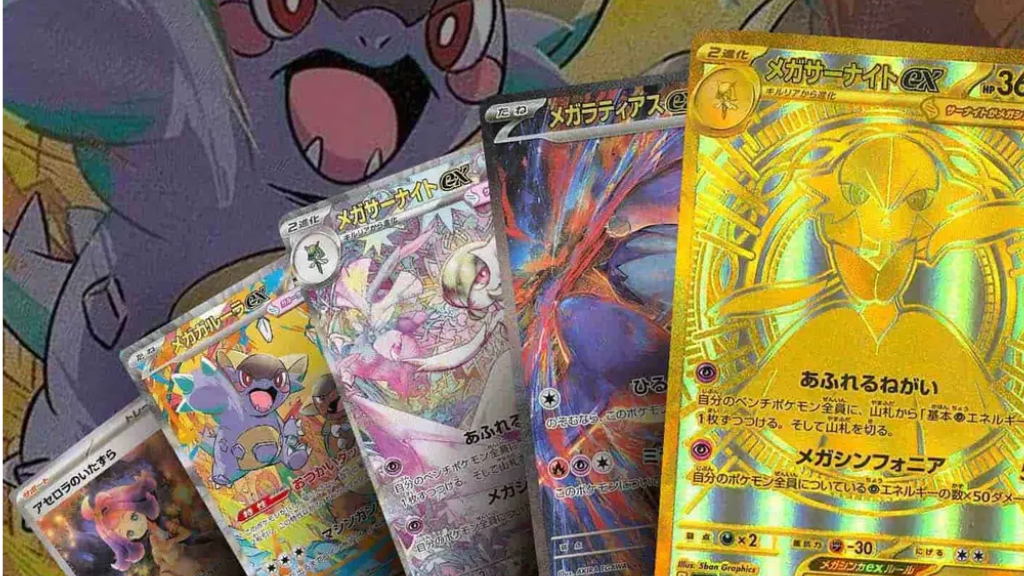
For vintage cards, look closely at condition. Scratches on the holo, whitening along the edges, worn corners and creases can make two copies very different purchases. A professional grade helps describe those differences, but a high grade still needs demand behind it to command a high price.
How the card was released matters too. Japanese cards have been distributed through tournaments, campaigns, events and special products as well as booster packs. A promo from a limited distribution may be much harder to replace than a regular expansion card.
Be careful with claims about low print runs. Exact production numbers aren’t public for many releases. Recent sales, the number of copies on sale, release history and graded population figures are more useful than an unsupported claim that hardly any were printed.
Put those checks together: how scarce is this printing, how desirable is the Pokémon or artwork, and what condition is this copy in? There also needs to be enough continuing collector interest to support the price. Rarity alone won’t do that.
Japanese vs English Pokémon card value
Neither language is automatically worth more. Two cards can share artwork and still have different supplies, audiences and sales histories. Treat them as separate printings when you look up prices.
This is why “Why are Japanese Pokémon cards cheaper?” has no single answer. Sometimes more Japanese copies are available relative to demand. Other Japanese releases are scarce or particularly sought after, which can put their prices above the English versions.
Here is a snapshot checked on 28 September 2026. These are rounded PriceCharting estimates in US dollars, rather than guaranteed sale prices.
| Card | Japanese | English |
|---|---|---|
| Gardevoir ex | ~$113 raw / ~$203 PSA 10 | ~$154 raw / ~$368 PSA 10 |
| Rosa’s Encouragement | ~$50 raw / ~$137 PSA 10 | ~$38 raw / ~$145 PSA 10 |
For Gardevoir ex, the estimate for Japanese Shiny Treasure ex #348 is lower than the one for English Paldean Fates #233 in both raw and PSA 10 condition.
Rosa’s Encouragement is a mixed comparison. Japanese Nihil Zero #115 has the higher ungraded estimate, but English Perfect Order #123 has the higher PSA 10 estimate. Even the grade changes the answer here.
A rule such as “Japanese cards are worth half as much” won’t help you with either example. And for a Japanese-exclusive card, there may be no English equivalent to compare at all.
An English price can provide context when a counterpart exists. Recent sales of the Japanese printing are still the evidence you need to value the Japanese card.
How to check Japanese Pokémon card value?
Identify the printing first, then find recent sales of that printing in a similar condition or grade. It sounds straightforward, but a wrong match at the first step can make every later price comparison misleading.
A scanner or price app is useful for finding a possible match. Check that match yourself before using the displayed figure.
Identify the exact Japanese card
Look for the set code and collector number, then compare the artwork and rarity. Establish whether the card belongs to a standard expansion or a promotional release.
For example, searching for Pikachu 173/165 Japanese points you towards a particular card. Searching for Japanese Pikachu value leaves you sorting through unrelated printings. The extra detail saves a lot of guessing.
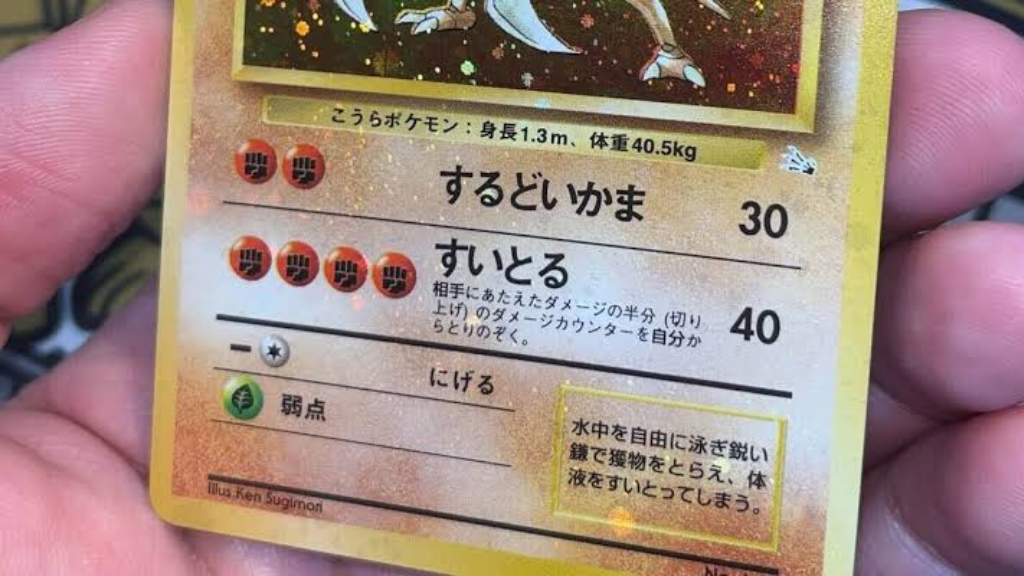
Use this checklist when confirming a match:
- Set and collector number;
- Japanese language;
- Artwork;
- Rarity;
- Promo or regular-set status;
- Known reprints or variants.
Set codes are especially helpful when releases look similar. If you can’t read the Japanese name, a scanner can get the search started. It still needs to be checked against the details printed on the card.
Check recent sold prices, not just listings
Once you’ve found the exact printing, look for transactions. A seller can list a card for $500 without anyone being willing to pay $500. That listing tells you the asking price, nothing more.
eBay’s Advanced Search includes Completed items and Sold items. Use the sold results to look for purchases, and check the descriptions and photos where available.
PriceCharting offers a quicker starting point. Its estimates use historical completed sales rather than unsold listings, and it separates prices by grade. You can then look at the underlying sales to judge whether the examples fit your copy.
Mercari Japan and other domestic marketplaces can add context, particularly for cards that trade more often within Japan. Keep asking the same question wherever you search: was this the same printing, in a comparable condition?
You want several useful matches. Picking the highest sale you can find is unlikely to give you a realistic estimate.
Match language, condition and grade
A sale is only a good comparison if its details line up with yours. Check for:
- The same Japanese printing;
- The same collector number and variant;
- A similar condition for an ungraded card; or
- The same grading company and grade for a graded card.
Compare raw cards with raw cards. For a PSA 10, use other PSA 10 sales of that printing. A PSA 9 sale or an ungraded listing answers a different pricing question.
PSA’s Population Report shows how many examples it has graded at each level and is updated daily. Those counts help you understand the graded supply, but they don’t tell you how many collectors want the card.
A large PSA 10 population can coexist with a high price when demand is strong. A low population can also coexist with a low price when there are few interested buyers.
Estimate a value range, not one exact price
Say comparable copies have recently sold between $180 and $220. A working estimate of $180–$220 makes more sense than announcing that your card is worth exactly $205.
Individual sales differ for ordinary reasons:
- Card condition;
- Timing;
- Seller reputation;
- Auction competition;
- Market movement.
The amount of evidence matters as well. Ten recent, closely matched sales give you more to work with than a rare promo’s occasional transaction. With very little data, leave more room for uncertainty.
Your estimate describes what other buyers have paid. It doesn’t promise that your copy will sell quickly, or that you’ll receive the highest price in the range.
Which Japanese Pokémon cards are most valuable?
Early vintage printings, scarce promos and trophy cards account for many of the standout Japanese collectibles. Some modern cards also attract enough demand to sell at substantial premiums.
The age or rarity label is only part of the story. Check the printing, its history, condition and actual sales before deciding that it belongs among the expensive examples.
Vintage and 1996 Japanese Pokémon cards
The Pokémon Card Game launched in Japan in 1996, before the English Base Set. That makes early Japanese cards interesting to collectors, but the date on its own doesn’t establish value.
One detail to check on the original Japanese Base Set is the rarity symbol. No Rarity Symbol copies lack the circle, diamond or star found on later printings. Collectors recognise them as distinct early variants.
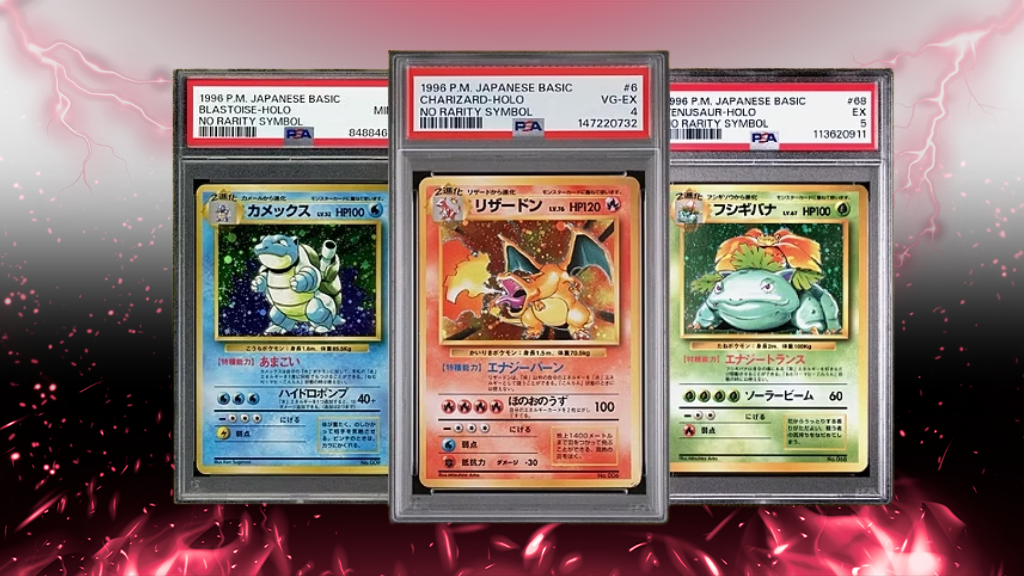
With a card such as Charizard, that detail can make a substantial difference, especially in high grades. Before using a record sale as a comparison, establish whether your copy is a No Rarity printing or a later rarity-symbol version. Then compare its condition or grade.
For a vintage Japanese card, check:
- Exact set and collector number;
- Rarity-symbol status;
- Holo or non-holo printing;
- Known variants;
- Surface, edges, corners and creases;
- Professional grade, if applicable.
Old cards aren’t necessarily rare, and rare cards aren’t necessarily expensive. The details of this particular copy are what make a comparison useful.
Rare Japanese promos and exclusive cards
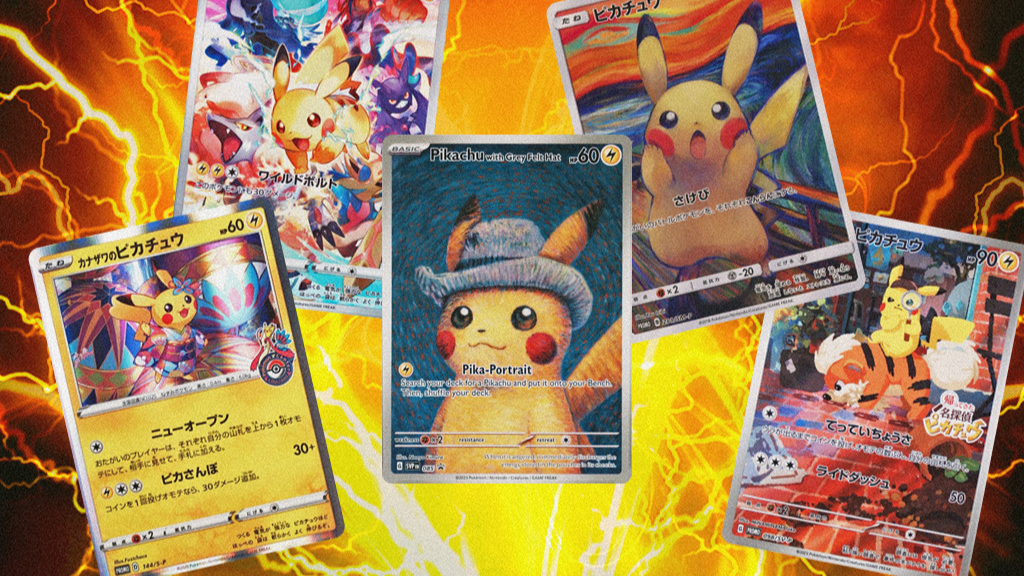
Some of the most valuable Japanese cards never appeared in ordinary booster packs. They were given out through illustration contests, tournaments, campaigns or events. Their original distribution could leave collectors with very few copies to pursue.
Pikachu Illustrator is the famous example. Originally awarded through Japanese illustration contests, its only known PSA 10 copy sold through Goldin in February 2026 for $16.492 million, including the buyer’s premium. Guinness World Records recognised that auction result as a record for a trading card.
Most promos won’t approach that price. It does show why their release history deserves attention, though. Their appeal can involve:
- Very limited distribution;
- Historical importance;
- Unique artwork or design;
- Strong collector demand;
- No equivalent English release.
For a Japanese exclusive, asking what the English version costs may lead nowhere. The Japanese release may be the only one that exists.
Modern Japanese cards with strong collector demand
Modern Japanese cards are generally easier to find than trophy cards or early vintage variants. Certain AR, SR and SAR cards still attract considerable premiums. To understand why, look at:
- Pokémon or Trainer popularity;
- Artwork;
- Rarity treatment;
- Popularity of the set;
- Release availability;
- Demand for high-grade copies.
Mew ex SAR #205 from Japanese Pokémon Card 151 is one example. On 28 September 2026, PriceCharting’s estimates were about $225 ungraded and $402 in PSA 10, using historical sales data.
The SAR label doesn’t explain that price by itself. Interest in Mew, the artwork, Pokémon 151 and the Japanese printing all contribute to its appeal.
A Japanese Pokémon cards value list needs regular checking. Modern prices can change as:
- More product enters the market;
- New copies are graded;
- Sets are reprinted;
- Collector preferences change;
- Particular Pokémon or artworks draw renewed attention.
Use recent sales when you are ready to buy or sell. An older “most valuable cards” list may be an interesting read without being a reliable price guide today.
Where to buy authentic Japanese Pokémon cards?
When buying, give the seller as much attention as the price. A useful listing identifies the set, card number, language, condition and release type. Those details matter particularly for vintage cards, promos and expensive singles.
Options in Japan include Pokémon Center Japan, Suruga-ya, Mandarake and Japan Figure. Pokémon Center Japan is the official outlet for current Pokémon Card Game products. Suruga-ya and Mandarake carry trading cards alongside figures and other pre-owned collectibles. Japan Figure offers Japanese Pokémon TCG products alongside anime figures and other Japanese merchandise.

Whichever retailer or marketplace you use, compare the price with recent sales of the same Japanese printing. With raw vintage cards and graded copies, a small difference in the listing details can be a large difference in what you’re buying.
FAQs About Japanese Pokémon Card Value
Are Japanese Pokémon cards worth more than English cards?
Sometimes, but there is no rule that covers both languages. Some Japanese printings sell for less. Japanese-exclusive promos, scarce variants and particularly sought-after copies can sell for more.
What is the best way to check Japanese Pokémon card values?
Identify the set, collector number, rarity and variant. Then find recent sales of that Japanese printing in a similar condition or the same grade. Use several matching sales rather than one app estimate or asking price.
Are 1996 Japanese Pokémon cards valuable?
Some are, especially desirable early printings, No Rarity variants and high-grade holos. A 1996 date alone doesn’t establish that a card is rare or valuable.
How much are Japanese Pokémon cards worth in America?
In the US, they range from inexpensive modern cards to costly vintage, graded and promotional releases. The exact printing, condition, available supply and buyer demand determine which comparisons are useful.
For your own card, return to the details you can check: its identity, condition and recent comparable sales. The closer those sales match the card you own, the more useful your estimate will be.
Last Updated: September 28, 2026