
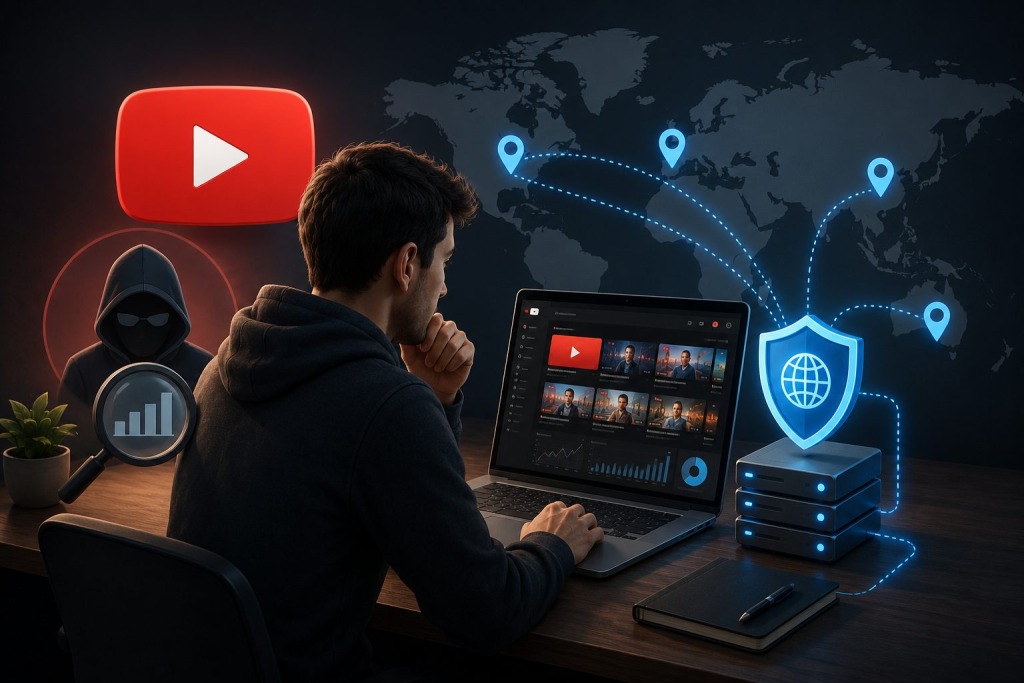
I’ve been scraping YouTube data for about 18 months now. Started small, just pulling metrics for a client’s competitor analysis.
Within 3 weeks? First IP ban.
Here’s what happened: I was collecting view counts and engagement stats across 200+ gaming channels. YouTube’s systems flagged my IP after roughly 47 requests in under 2 hours. Access blocked, project stalled, client annoyed.
That’s when I discovered a youtube proxy could actually solve my problem and I went down this whole rabbit hole of learning how they work.
The Problem With YouTube’s Detection Systems
YouTube doesn’t like bots or scrapers or anything that looks automated. But when you’re doing legitimate research or managing content across multiple channels, their systems can’t tell the difference between you and someone trying to game their algorithm.
They track behavior patterns aggressively. Same IP making repeated requests gets flagged immediately, multiple account logins from one location looks suspicious, and accessing region-locked content triggers instant blocks.
The region-locking thing drives me crazy. I was trying to analyze how different countries promoted the same game trailer, but couldn’t access half the videos without changing my apparent location.
How Proxies Actually Help
Proxies give you a different IP address so instead of YouTube seeing 200 requests from one source it sees 200 requests from 200 different sources that look natural and stay under the radar.
I started with residential proxies because they use real IP addresses from actual internet service providers and YouTube treats them like regular users, which means no red flags and no blocks.
Here’s what changed for me: pulled data from 340 channels in 6 hours without a single block, accessed region-specific content from 12 different countries, managed 8 client accounts without triggering security alerts, and cut my research time by about 60%.
Which Type Actually Works
I’ve tested three types over the past year. Datacenter proxies got blocked within 45 minutes because YouTube spots them instantly. Mobile proxies worked great but cost $89 per month for the traffic I needed. Residential ones hit the sweet spot—reliable and reasonably priced at around $52 monthly.
Speed matters too. I tried a bargain provider once that charged $23 for “unlimited” access and videos buffered constantly while data requests timed out 30% of the time. Mid-range providers deliver the best balance between cost and performance.
When You Actually Need This
Not everyone needs a proxy for YouTube. If you’re just watching videos casually, you’re fine.
Content creators managing channels across different regions need them constantly. Marketers analyzing competitor strategies at scale can’t function without them. Researchers collecting data for trend analysis would spend triple the time otherwise.
One friend uses them for verifying how his sponsored content appears in different countries, which affects his rates and contract negotiations. Another runs a small agency and needs to check ad placements across 15 client accounts daily without triggering security reviews.
You probably don’t think about this stuff until it blocks your work. Then it becomes pretty important pretty fast.
Last Updated: June 19, 2026