
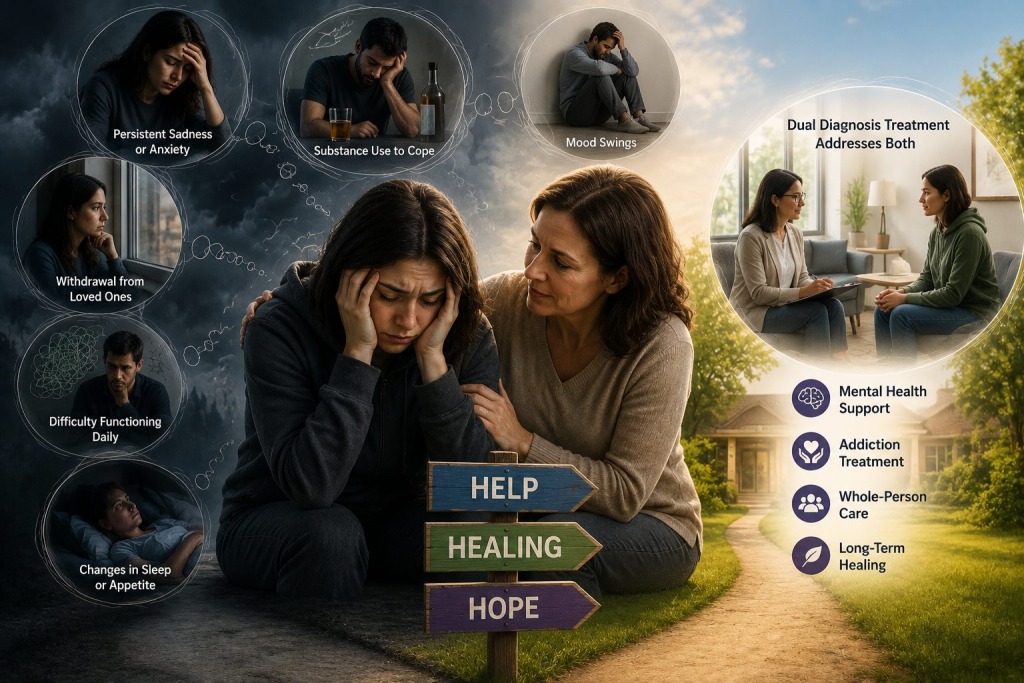
You or your loved one may need dual diagnosis treatment if mental health symptoms and substance use are occurring together and affecting daily life. Common warning signs include mood instability, self-medication, repeated relapse, isolation, and difficulty functioning at work, school, or home. Recognizing these patterns early can help you seek more effective support and improve long-term outcomes.
Many people treat one issue while overlooking the other. Understanding how both conditions interact can help you identify when additional support may be needed.
What Is Dual Diagnosis?
Dual diagnosis means experiencing both a mental health condition and a substance use disorder at the same time. These conditions often affect each other, which can make symptoms more difficult to manage. That’s why at Inner Voyage dual diagnosis treatment, both conditions are treated together to create a more complete and effective path toward recovery.
What Are the Signs That Dual Diagnosis Treatment May Be Needed?
Dual diagnosis can appear differently from one person to another. However, there are common patterns that often suggest mental health symptoms and substance use may be affecting each other. Here are some of the most important signs to pay attention to.
Persistent Mood Changes That Disrupt Daily Life
Occasional stress or emotional changes are normal. The concern begins when mood patterns become intense, frequent, or difficult to control.
Mental health symptoms can sometimes contribute to substance use. Substance use can also increase emotional instability.
This cycle often becomes difficult to recognize without stepping back and observing patterns. Pay attention to signs such as:
- Frequent irritability
- Ongoing sadness
- Increased anxiety
- Emotional outbursts
- Sudden mood shifts
Also consider whether these changes affect daily routines, relationships, or decision-making. Symptoms that continue over time may indicate that both mental health and substance use need attention. When both appear together, treatment that addresses both conditions may provide more effective support.
Using Alcohol or Drugs to Manage Emotions
Many people do not initially recognize self-medication. It often begins as an attempt to reduce stress, improve sleep, avoid difficult emotions, or feel temporary relief.
Over time, the pattern can become harder to control. Common warning signs include:
- Using substances after stressful events
- Needing substances to relax
- Increasing frequency of use
- Difficulty coping without them
Substances may reduce symptoms temporarily but rarely address the cause. In some cases, they can intensify anxiety, depression, or emotional instability. If coping depends on substance use, it may be helpful to explore whether deeper concerns are contributing.
Repeated Relapse
Relapse does not automatically mean treatment failed. It can indicate that important factors were not fully addressed.
When mental health symptoms remain untreated, recovery efforts may become harder to sustain. Look for patterns such as:
- Multiple recovery attempts
- Short periods of improvement
- Return to previous behaviors
- Increased emotional distress
Repeated relapse should be viewed as information rather than failure. Understanding what continues to trigger setbacks can lead to more effective support.
Isolation and Withdrawal
People often withdraw gradually, making this sign easy to dismiss as stress or a personality shift. By the time isolation becomes obvious, it has usually been building for months.
When co-occurring disorders are present, withdrawal serves a purpose. Your loved one may be avoiding situations that trigger anxiety, hiding substance use, or simply lacking the energy that connection requires. Watch for a pattern of pulling back from everyday life, including:
- Avoiding conversations or social settings
- Canceling plans repeatedly without explanation
- Losing interest in previously enjoyed hobbies
- Spending increasing time alone
Isolation cuts off the relationships and accountability that recovery depends on. Changes that persist over weeks or months deserve a direct conversation, not continued dismissal.
Difficulty Functioning at Work, School, or Home
One of the strongest indicators is declining daily functioning. Emotional and behavioral changes eventually begin affecting responsibilities. Watch for changes such as:
- Missed deadlines
- Reduced performance
- Financial difficulties
- Conflict with others
- Difficulty maintaining routines
A decline in functioning often reflects more than temporary stress. When responsibilities become consistently difficult to manage, looking at both mental health and substance use together may provide better insight. Recognizing these patterns early creates more opportunities for meaningful support and long-term improvement.
Start Your Recovery With Dual Diagnosis Treatment Today
Dual diagnosis treatment is most effective when both conditions are identified and treated early. If not, each condition continues to fuel the other, making recovery significantly harder to sustain. Reaching out for a professional evaluation is the most important step you can take toward lasting change.
Did you find this content helpful or insightful? Check out our other blogs for more related content on mental health, substance use, and recovery.
Last Updated: June 24, 2026