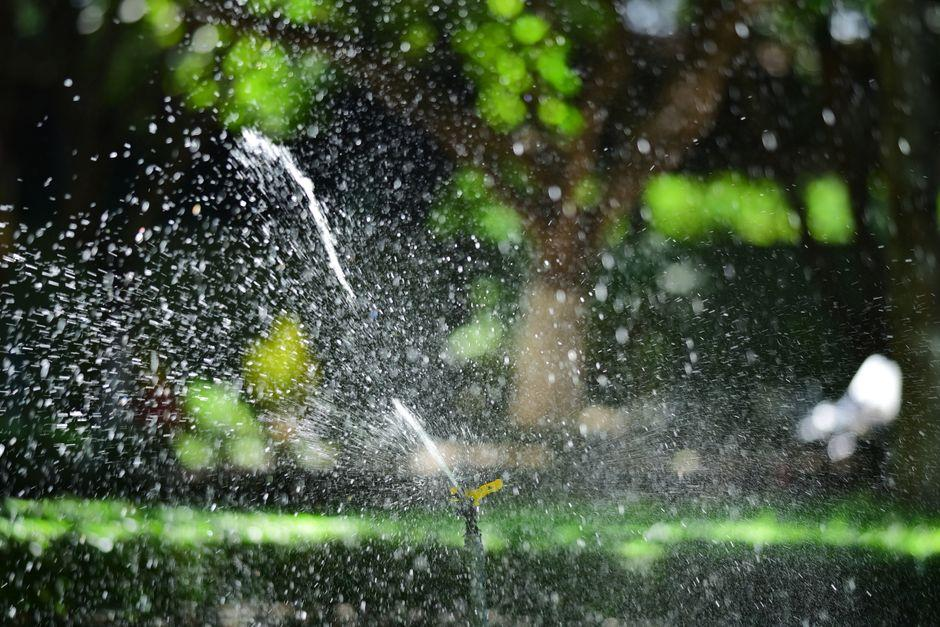
Walk around the perimeter of your lawn while the sprinklers are active. If the driveway is wet but the strip of grass beside it is dry, extending the watering cycle is likely to give you a wetter driveway. Watch where the spray lands before adjusting the timer.
Your Lawn Is Sending Clear Stress Signals
Brown spots or patches are a good indicator. Push a trowel into the brown spot immediately after the next watering cycle. Then check an area of healthy lawn approximately three to four feet away from the previous location. Compare how deep down the moistened area of soil is. The soil may appear to have adequate moisture levels below ground even if it appears parched or dehydrated above ground.
Watch what happens on slopes. If water starts running downhill while the soil beneath the surface is still dry, try two shorter cycles with a break between them. Check the same spot afterward to see whether the water reached farther down.
Rising Water Bills Usually Mean Hidden Inefficiency
Run each zone on its own. Look for a broken head that gushes when it pops up, a nozzle spraying the fence, or water bubbling beside a sprinkler. Some leaks only show themselves while that particular zone is on.
This is where a professionally planned irrigation system becomes a practical upgrade rather than a luxury add-on. When watering zones match your plant types, sun exposure, and soil conditions, you stop paying to soak sidewalks and overwater low-need areas.
A weather-controlled irrigation system will allow you to reduce the duration of a watering session as temperatures drop. However, a controller has no knowledge about your individual zones’ optimal timing. After installing the system check how long each zone runs during the first couple weeks of operation. Observe how the system behaves on your first rain event.
Uneven Growth Across the Yard Points to Coverage Problems
If one section of your lawn looks like a golf course and another looks neglected, coverage is probably uneven. This can happen when spray heads are blocked by plant growth, rotor spacing is off, or pressure varies across zones. You may also have mismatched equipment trying to water areas with totally different needs.
Set empty, straight-sided containers of the same size across a problem area, including one in the dry patch. Run the zone once and compare the water levels. A nearly empty container beside a full one gives you a place to start looking for an obstruction or a head pointing the wrong way.
If the containers collect similar amounts, compare the sites themselves. A sunny strip beside the driveway can dry out well before the shaded lawn, even when both get the same amount of water.
You’re Spending Too Much Time Watering by Guesswork
For small gardens you might want to try using a portable sprinkler. Moving around a portable sprinkler isn’t always easy; however, by using a timer and leaving a note of which beds were sprayed you’ll avoid overwatering a bed again and under watering another bed for a whole week.
Early morning is a practical time to water turf. There is usually less evaporation than in the afternoon, and wet blades have daylight ahead to dry. Check containers separately, especially on a sunny patio.
New Landscaping Often Outgrows Old Watering Methods
A sprinkler set up for open grass may now spray straight into a hedge. If you’ve renovated your yard, run the old program while you walk the new layout. Pay particular attention to places where turf gave way to paving and where young shrubs now shelter the ground beneath them.
When first planting trees, the most important thing is to ensure that there is sufficient moisture surrounding the root ball. If a sprinkler simply waters the leaves of a new tree, it may completely miss watering the area where the root system exists. When planting in beds with multiple plants (a “mixed bed”) check the location of where your drip irrigation emitters disperse the water and adjust their placement as needed when the plants begin to grow into the space.
Smarter Watering Supports Long-Term Yard Health
Once you make a modification to your watering schedule or irrigation system, head back to the original dry spot with your trowel. Does the water now reach down to the roots of the plants? Did the puddle at the base of the sloping section disappear? Make changes one at a time, so you know which adjustments were effective.
Last Updated: November 23, 2026