
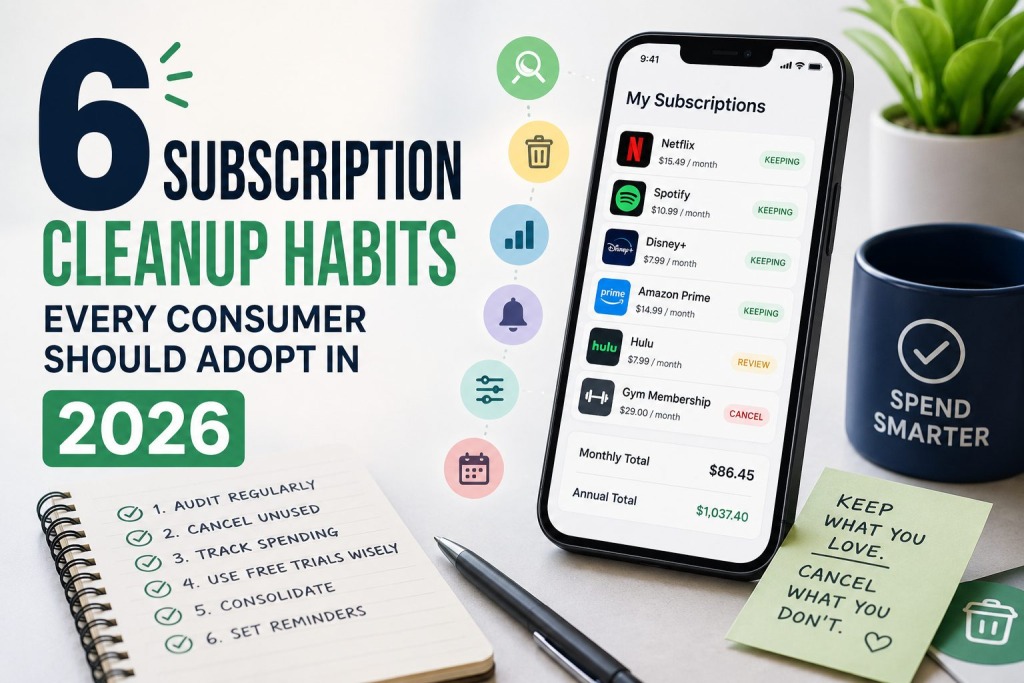
Subscription cleanup is not only about canceling a few unused services once a year. In 2026, recurring payments sit inside streaming accounts, storage plans, food apps, work services, fitness memberships, and trial offers that renew without much attention. The smarter habit is to treat subscriptions as a small part of regular money care. A consumer does not need a complicated system. A few simple routines can keep charges easier to understand and easier to stop when they no longer make sense.
1. Check Recurring Charges Once a Month
A monthly subscription check should become as normal as checking a grocery receipt. It does not need to take long. The goal is to scan the statement and notice anything that repeats. If the same name appears every month, it deserves a quick decision. Is it still used? Is it worth the price? Is there another service doing the same job?
A service from subdelete.com can fit into this habit when a consumer already knows what needs to be canceled. Subdelete says it provides cancellation letters, tracking, and proof of delivery. That can be useful when the charge is clear but the cancellation process is annoying. The monthly check finds the problem. The cancellation process handles the next step.
A basic review can include:
- Streaming and music services
- App trials and mobile subscriptions
- Cloud storage and software plans
- Fitness, wellness, or meal memberships
- Old work accounts tied to a personal card
2. Keep One List of Active Subscriptions
Many people rely on memory, and memory is bad at subscriptions. A service may be linked to an old email address. A trial may have started during a trip. A family member may have signed up for something on the same card. Without one list, the same charge can feel new every time it appears.
The list can be simple. It should include the service name, price, renewal date, billing method, and the email used to register. A spreadsheet, notes app, or budgeting app can work. What matters is that the list exists and gets updated. If a subscription is canceled, mark the date and keep any confirmation.
3. Set Renewal Reminders Before the Charge Happens
A reminder after the payment is less useful. The better habit is to set a reminder a few days before renewal. This gives enough time to decide whether the service should stay. It also helps with annual plans, which are easy to forget because they do not appear every month.
This matters most for free trials. A trial is usually started for a short reason: one document, one show, one fitness plan, one project. After that need passes, the service may keep billing. A reminder makes the decision happen before the card is charged.
Some consumers prefer a weekly reminder to review all upcoming renewals. Others set one reminder for each subscription. The method is less important than the timing. The reminder should appear before money leaves the account, not after.
4. Cancel Services Right After the Decision Is Made
The worst time to cancel is “later.” Later usually means another billing cycle. If a subscription is not useful anymore, it is better to act while the decision is still fresh. Even a small charge can become irritating when it repeats because nobody stopped it.
A useful cancellation routine looks simple:
- Find the account email and billing details
- Check whether the subscription was bought directly or through an app store
- Send or submit the cancellation request
- Save the confirmation or delivery record
- Check the next statement to confirm the charge stopped
This habit also reduces second guessing. A consumer does not need to ask every month whether the old service is still active. The request is sent, the record is saved, and the next statement confirms the result.
5. Watch for Duplicate Services
Duplicate subscriptions are common because they do not always look identical. One household may pay for two music plans. A freelancer may use two storage services. Someone may keep both a gym membership and a fitness app, even though only one is used.
This is not always wasteful. Some duplicate services serve different needs. But each one should have a clear reason to stay. If the reason is “maybe later,” that usually means the service needs review. A good habit is to group subscriptions by purpose. Entertainment, work, fitness, storage, and learning can each have their own mini review.
6. Keep Proof After Every Cancellation
A cancellation is not fully finished until there is proof. A screenshot, email confirmation, delivery record, or support message can matter later. If another charge appears, the consumer has something concrete to use when contacting the company or card issuer.
This is where documentation becomes part of financial hygiene. It may feel boring, but it saves time when something goes wrong. A person who keeps proof does not need to explain the story from memory. The date, request, and response are already there.
Subdelete lists proof of delivery and tracking among its features. That kind of record can help when a company needs to confirm that a cancellation request was sent. It does not replace checking the next bank statement, but it gives the customer a stronger starting point if billing continues.
Conclusion
Subscription cleanup works best when it becomes routine. A monthly review, one active list, early reminders, quick cancellation, duplicate checks, and saved proof can prevent small recurring charges from becoming a messy budget problem. The point is not to cancel everything. The point is to know what is active, what is useful, and what should stop before another payment goes through.
Last Updated: July 15, 2026