
Introduction
In every stage of construction projects, infrastructure development, property transaction, and land planning, accurate information is put together by surveyors. They do the work of collecting, analyzing, and interpreting that info to present it in very detailed maps, which in turn guides in making those important decisions. Also, without precise surveying, property boundaries may become an issue, construction projects can see very costly delays, and land development plans may run into great difficulty.
Modern surveying is a blend of old and new technologies that professionals use to turn raw land data into very accurate maps. These maps are assets that engineers, architects, developers, government agencies, and property owners use and that count on the precision of the info presented.
The Importance of Accurate Land Surveying
Land measurement and documentation, which is what is known as land surveying. Surveyors collect info on boundaries, elevations, natural features, structures, and other elements that are important to a property.
Precise surveys form the base of many projects, which include the following:.
- Residential developments
- Commercial construction
- Transportation infrastructure
- Utility installations
- Environmental assessments
- Property boundary verification
Professionals seeking reliable Land Surveying Services in Florida often depend on survey data to ensure projects begin with accurate and legally recognized information. High-quality surveys in turn reduce risk and improve planning efficiency throughout the project lifecycle.
How Surveyors Collect Land Data
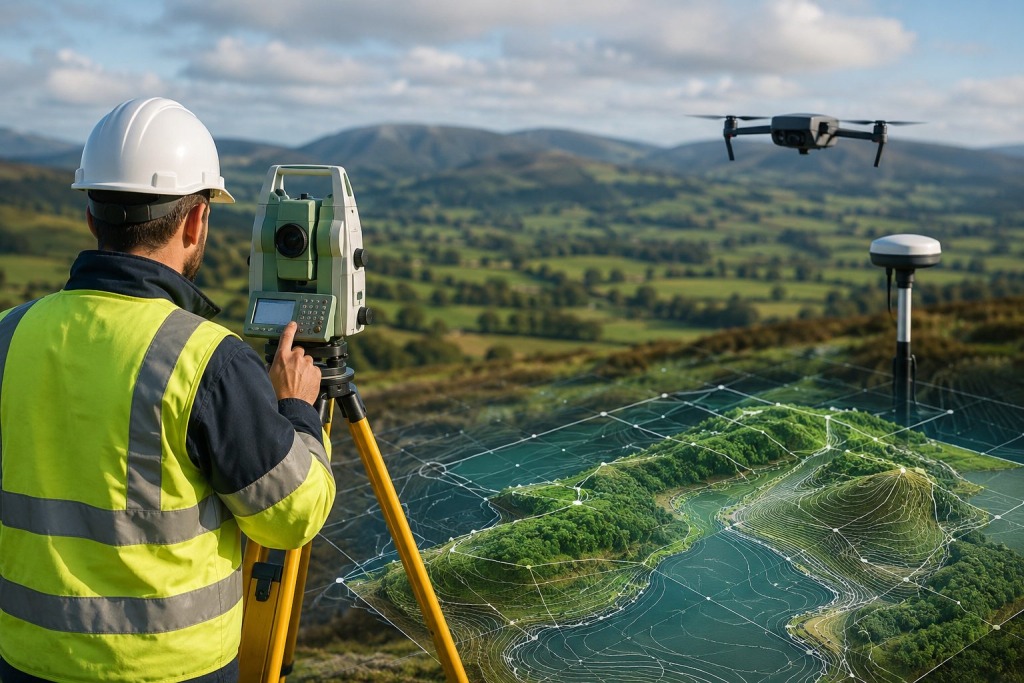
In the field is where the mapping process begins, which, by the way, is done by surveyors that use special equipment. Also, there are very precise methods of gathering data available in modern surveying technology.
Common tools used by surveyors include:
Global Navigation Satellite Systems (GNSS)
GNSS devices use satellite signals to determine exact geographical positions. Also, these systems permit surveyors to identify locations with a high degree of accuracy, which in turn can be applied across large areas.
Total Stations
Total station instruments combine distance measurement and angle measurement into one unit. In the field, surveyors use these to collect precise data and to set out reference points at a site.
Drones and Aerial Surveys
Drones have changed modern surveying. Equipped with cameras and sensors they are able to quickly get in and out of large properties to return detailed images and topographic info.
LiDAR Technology
LIDAR uses laser pulses to produce in-depth 3D models of terrain and structures. Also, it is very useful for complex landscapes and large-scale mapping projects.
Transforming Raw Data Into Useful Information
Collect at first to amass data which is the base. Once fieldwork is done surveyors use special software to input and analyze the info.
The collected data is entered into CAD and GIS platforms. In these programs surveyors put together measurements, identify trends, check accuracy, and produce precise visual models of the land.
Through this process, many separate data points are transformed into easy-to-understand and use maps, which are made available to project stakeholders.
Types of Maps Created by Surveyors
In different projects different types of maps are required. Surveyors produce a variety of mapping products, which depend on the project’s specific needs.
Boundary Maps
Boundary maps determine legal property lines and the extent to which they are owned. They are also very important for property transactions, dispute resolution, and land development planning.
Topographic Maps
Topographic maps present elevation changes, slopes, contours, and natural land features. Also, it is the engineers’ resource when they are into road design, drainage systems, and construction projects.
Construction Layout Maps
Construction drawings, which are detailed out by professionals, aid in the precise placement of all construction elements as per the given plans.
Utility Maps
Utility maps present the location of both underground and aboveground infrastructure, which includes water lines, sewer systems, gas pipelines, and communication networks.
The Role of Technology in Modern Mapping
Technology has seen great improvement in terms of accuracy and efficiency in surveying. Today it is evident that software developers have put out solutions that enable surveyors to work with large sets of data at an unprecedented speed without sacrifice of precision.
Advanced mapping, which includes data from many sources, including
- Satellite imagery
- Drone photography
- LiDAR scans
- Ground surveys
- Geographic databases
These integrated data sets present a full picture of land conditions, which in turn supports better decision-making.
Why Precision Matters
Even at a small scale measurement errors are large issues. Inaccurate maps may cause construction delays, design changes, legal issues, or out of the blue project costs.
Precision is of great importance in:.
- Property boundaries
- Engineering design
- Transportation corridors
- Utility placement
- Floodplain analysis
- Environmental protection areas
Survey teams adhere to high standards of quality control which in turn produces reliable and accurate info.
Supporting Sustainable Land Development
Survey developed maps play a role in responsible land use and sustainable development. Precise geographic information helps planners to assess environmental conditions, manage natural resources, and also minimize impact on adjacent communities.
Detailed mapping can assist with
- Stormwater management planning
- Habitat preservation
- Infrastructure optimization
- Resource conservation
- Risk assessment
As populations increase, which in turn causes communities to grow, there is a greater need for reliable survey data, which in turn helps communities balance development needs with environmental issues.
Conclusion
Surveyors do much more than just take basic measurements. They turn in very detailed maps, which form the base for construction, development, engineering, and property management projects. Out in the field and in the office, they bring to bear their expertise with the latest technologies like GNSS, drones, LiDAR (read more), and GIS software, which in turn they use to very accurately model the physical world.
These in-depth maps support decisions, reduce project risks, and also help out in the responsible and efficient development of land. As technology grows, it is evident that survey professionals will still be key in turning that raw geographic data into the very precise maps that form communities and which also guide future growth.
Last Updated: June 30, 2026