
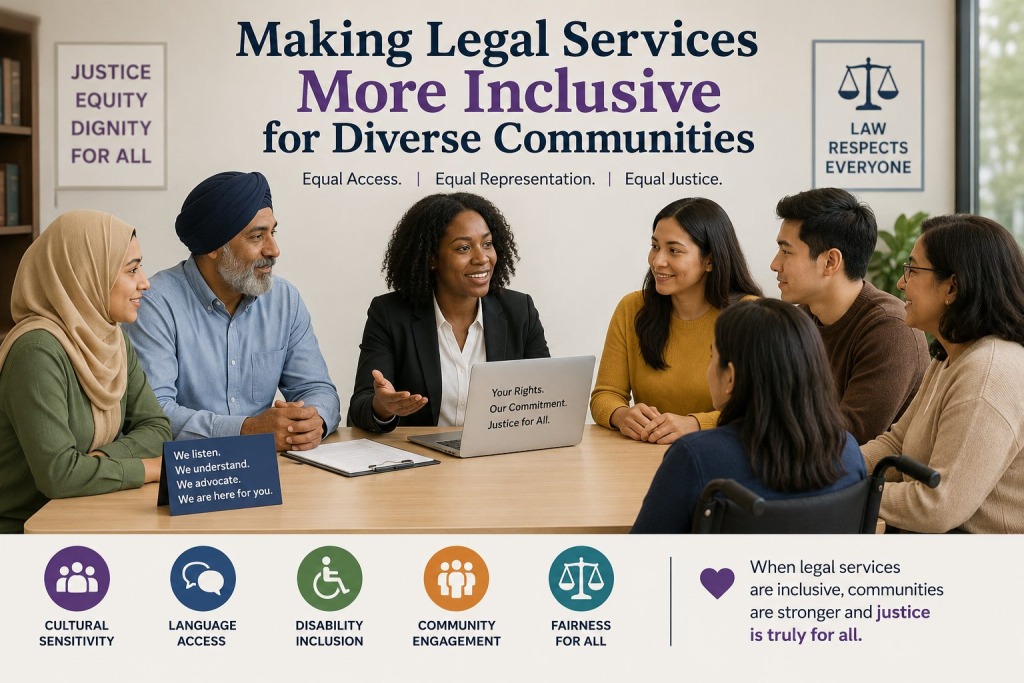
Access to legal help should not depend on your income, language, disability, immigration background, or familiarity with the court system. Yet many people still struggle to understand their rights, locate reliable attorneys, or communicate clearly during a legal matter.
Law firms, courts, nonprofit organizations, and public agencies can make legal services more inclusive by removing practical barriers. This requires clear communication, flexible service options, transparent pricing, and respect for the needs of each community.
Provide Legal Information in More Than One Language
Language barriers can prevent people from understanding deadlines, legal documents, settlement offers, and court instructions. A person may speak conversational English but still struggle with technical terms such as liability, contingency fee, statute of limitations, or comparative negligence.
Legal providers should translate essential materials, including:
- Intake forms
- Fee agreements
- Privacy notices
- Frequently asked questions
- Appointment reminders
- Legal rights guides
- Settlement documents
- Instructions for collecting evidence
Translation should involve qualified professionals who understand legal terminology. Automated translation tools may help with basic communication, but they can misinterpret important details.
Spanish-speaking clients seeking help after a collision may benefit from legal assistance accessible to Spanish speakers when they need to explain injuries, insurance issues, and accident details in the language they understand best.
Law firms should also offer interpreters during consultations, depositions, medical appointments, and court appearances when appropriate. Clients should never have to rely on a child or untrained relative to interpret sensitive legal information.
Use Clear Language Instead of Legal Jargon
Complex language can make legal services feel inaccessible, even when an attorney speaks the client’s preferred language.
You should receive explanations that help you understand:
- What happened in your case
- What legal options you have
- What documents you need
- What deadlines apply
- What the process may cost
- What risks each option carries
- What your attorney needs you to do next
For example, an attorney could replace “You must preserve all evidence relevant to the claim” with a more direct instruction:
“Keep your medical bills, photographs, repair estimates, emails, text messages, and insurance letters. Do not delete anything connected to the accident.”
The second version gives the client a clear task and specific examples.
Legal organizations can improve communication by testing public materials with people who do not have legal training. If readers cannot explain the instructions after reading them once, the content probably needs revision.
Make Initial Consultations Easier to Access
Many people cannot attend appointments during standard business hours. They may work multiple jobs, care for children, lack transportation, or live far from the nearest legal office.
Law firms can improve access by offering:
- Evening or weekend consultations
- Phone and video appointments
- Online intake forms
- Text message appointment reminders
- Flexible meeting locations
- Home or hospital visits when necessary
- Clear instructions for public transportation and parking
A client who works from 8 a.m. to 5 p.m. may be unable to attend a 2 p.m. consultation without losing income. Offering one evening appointment block each week can give that person a realistic opportunity to speak with an attorney.
Online scheduling should remain optional. Some clients may have limited internet access, low digital confidence, or concerns about sharing personal details online. A staffed phone number remains important.
Explain Legal Fees Before Work Begins
Unclear pricing can discourage people from contacting an attorney. Clients may assume that every consultation requires a large payment or that legal representation will create unaffordable debt.
Legal professionals should explain fee arrangements in plain language before the client signs anything.
For example:
- An hourly fee means the client pays for the time the attorney spends on the case.
- A flat fee covers a defined service for a set price.
- A contingency fee means the attorney receives an agreed percentage if the client obtains compensation.
- A retainer is money paid in advance and used toward future legal work.
Clients should also understand possible additional expenses, such as filing fees, expert witness costs, medical record charges, translation services, or court reporter fees.
Written agreements should include actual percentages and sample calculations. If a contingency fee is 33.3 percent, the lawyer can explain how that fee would apply to a hypothetical $30,000 settlement. Concrete examples help clients understand what they may receive after fees and expenses.
Build Trust Through Accurate Public Information
People often research legal providers before making contact. Incomplete or inconsistent information can cause confusion and reduce trust.
Law firms should keep the following details accurate:
- Firm name
- Office address
- Phone number
- Business hours
- Languages spoken
- Practice areas
- Attorney licensing information
- Consultation policies
- Accessibility options
Profiles on reputable legal directories can help potential clients verify a firm’s identity and services. For example, a person researching a Las Vegas legal provider can review this attorney directory profile as part of the evaluation process.
Directory profiles should match the information on the firm’s website and business listings. A different phone number or outdated address may cause a person to contact the wrong office.
Address Disability and Accessibility Needs
Inclusive legal services should work for people with physical, sensory, cognitive, and communication disabilities.
Offices should evaluate whether clients can:
- Enter the building without using stairs
- Access an appropriate restroom
- Read documents in large print
- Use screen-reading software on the website
- Request sign language interpretation
- Participate by phone or video
- Receive information in an accessible digital format
Website forms should include clear labels and keyboard navigation. Videos should include captions. Documents should use readable fonts, descriptive headings, and sufficient spacing.
Staff members should ask clients what accommodations they need instead of making assumptions. A simple intake question such as “Do you need any communication or accessibility support for your appointment?” gives clients a direct way to request assistance.
Respect Cultural and Personal Differences
Clients may approach legal problems based on their previous experiences with government agencies, courts, police, or attorneys. Some may hesitate to share information because they fear judgment, discrimination, or immigration consequences.
Legal professionals should explain confidentiality clearly. They should also avoid assumptions about family roles, education, citizenship, employment, or financial circumstances.
Inclusive service includes using a client’s correct name and preferred form of address. Attorneys should ask who the client wants involved in meetings and confirm whether the client gives permission to discuss the case with relatives.
Respectful communication improves accuracy. Clients are more likely to share important facts when they feel safe asking questions and correcting misunderstandings.
Create Practical Educational Resources
Legal education can help people identify problems before they become more serious.
Community organizations and law firms can publish short guides covering subjects such as:
- What to do after a car accident
- How to document workplace discrimination
- What to bring to an immigration consultation
- How to respond to a court notice
- How to recognize a legal scam
- When to seek help after domestic violence
- How insurance claims are evaluated
Resources should include specific steps. After a traffic accident, for example, a guide may advise readers to call emergency services, photograph the vehicles, exchange insurance information, seek medical care, and save all related records.
People can also review official information from the National Highway Traffic Safety Administration concerning vehicle safety, recalls, crash prevention, and road safety guidance.
Public education should never promise a specific legal result. It should help readers recognize risks, preserve information, and determine when professional advice may be necess0ary.
Partner With Trusted Community Organizations
Some people feel more comfortable seeking help through organizations they already know. Legal providers can work with schools, libraries, cultural associations, faith-based groups, disability organizations, shelters, and neighborhood centers.
Useful partnerships may include:
- Free legal information sessions
- Monthly consultation clinics
- Multilingual rights guides
- Referral programs
- Document preparation workshops
- Safety and accident prevention events
A monthly two-hour clinic at a local library may reach residents who would never visit a downtown law office. The clinic should have clear limits. Staff must explain whether they are providing general education, brief advice, or full legal representation.
Ask Clients for Direct Feedback
Law firms cannot assume that their services are accessible. They need feedback from the people using them.
A short survey can ask:
- Was it easy to schedule your appointment?
- Did you receive information in your preferred language?
- Did the attorney explain your options clearly?
- Did you understand the fee arrangement?
- Did you experience any accessibility problems?
- What could the office improve?
Firms should review patterns instead of treating each response as an isolated comment. If several clients report difficulty completing an online intake form, the form may need fewer fields, clearer instructions, or a mobile-friendly design.
Inclusion Requires Consistent Action
Inclusive legal service depends on practical decisions made throughout the client experience. Clear language, translated materials, accessible offices, flexible appointments, transparent fees, and accurate public information all affect whether a person can use the legal system effectively.
You should be able to understand your rights, communicate with your legal provider, and make informed decisions about your case. Legal organizations that regularly review their procedures can identify barriers early and provide services that work for more members of the communities they serve.
Last Updated: July 21, 2026