
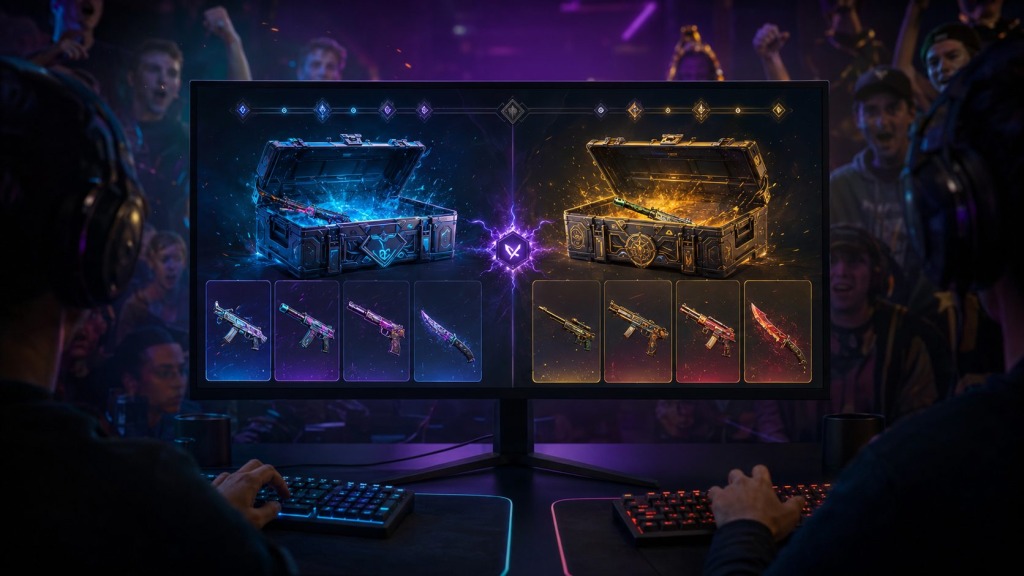
Opening cases has always been an important part of CS2, the game Valve built on the foundation of CS:GO, and case battles have become another popular way to do it. Instead of opening cases on your own, you compete against other players while opening the same cases. This creates a different type of experience and gives players another reason to enjoy the game. In this article, we’ll explain how case battles work, how they compare with regular case openings, and what you can do to make better decisions when joining them.
CS2 Cases vs Case Battles
Although both involve opening the same CS2 cases, they are not the same. Knowing how each option works will help you choose the one that better matches what you’re looking for.
Solo vs Group Format
Opening a case on your own is a quiet moment between you and the screen. You pay for the key, watch the animation, and see the result. CS2, CS:GO case battles take the exact same activity and add other players to it. Everyone opens the same cases at the same time, and every result appears live next to the others. The mechanics inside each case stay the same, but the atmosphere changes completely.
How Value Is Split
In a normal opening, every item you receive stays with you, no matter what it is worth. In a case battle, only the player with the highest total value at the end keeps every item from the session. This one detail changes how you look at your results. A cheap item during solo opening is still yours, and you can hold it or sell it on the Steam Marketplace whenever you like. The same item in a battle only matters if it beats what the other players received. So even though the cases are the same, the value you take home follows a very different rule.
Which Fits Your Style
The right choice depends on what you want at that moment. If you feel like relaxing and reviewing each result on its own, solo openings are the better option. If you want a short, active session with a clear ending and some social energy, case battles are a better fit. Many players use both, choosing solo openings when they want to slowly try one case at a time and joining battles when they want faster sessions with real interaction between players.
Why You Should Join a CS2 Case Battle
Many players choose case battles even though they can simply open cases on their own. Let’s look at the reasons why this format has become so popular.
More Interaction with Others
A case battle turns a normal opening into a live moment. You see the other players’ results next to your own, you can talk with them in the chat, and the whole session moves at a shared pace. Instead of watching your own screen quietly, you become part of a small group doing the same activity together.
Clear Beginning and End
Solo openings have no natural stopping point. You can always open one more case, and this often leads to spending far more than you planned. Case battles are the opposite. The cases are chosen at the start, the session runs, and it ends. This clean structure makes it easier to control both time and money.
A Chance to Watch Before Joining
Most platforms let you watch other players’ case battles for free. This makes the format easier to learn than any other activity in CS2. You can spend some time watching live sessions, see which cases produce interesting results, and understand how the pacing works before you spend anything yourself. Once you feel comfortable, you can join a small session and try it. Very few activities in the CS2 world let you study them so closely without paying, which makes this a friendly starting point for new players.
How to Get the Most Out of CS2 Case Battles
The outcome of a case battle depends partly on luck, but your decisions still matter. Following a few practical habits can help you manage your budget and make smarter choices over time.
Check the Cases First
The cases inside a session decide the entire range of possible results, so this is where your real thinking should happen. Before joining a battle, take a minute to look at the item list of every case included. A session filled with cheap cases and weak item lists usually leaves everyone disappointed, even the player who wins. Sessions built around cases with strong lineups feel worth the time.
Match the Session to Your Budget
Case battles come in every size, from small sessions that cost only a few dollars to large ones with hundreds at stake. The right session is always the one where the price feels comfortable to you. A session that stretches your budget adds pressure to every single result and quickly removes the fun. Decide how much you are willing to spend before you sit down, and only look at sessions inside that limit.
Learn from Your Sessions
The more battles you join, the more patterns you notice, such as which cases produce interesting results, which session sizes fit you best, which platforms feel most fair, and how market trends affect the value of the skins you’re chasing. Writing short notes after each session, even a few lines on your phone, turns your experience into real knowledge. After ten sessions, you will know exactly which battles to look for and which to skip. Most players never do this, which is why they keep repeating the same choices. A few minutes of reflection saves hours of trial and error later.
Conclusion
We explored what makes case battles different from regular case openings and discussed why so many CS2 players choose this format. We also shared several practical ideas that can help you approach case battles more carefully. The more you understand how they work, the easier it becomes to decide when and how to join one.
Last Updated: July 30, 2026