
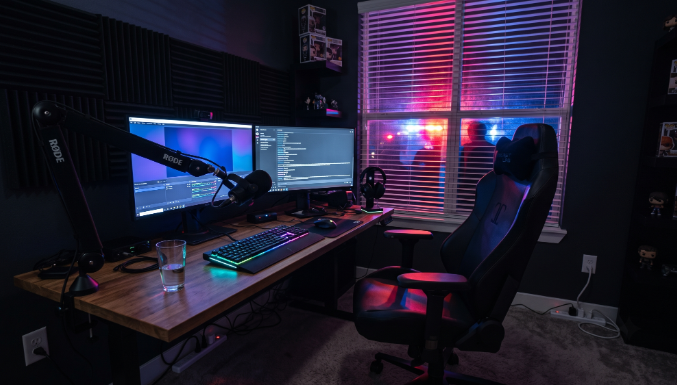
Every competitive scene eventually produces its own folklore about revenge. Somebody gets dropped from a lobby, somebody gets doxxed, and somebody decides the appropriate response is to make a phone call. The console community has been living with that escalation longer than most audiences, because the tactic now known as swatting grew up alongside voice chat and live streaming.
What has not kept pace is the general understanding of what that call is, legally. Most people who make one seem to believe they are committing a prank, or at worst a stunt that ends with a warning. In New Jersey, the call is charged as a felony-level offense before anyone asks whether somebody got hurt. Here is what the statute actually says, and why the sentence is only part of the bill.
Why the Console Community Became the Testing Ground
Swatting requires two things that gaming culture supplies in unusual abundance: a live audience and a home address. A stream turns a false emergency into a performance with a viewership. A leaked address, harvested from a doxx or an old breach, makes it targeted.
The Spoofing Layer
The technical piece is not sophisticated. Callers route the report through spoofing services so the number appears to originate from the victim’s own phone or neighborhood, which is exactly what makes dispatchers treat it as credible. New Jersey’s state cybersecurity agency publishes a swatting threat mitigation guide for civilians that walks through how these calls are built and what a targeted household can do in advance. It is worth reading if you stream under your real first name.
What New Jersey Actually Charges
The controlling law is the state’s false public alarm statute. Initiating or circulating a false report of an impending fire, explosion, crime, catastrophe, or emergency that is likely to cause an evacuation or public alarm is a crime of the third degree. Third degree in New Jersey carries an ordinary sentencing range of three to five years and a fine of up to $15,000.
The Word “Any” Is Doing Enormous Work
That is the floor, not the ceiling. When the state rewrote the law in 2015, it added a second-degree tier for false alarms involving a bombing, a hostage situation, a person armed with a deadly weapon, “or any other incident that elicits an immediate or heightened response by law enforcement or emergency services.” The enacted text is public and readable in New Jersey’s 2015 false public alarms law. A tactical response to a residential address is the paradigm case for that clause. Second degree moves the range to five to ten years, with a fine of up to $150,000 and a presumption of imprisonment even for a defendant with no prior record.
Strict Liability Changes the Math
The statute also imposes strict liability on outcomes. If the false report in fact results in serious bodily injury, the grading rises regardless of what the caller intended or foresaw. If it results in death, the offense becomes a first-degree crime. There is no defense that an officer’s reaction was unforeseeable or that somebody else pulled the trigger.
The 911 Call Nobody Thinks Is a Crime
Not every bad call is a swatting call, and New Jersey grades the smaller ones too. Knowingly dialing a 911 system with no purpose of reporting a need for service is a fourth-degree crime on its own. A 2020 amendment went further, making it a third-degree crime to call 911 with the purpose of intimidating or harassing someone because of race, religion, gender, sexual orientation, gender identity, national origin, or ethnicity. The 2020 amendment to the false public alarm statute is short, and it covers a category of call that people still describe to themselves as trolling.
The Bill That Arrives After the Sentence
Then there is the number nobody mentions in the group chat. New Jersey’s sentencing code directs courts to order restitution where a victim suffered a loss and the defendant can pay or will be able to pay. A tactical deployment is not cheap. Officer hours, equipment, a closed street, an evacuated block, a staged ambulance, and any property damaged during entry can all become line items attached to a sentence.
Restitution also does not end when a custodial term does. Anyone facing this exposure in Morris County tends to learn quickly that the criminal case and the financial case have to be defended together, which is one reason legal defense counsels in Parsippany, New Jersey treat the restitution calculation as a contested issue rather than routine paperwork.
What Streamers and Squad Members Should Take From This
The uncomfortable part for anyone in a competitive lobby is that the person most likely to make this call is not a stranger. It is usually someone from the same server, the same clan, or the same argument. Group chats where an address gets passed around are themselves evidence, and everyone in that thread becomes part of the investigation.
Treat your home address the way you treat your payment details. Keep it out of account recovery answers, off stream overlays, and out of any conversation with someone you have just made angry. The three-to-five-year exposure belongs to whoever places the call. The consequences of the response belong to whoever answers the door.
Last Updated: August 27, 2026