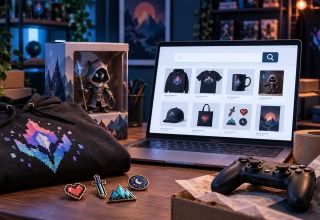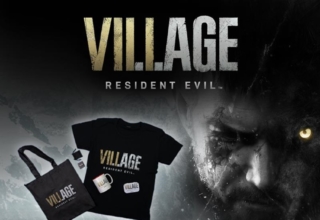
A limited-run hoodie tied to a game launch might sell out in minutes on a Tuesday. Six months later, once the hype has faded, a similar item could sit unsold. Those swings make planning difficult for gaming merch retailers. General ecommerce SEO advice still helps, but it needs to account for demand tied to specific releases and fan communities.
Search interest in gaming merchandise can have different triggers from those covered in seo for homeware, or fashion seo. For example, a store may experience increased interest in its merchandise due to upcoming game releases, esports events, or social media streaming by gamers. However, the same level of interest may disappear as soon as attention shifts to another subject.
Merchants offering merchandise related to games may compete in several areas simultaneously. These include: (1) the official storefronts operated by the studios producing the game, with their established audiences; (2) marketplace vendors operating on platforms such as Amazon and Etsy competing on price; and (3) fan-operated websites using print-on-demand services to sell similar merchandise.
Standing out takes more than good product photography. The website needs to cope when traffic rises, and the search strategy needs to give customers a chance to find a collection while they still want it.
The Problem With Seasonal Spikes Nobody Plans For
Retail has always had seasonal patterns of demand. Summer sales, back-to-school shopping, and holiday seasons like Christmas all bring spikes in consumer spending. However, the world of gaming merchandise can have additional periods of heightened demand due to the unpredictable nature of gaming-related news and announcements. One example would be when a video game company announces a new game or trailer. That can prompt a surge of interest in products featuring the game’s characters. That interest may fade when fans move on to the next announcement. A shop that takes a week to build its collection page risks missing the busiest period. Getting the page online is only part of the job: customers and search engines also need a route to it.
Product selection and pricing matter. So do technical issues: poor internal links can make pages harder to discover, and a slow website can frustrate shoppers when traffic rises. Without proper implementation of product schema, a merchant may also lose the opportunity to use rich product displays as described in Google’s product structured data guidance. Adding the markup does not guarantee those displays or improved rankings.
Licensing Complexity Makes Content Harder Than It Looks
When creating licensed gaming merchandise, merchants may have restrictions placed on their ability to write creative copy for their products based upon agreements with their licensors. Specific brand guidelines developed by rights holders may dictate approved names, logos, and descriptions. A generic SEO template will not account for the requirements of an individual licence. Prior to developing product content, merchants need to verify the requirements for each licence agreement rather than assuming that any popular term related to a franchise can be used in the product description.
Stores that are successfully using SEO techniques are writing product descriptions that meet the requirements for each licence agreement while providing sufficient detail for consumers to understand the characteristics of each product. Instead of relying on trademarked phrases, stores are using terms related to product materials, fit, print quality, and release information. Writing product copy for licensed gaming merchandise involves different skills than writing generic product copy. As a result, generalist SEO advice is not easily translated to this space.
Community Behaviour Changes How People Search
Consumers searching for gaming merchandise may use terms common in their fan community (e.g., a character name, an in-game item or an abbreviation familiar to fans of a particular franchise). Therefore, using only keyword research tools may not identify all terms used by consumers searching online. Some terms may be new or have low recorded search volume. Public discussions on Reddit or Discord can help reveal the words fans actually use. To capture this type of language, merchants offering gaming merchandise need a content strategy that monitors conversations occurring in their fan community versus monitoring only reported search volume.
Community conversations are a useful early signal, though a popular joke or nickname does not automatically mean people want to buy a product. Compare those signals with the shop’s own searches, enquiries and sales before committing to a collection.
What Actually Works For Stores In This Category
Successful merchants selling gaming merchandise generally operate under a few principles. First, they keep product page templates ready to fill with approved images, accurate descriptions and stock details when a release is announced. Second, they monitor fan communities directly for emerging terminology versus waiting for delayed keyword data. Finally, they structure their website so that new pages are easily accessible via relevant internal links and updated sitemaps. Preparing useful pages ahead of a known release gives customers more time to find them. Unfortunately, how long it takes Google to crawl and index new pages is outside of a merchant’s control. Google’s Crawling Guidance indicates that crawling can take days or even weeks, and submitting requests does not ensure inclusion in search results. Therefore, preparing for known releases by establishing useful pages prior to the release is beneficial for merchants seeking opportunities to capitalise upon spikes in demand.
A store does not need to chase every viral moment. Having approved copy, usable templates and a website that can handle extra visitors makes it easier to respond when a relevant opportunity arrives.
Last Updated: September 15, 2026