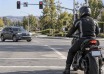
A motorcycle leaves little between its rider and another vehicle. That exposure helps explain a striking U.S. statistic: motorcycles account for about 3% of registered vehicles, while motorcyclists accounted for 16% of traffic deaths in 2024. The share of miles traveled is smaller still. Every trip deserves care, but the figures do not mean a crash is inevitable.
It helps to know what the numbers count, where danger tends to appear, and what a rider can do before the next journey.
What the 2024 figures show
The National Highway Traffic Safety Administration (NHTSA) reports that 6,228 motorcyclists died in U.S. traffic crashes in 2024. Its 2024 Traffic Safety Facts report also estimates 86,887 injured motorcyclists. These figures include riders and passengers. They are a count of people, not a measure of how dangerous each individual ride will be.
There is a second number in some reports: 5,950 motorcycle riders killed. That narrower count refers to operators, while 6,228 includes passengers. Mixing the two makes the statistics appear contradictory. The distinction also matters for impairment data: the reported 26% with a blood alcohol concentration of at least 0.08 g/dL describes fatally injured motorcycle operators, not every person killed on a motorcycle.
The National Safety Council’s Injury Facts data gives a longer view of motorcycle deaths and rates. Changes in the total death count and changes in deaths per mile should be read separately; a larger total alone does not establish that every mile has grown riskier.
Where another driver may miss a motorcycle
A driver waiting to turn left may look straight through an approaching bike or misjudge its speed. At a junction, the rider has little time to respond once the car begins crossing the lane. Research summarized by the Insurance Institute for Highway Safety (IIHS) identifies left-turning vehicles as an important pattern in fatal two-vehicle crashes.
Other situations call for similar attention. A motorcycle can sit in a driver’s blind spot during a lane change. At a driveway, a driver may look for a car-sized gap and pull out. In slow traffic, a following driver may leave too little room to stop behind a bike. Poor light makes it harder for everyone to judge distance. These are practical situations to scan for, rather than a ranked list of the five leading causes of motorcycle deaths.
At an intersection, watch the front wheels of a waiting vehicle as well as the driver’s face. Leave room to brake or move if the vehicle starts to turn. On a multi-lane road, avoid staying alongside a car for longer than necessary. Those habits cannot guarantee safety, but they give you more time and space when somebody misses you.
Crashes involving one vehicle matter too
About 35% of motorcyclist deaths in 2024 occurred in single-vehicle crashes; the remaining 65% involved multiple vehicles. Road conditions, speed, alcohol and rider decisions can all matter, but a single-vehicle crash does not automatically establish that the rider caused it. A sudden hazard or another road user’s actions can play a part even when there was no collision with that vehicle.
IIHS fatality data shows that 36% of motorcycle drivers who died in 2024 lacked a valid motorcycle licence, compared with 17% of fatally injured passenger-vehicle drivers lacking a valid licence. The figure is about the riders who died; it does not mean 36% of all riders on the road are unlicensed. A licence and recent training matter because emergency braking and cornering require practice, not just confidence.
A short check before riding
- Wear a properly fitted helmet and protective gear. Gloves, boots, a jacket and trousers help protect exposed skin. NHTSA recommends a helmet meeting U.S. Department of Transportation standards.
- Check the bike. Look at tyres, lights, brakes and fluid leaks before setting off.
- Give junctions extra attention. Reduce speed when you see a vehicle waiting to cross your path, and keep a possible escape route in mind.
- Ride sober and within your limits. Alcohol and excessive speed leave less room to recover from someone else’s mistake.
- Refresh your skills. A training course can help you practise emergency stops and low-speed control in a safer setting.
If a crash happens
Get medical help, report the collision as required locally, and preserve photos, witness details and records when it is safe to do so. Injuries sometimes become clearer after the immediate shock has passed. Legal deadlines vary by state and by claim, so someone facing serious injuries may want prompt advice from a qualified motorcycle accident lawyer in the relevant jurisdiction. No outcome or compensation is guaranteed.
The most useful lesson in these figures is concrete: wear the gear, keep the bike ready, make space at junctions and never rely on another driver having seen you.
Last Updated: September 23, 2026