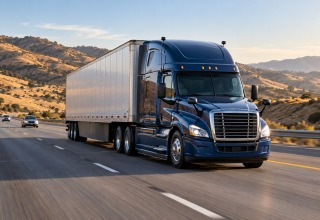
Trucks carry about 72% of all U.S. freight by weight. The cereal in your kitchen, the diesel at the pump and the boards for a new deck all arrived on a semi. Today’s semi-truck is essentially a mobile computer, equipped with cameras facing both directions and a modem sending updates to dispatchers every few seconds. The cab has evolved much faster than the highway it travels on.
From Paper Logbooks to Connected Cabs
It hasn’t been all that long since truckers recorded their hours in paper logbooks. Drivers even jokingly called them “comic books”, as it was so simple to be dishonest about the hours written in them. Ten hours of actual driving could appear as eight with only a pen and some imagination.
December 2017 brought the federal ELD mandate. Most interstate carriers using paper logs had to switch to electronic logging devices connected directly to the engine. Trucks now automatically record their movement. No pen needed.
More changes followed. Tesla delivered its first Semi trucks in December 2022, with PepsiCo as the first customer. Volvo and Freightliner also have electric tractor-trailers hauling actual cargo. Diesel trucks are still the norm, but the move toward electric vehicles is visible.
Innovations in Fleet Monitoring and Safety
What Modern Fleets Actually Track
Ask a fleet manager what she can see from her desk. She can tell you where the truck is, how fast it is traveling and how hard the driver applied the brakes outside Bakersfield ten minutes ago. Most setups have:
- ELDs recording every minute spent driving, so nobody has to remember.
- GPS telematics. Vehicle speed, location and harsh braking data sent back as they happen.
- Two-way dash cams recording the road ahead and the driver’s face. Lytx and Samsara are big names in this market.
- Collision mitigation that can apply the brakes independently if radar detects stalled traffic.
- Lane departure warnings that buzz when a tired driver drifts out of the lane.
- Tire pressure sensors. A blowout at 65 mph is no small problem.
The Part Nobody Puts in the Brochure
Technology cannot rest for the driver. A camera may capture a yawn, but it cannot provide an additional six hours of sleep. Some veteran drivers say an inward-facing camera makes them feel as though they are on probation. Is that a fair concern? To some extent, yes. The footage also protects good drivers after a crash that wasn’t their fault.
Highway Risk Factors Between Cars and Heavy Trucks
Where Cars and Trucks Collide
Put an 80,000-pound tractor-trailer next to a 4,000-pound Camry. The ratio is twenty to one. Physics settles most arguments after that. There are several common danger points:
- Blind spots. Directly behind the truck, beside the cab and along the passenger side. If you cannot see the truck’s side mirrors from your seat, assume the driver cannot see you.
- Stopping distance. At highway speed, a fully loaded rig needs close to two football fields to stop.
- Wide right turns. Trucks may swing left before turning right. Cars that squeeze into the gap put themselves in danger.
- Underride. A small car can slide beneath a trailer, and side guards still aren’t federally required.
- Fatigue. Federal rules allow 11 hours of driving within a 14-hour workday. Deadlines put pressure on those limits.
Some readers will remember Lakewood, Colorado, in April 2019. A semi with failing brakes came down I-70 and slammed into cars stuck in traffic. Four people died. The driver’s 110-year sentence later became national news, and the governor reduced it to 10 years. Brakes, training, runaway ramps. People questioned every piece of the system.
Safety Standards on Major Highways
There are rules in place, and some are strict. In California, for example, a big rig may legally travel no faster than 55 mph while the sedan beside it may legally do 70. Carriers must also meet federal requirements for random drug testing, annual vehicle inspections and records for every brake job.
Here is the thing. Picture a pileup on I-5 near the Grapevine. Who’s at fault? Maybe the driver. Maybe the carrier that squeezed his schedule, or the crew that loaded the trailer unevenly. And honestly, the truck’s own data usually beats what anyone remembers after the airbags go off. A specialized truck accident attorney California team, like the one at Landver Law, usually starts with that data: ELD records, dash cam video, brake inspection logs. Why so quickly? Many systems record over old footage on a loop, sometimes within days.
Where to Look for Solid Facts and Legal Help
Better Places to Start Than a Forum Thread
Anonymous advice online is a coin flip. These are steadier places to start:
- FMCSA’s SAFER system. Search by a carrier’s USDOT number to see its inspection and crash history.
- NHTSA and IIHS. Both publish crash data and vehicle safety research.
- The California Highway Patrol. Collision reports for crashes on state highways.
- Law firm websites that cover transportation cases. Landver Law’s site, for example, explains California truck claims in plain language, including deadlines.
One honest note: general articles help explain the landscape. They cannot tell which lane you were in or what the trucker’s log showed that morning. A licensed attorney who has seen the actual file can assess those details.
Trucks will keep getting smarter. Highways won’t get much wider. Five years from now, will radar handle most of the safe driving, or will it still be the guy with a coffee and a 14-hour clock? Where would you put your money?
Last Updated: October 20, 2026