Today, Medieval Extreme is recognized as the first brand to make this innovative breakthrough within the buhurt (HMB – historical medieval battle) industry. Athletes no longer have to wear 25–35-kilogram armor or use equipment with no protective features. Equipment design has changed considerably: the gear load has been reduced to 17–20 kg, and fully blunted weapons are made from lightweight alloys intended to be safe and comfortable to handle.
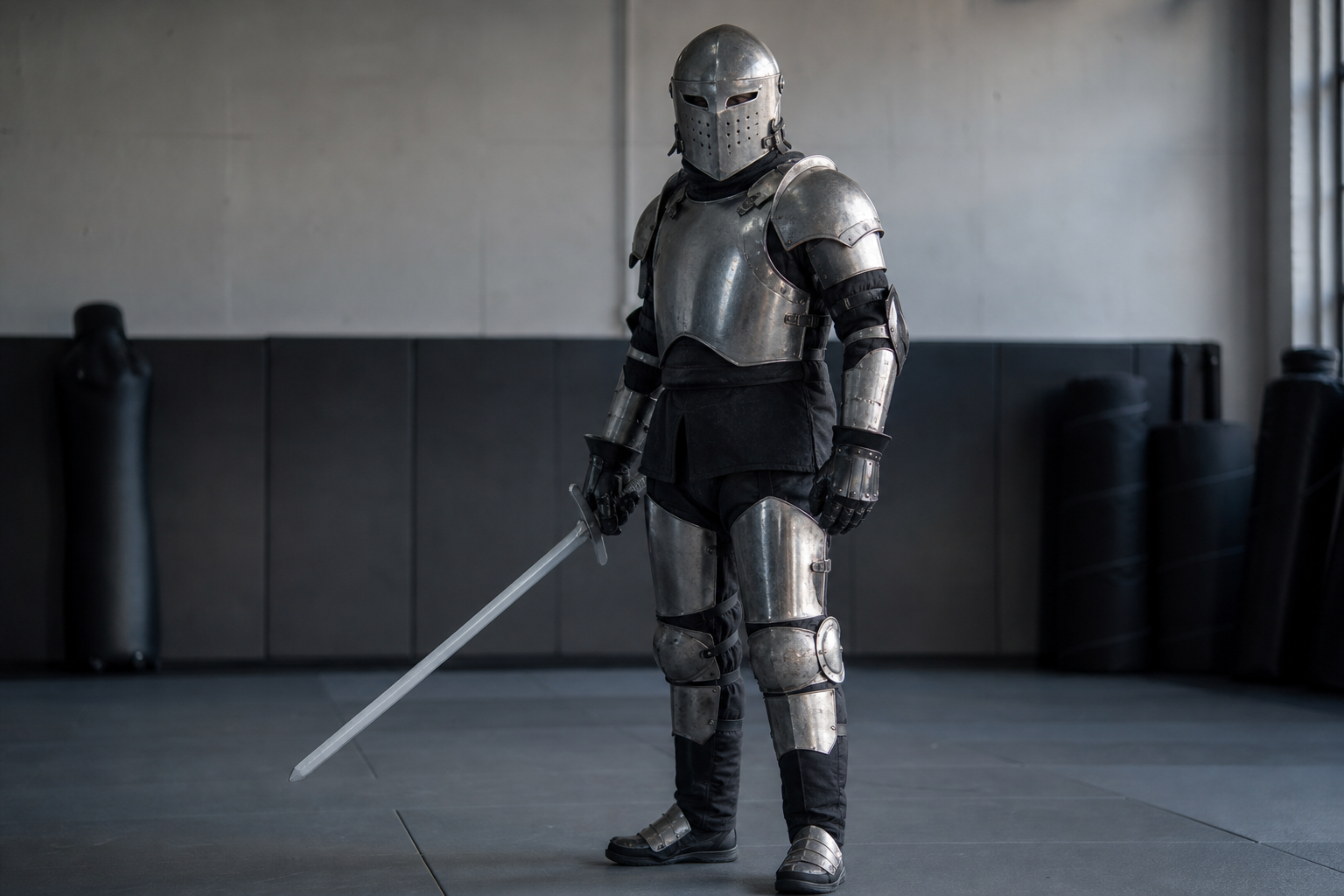
Modern medieval armor looks not only beautiful and creatively designed (fully conveying the atmosphere of knightly battles), but is also made with anatomical padding and protection in mind. Absolutely everything is done so that athletes feel confident, can simultaneously convey the historical atmosphere, and freely reproduce the necessary battle tactics.
Medieval Armor Was Never Just Decoration
Modern technology and advances in metallurgy have changed the way equipment is made. Spring steel and lightweight titanium alloys are used for armor intended to perform during long training sessions and competitions. Weapons are adapted to international rules and standards, with their sharp edges removed. Technical foam protectors and ergonomic footwear, including sabaton and tactical boots, also form part of the equipment.
The Metropolitan Museum of Art explains that well-fitted historical armor spread its weight across the body. Its articulated plates also allowed movement, so mobility was already a concern for the armorers of the past.
Historical Design Meets Modern Combat Requirements
Modern buhurt is a full-contact sport that balances historical knightly design with modern equipment. Historical designs are adapted to combat requirements with the following rules in mind:
- Historical affiliation. Athletes cannot wear “fantasy” armor. Their equipment should reflect the medieval period while allowing for innovations in helmets, plate armor, footwear and weapons.
- Compliance with regulations. Participants must select their equipment according to the authenticity and safety requirements for each element of the armor.
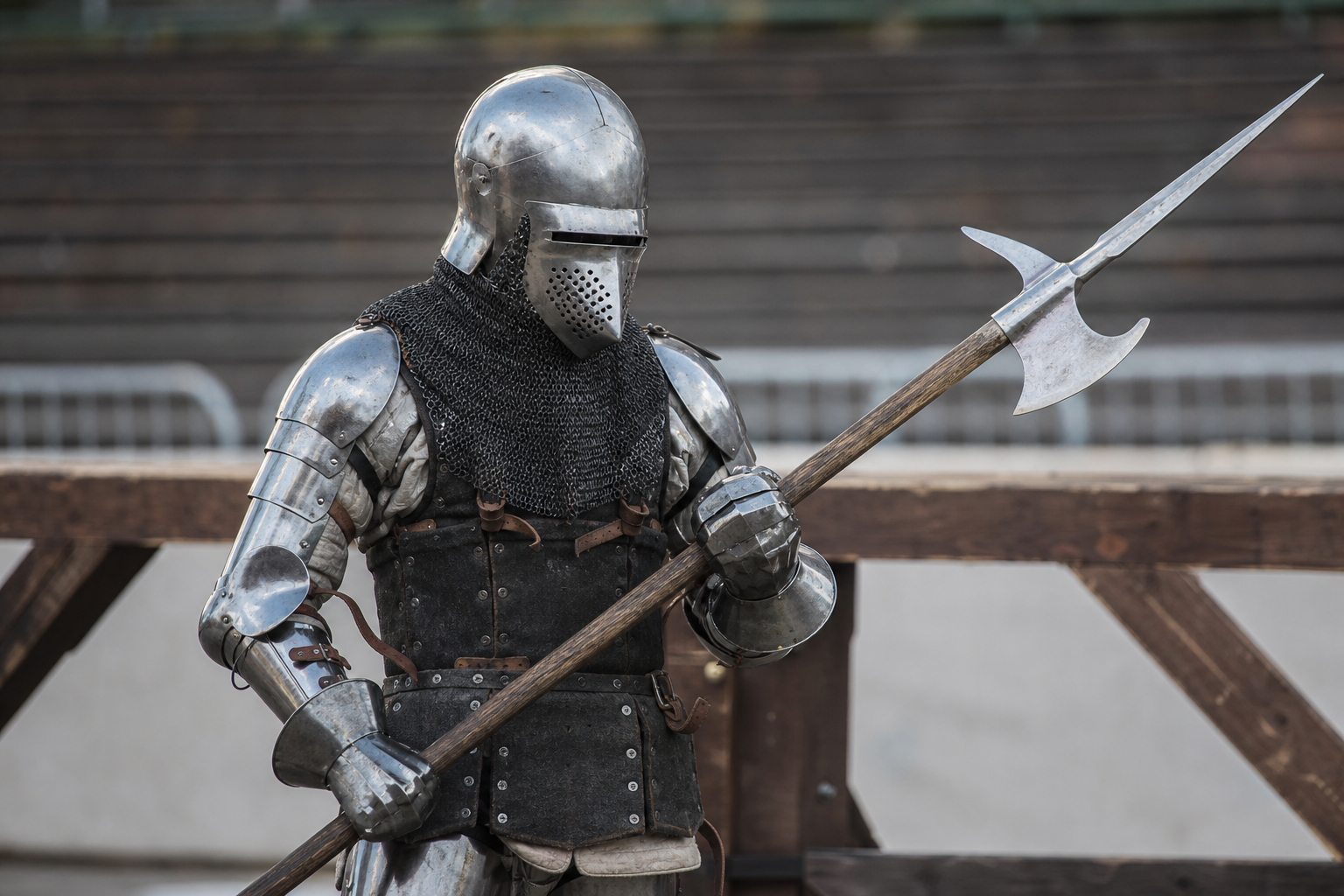
- Weapons. Swords, axes, and halberds must comply with the standards and be blunted. The Australian Medieval Combat Federation lists a minimum blade-edge thickness of 2 millimeters for these weapons, rather than a maximum. Sharp tips are not acceptable; fighters should check the current requirements for their event.
Special attention must also go to protective elements that cannot be seen. These include a gorget for the neck area, multilayer leather clothing and shock-absorbing foam.
Mobility, Weight and Protection
Mobility depends on how evenly the weight is distributed and whether the joints can move freely. Special fasteners, protectors and lightweight materials are intended to protect participants in the arena. A set of gear can weigh about 17–20 kilograms, with additional equipment adding another +6–7 kg. Distributing that load across the body helps fighters move during sparring sessions, tournaments and buhurt championships.
Why Proper Fit Matters in Full-Contact Fighting
Full-contact martial arts demand carefully fitted gear from modern knights. The weight should be distributed evenly, and the armor should allow movement rather than restrict it. Professional equipment is designed around the body so that athletes can train or fight in the ring when required. A close fit, soft fabrics, flexible protection, shock-absorbing foam and lightweight alloys help fighters deliver strikes accurately.
Steel and Titanium in Modern Armor Making
In buhurt, armor means protection. Blacksmiths were once involved in making it; today, engineers also develop equipment using modern technology. Hardened spring steel, including grades 65G and 30KhGSA, is used for helmets and hand protection. These steels offer impact toughness and hardness of about 32–38 HRC when properly heat-treated. One drawback compared with titanium alloys is their greater weight.
If an athlete chooses titanium equipment, the armor can be approximately 45% lighter. Its corrosion resistance and lower weight can reduce the load on the body, particularly the athlete’s spine. Titanium equipment is used to support mobility and speed in contact battles and group fights. It is also used for arm and leg protection and for body armor components such as brigandines.
What Fighters Expect From Battle-Ready Equipment
Battle-ready equipment is an important part of preparing to enter the arena. It must comply with the international standards and rules used for the sport:
- Durability. Helmets, armor, footwear and weapons need to withstand heavy strikes from halberds.
- Joint coverage. Armor must allow the fighter to move without leaving gaps or exposed areas around the joints.
- Strong fastenings. Leather straps, buckles, rivets and lacing need to withstand high loads and meet technical requirements.
Before equipment reaches the market, its elements undergo testing and expert evaluation by the manufacturing companies.
Medieval Extreme and the Evolution of Armored Combat Gear
Medieval Extreme develops equipment around HMB tactics and rules. Its designers focus on anatomical articulation and movement in the gear. Modern buhurt calls for historical reconstruction as well as comfort, so engineers develop movable protective systems for the arms, neck, legs and other parts of the body. These systems use lightweight alloys, shock-absorbing foam and other nanomaterials.
Last Updated: October 14, 2026