Nutrition can affect gaming by providing the fuel you need to play for extended periods. Go into a demanding session hungry, thirsty or uncomfortable, and you have something else competing for your attention.
Performance, focus and reaction time overlap, but they are not interchangeable. Understanding how each relates to nutrition can help you make useful changes to your gaming routine without searching for a magic snack that will transform your gameplay.
Performance
Gaming performance combines several skills: monitoring player movement, making decisions, communicating with teammates and executing actions accurately. Nutrition supports the energy you need for those tasks. It will not directly increase your rank or improve your aim.
Your brain uses glucose for energy, and foods containing carbohydrates provide a source of it. A meal built around oats, rice, potatoes or beans helps meet your energy needs before you settle into a session.
You do not need a sugary drink to keep that process working. Eating a normal meal before you start is a good place to begin, particularly if queuing for another match usually means putting dinner off for hours.
Alongside those carbohydrates, include some protein and fruit or vegetables. The aim is to meet your nutritional needs and feel comfortably satisfied. You do not have to create the ultimate esports meal.
Physical comfort matters as well. Hunger, thirst or feeling excessively full can pull your attention away from the decisions you are making on screen.
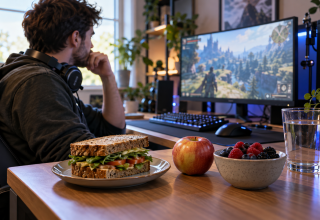
If you are planning a long session, prepare food ahead of time and allow yourself a proper break. A sandwich and some fruit may fit your schedule better than abandoning dinner altogether.
According to a 2025 review in the International Journal of Esports, research into esports nutrition still has important gaps. For you, that means prioritising reliable eating habits over confident claims that one food or supplement will improve competitive results.
Focus
Gaming focus means keeping your attention on relevant information while filtering out distractions. During a match, that might involve following an opponent’s movement, noticing a changing objective or listening for a teammate’s call.
Eating regularly can help keep hunger from becoming a distraction. If you often start playing without having eaten, a planned meal or snack gives you one less thing to deal with during a match.
That does not mean every loss of focus points to a nutritional problem. Session length, stress and how well you have slept also matter, especially if you lose concentration despite eating normally.
Registered dietitian guidance could help when you are struggling to get the right nutrition. For Weight Watchers members with qualified insurance, registered dietitian visits can be as low as $0.
Keep water within reach, too, and check your thirst during breaks. Pairing that habit with food breaks can help you avoid neglecting basic needs when a gaming session runs longer than expected.
Before you start, take a moment to work out whether you need food, water or a break. Building those checks into your routine lets you address possible distractions before they interrupt your play.
Reaction Time
Reaction time measures how quickly you respond after noticing a cue. In a game, you also need to recognise what has happened and choose the right action. A fast response is not much use if it is the wrong one.
Nutrition research offers some evidence about specific substances, particularly caffeine.
What Caffeine Can and Cannot Tell You
A 2024 study published in Frontiers in Sports and Active Living tested caffeine in 24 first-person-shooter esports players. Researchers found improvements in selected shooting measures and reaction time, with results varying by task and timing.
The useful takeaway is that caffeine may influence certain responses. It does not mean drinking an energy drink guarantees faster reactions or better play. With only 24 participants, a small study cannot establish the best routine for every gamer.
More caffeine is not always better. Pay attention to whether your usual intake leaves you alert and comfortable, or unsettled and struggling to sleep later.
Avoid Confusing Better Fuel with Faster Reflexes
Regular meals and hydration support your daily needs, but they should not be presented as proven reflex boosters. Feeling better prepared for a session is different from showing a measurable improvement in reaction time.
If your responses seem slower, look at sleep, fatigue and practice alongside your eating habits. Changing several things at once makes it difficult to tell what helped.
Making Nutrition Part of Your Gaming Routine
Understanding how nutrition impacts gaming performance means separating useful habits from exaggerated promises. Regular meals and attention to hydration help you meet your needs. Claims about sharper focus or faster reactions need more careful interpretation.
For more ideas to bring into your next session, take a look at our related gaming posts.
Last Updated: October 9, 2026