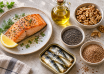
A salmon fillet supplies different omega-3 fats from a handful of walnuts. Both can be useful additions to meals, but the distinction matters if you are trying to understand what you eat or compare supplement labels.
Omega-3 fatty acids help make up the membranes surrounding the body’s cells. They have roles in the heart, brain and eyes. The body cannot make one of them, alpha-linolenic acid, so we have to get it from food.
What Are the Main Types of Omega-3 Fatty Acids?
Omega 3 fatty acids from amazon come in three main forms: alpha-linolenic acid (ALA), eicosapentaenoic acid (EPA), and docosahexaenoic acid (DHA).
Here is where each fits:
- ALA: the essential omega-3 found in plant foods. Chia seeds, flaxseeds, walnuts and canola oil are familiar sources.
- EPA: found in oily fish and other seafood. It is involved in processes that regulate the body’s inflammatory response.
- DHA: also found in fish and seafood, and particularly concentrated in the brain and retina. It has an important role as the brain and vision develop during pregnancy and early life.
The body can turn some ALA into EPA and then DHA. As the NIH Office of Dietary Supplements explains, that conversion happens only in small amounts. ALA-rich plant foods remain useful, but eating them does not directly supply the EPA and DHA found in seafood.
These fats attract plenty of health claims. Their normal functions in the body should not be confused with a promise that taking extra will improve memory or prevent illness. Research findings depend on the outcome being studied and the people taking part.
Best Omega-3 Food Sources for Everyday Nutrition
For EPA and DHA, oily fish is a straightforward choice. Salmon, sardines, mackerel, herring and anchovies all provide them, along with protein and other nutrients.
The NHS advice on fish and shellfish recommends at least two portions of fish a week, including one of oily fish. Check the separate advice for children and during pregnancy or breastfeeding: some fish should be limited or avoided.
There are plenty of ordinary ways to work ALA into meals, too:
- Stir chia seeds into oatmeal or yogurt.
- Add ground flaxseeds to cereal or baked goods.
- Put walnuts in a salad, or have them as a snack.
- Use canola or soybean oil where it suits your cooking.
Nuts and seeds also contribute fiber and other nutrients. Choose options you enjoy and can eat regularly. A varied diet is more useful than building every meal around one supposedly ideal ingredient.
What About Omega-3 Supplements?
Algae oil is an option for people who avoid fish and want a direct source of DHA. Some algae-based products supply EPA as well. Read the label to find out which fats a particular product contains.
With fish oil, look beyond the total oil amount on the front of the pack. What matters when comparing products is the amount of EPA and DHA in a serving, and how many capsules make up that serving. A larger total oil figure does not necessarily mean more of either fatty acid.
Clear ingredient information and independent testing can help you assess a product’s quality. Testing does not establish that it will deliver a particular health benefit.
If you take medication or have a health condition, discuss supplements with a healthcare professional first. This is especially relevant with anticoagulant medicines. Ask for individual advice during pregnancy or breastfeeding as well.
Not everyone needs a supplement. For everyday nutrition, start by looking at the foods you already eat: fish supplies EPA and DHA, while seeds, nuts and certain plant oils supply ALA. There is room for several of these sources in a balanced diet.
Last Updated: October 23, 2026