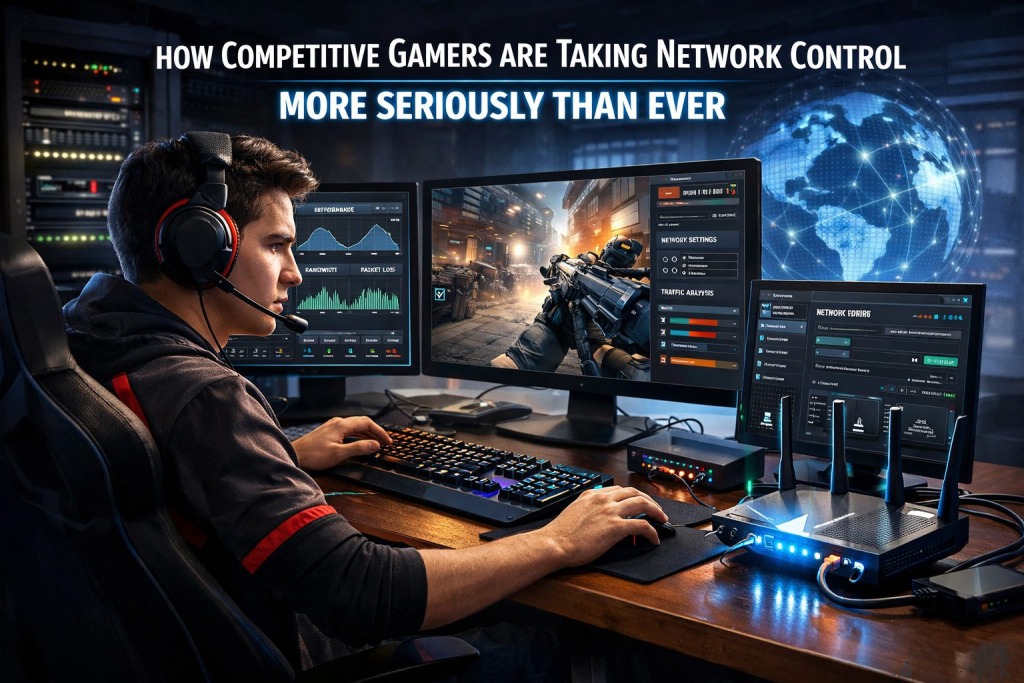
Competitive gaming has always been about the small margins. A split-second reaction, a cleaner rotation, or one better read of the map can decide everything. But as online play has matured, more players have started paying attention to something less visible and just as important: the path their connection takes before the game even begins.
That shift is easy to understand. When a match feels off, most players notice it before they can explain it. Inputs feel late, movement feels slightly heavy, and fights that should have been clean start to look messy. For serious players, that kind of inconsistency is not just annoying. It gets in the way of performance.
Why connection awareness is now part of the competitive mindset
A few years ago, many players treated network settings as background noise. Today, that is changing fast. Competitive gamers are learning more about server regions, routing, latency spikes, packet loss, and the tools that can affect how traffic moves. That is also why more players have started reading about what is a vpn vs proxy when trying to understand which tools actually change connection behavior and which ones only mask a location or IP.
This is not just about chasing an advantage. In many cases, it is about building a more predictable setup. If you spend hours practicing mechanics, team communication, and map knowledge, you do not want unstable routing to be the weak link.
Online performance is shaped by more than raw skill
Anyone who plays ranked shooters, fighters, sports titles, or MOBAs already knows that network quality can shape the feel of a match. Research on online play has supported that view as well. A widely cited study on how online gamers respond to network quality found that players were strongly affected by connection conditions, and that poor network quality could shorten play time and reduce satisfaction.
That matters because competitive play depends on rhythm. Timing windows, movement patterns, and reaction-based decisions all rely on a stable experience. When the network becomes unreliable, the match can stop reflecting skill as clearly as it should.
Why gamers are becoming more technical
There is also a cultural shift happening around gaming. Players are more informed than before, and the wider esports ecosystem has made technical performance part of everyday discussion. Ping, tick rate, server location, and connection consistency are no longer niche talking points. They are part of how players explain wins, losses, and frustrating sessions.
Content creators, streamers, and competitive communities have helped push that change further. Once players begin comparing routes, setups, and tools, they stop seeing the internet connection as a fixed utility. They start treating it as part of the overall loadout.
Control matters when every match counts
Not every player wants to dive into network jargon, and not every bad game is caused by connection issues. Still, competitive players are right to care more about the path between themselves and the server. At higher levels, consistency matters almost as much as speed.
That is why network control has become a more serious topic in gaming circles. It is no longer just about having fast internet. It is about understanding how that connection behaves when the pressure is on, and making sure your performance is decided by your play rather than the instability around it.
Last Updated: April 20, 2026