Eye strain during late-night gaming usually comes from a combination of screen brightness, reduced blinking, poor lighting, and extended focus on fast-moving visuals. Long gaming sessions force the eyes to work harder, especially in dark rooms where the contrast between the screen and the surrounding environment becomes more intense. Many gamers notice symptoms like dry eyes, headaches, blurry vision, or light sensitivity after several hours of play.
Modern gaming setups can make the problem worse when monitors are too bright or positioned incorrectly. Fast-paced games also encourage players to stay focused without taking breaks, which increases fatigue over time. Small adjustments to lighting, monitor settings, and viewing habits can significantly reduce discomfort during nighttime sessions.
Healthy gaming habits are becoming more important as more people spend hours online for both entertainment and work. Understanding how to protect eye health can help gamers stay comfortable without sacrificing performance or enjoyment.
Gaming Setup Adjustments That Reduce Eye Strain
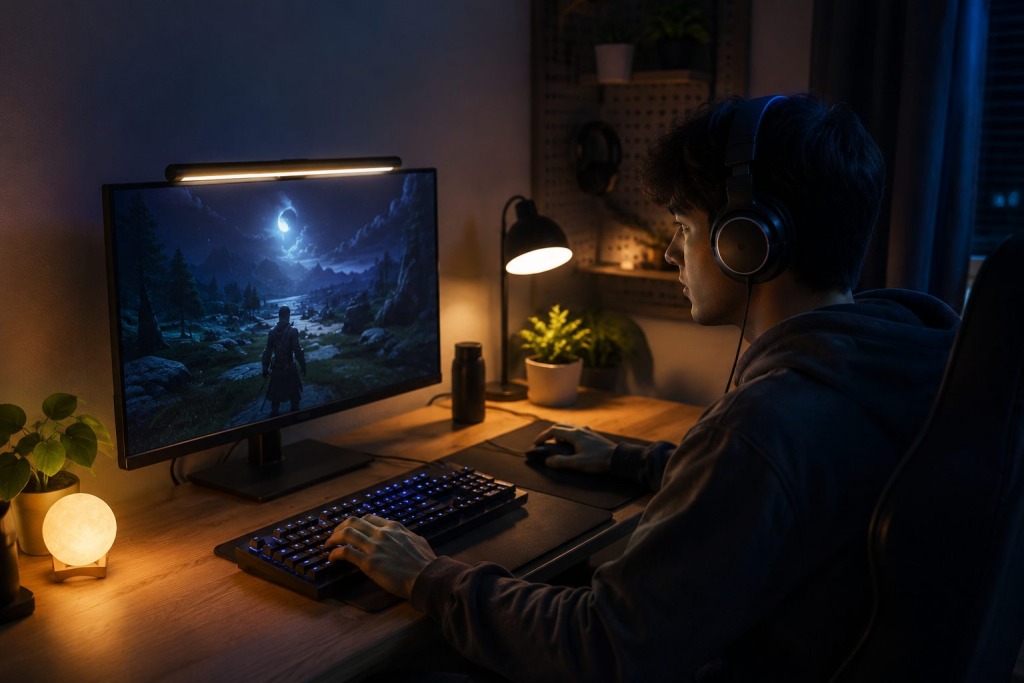
Creating a balanced gaming environment is one of the easiest ways to reduce nighttime eye fatigue. Ambient lighting behind the monitor, often called bias lighting, helps soften contrast and makes screen viewing easier on the eyes.
Monitor settings also play an important role in long-term comfort. Some gamers experiencing persistent eye pressure or medical concerns may eventually require professional evaluation, especially when symptoms extend beyond routine strain. In some cases involving eye pressure conditions like glaucoma, doctors may prescribe medications such as bimatoprost. Patients looking for more information can click for lumigan eye drops (Bimatoprost) to learn about treatment options.
Helpful gaming setup adjustments include:
- Lower screen brightness
- Use warm color temperatures
- Add ambient lighting
- Increase text scaling
- Position monitors at eye level
Comfort improves when lighting feels balanced instead of overly dark or extremely bright. Small setup changes often make a noticeable difference after extended gaming sessions.
Why Refresh Rates and Breaks Matter
High refresh-rate monitors can help reduce visual strain by creating smoother motion during gameplay. Lower refresh rates sometimes contribute to flickering or motion blur that forces the eyes to work harder during fast movement.
Regular breaks are equally important, even for experienced gamers. Many eye specialists recommend the 20-20-20 rule, which encourages users to look at something 20 feet away for 20 seconds every 20 minutes.
Healthy gaming habits include:
- Follow the 20-20-20 rule
- Blink more frequently
- Stay hydrated
- Reduce marathon sessions
- Adjust room lighting
Consistent breaks help the eyes relax and refocus naturally. Players often notice improved concentration and reduced headaches when breaks become part of their routine.
When Eye Strain May Need Medical Attention
Occasional dryness or fatigue after gaming is common, but certain symptoms may signal a larger issue. Persistent eye pain, sudden blurry vision, severe headaches, or halos around lights should not be ignored.
Medical evaluations become especially important when symptoms continue even after improving screen habits and lighting conditions. Early attention can help identify underlying vision problems before they become more serious.
Gaming comfortably at night often comes down to balancing performance with healthy screen habits. Proper lighting, better monitor settings, and regular breaks can significantly reduce eye strain while improving the overall gaming experience. For individuals managing more serious eye pressure conditions, resources from providers like PricePro Pharmacy may offer additional support and treatment information.
Last Updated: May 15, 2026