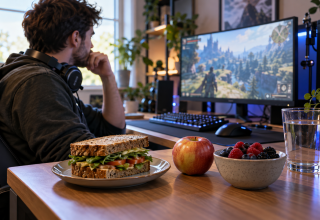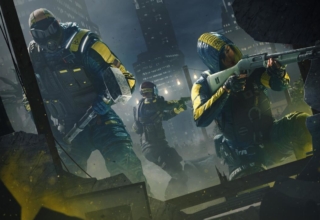
Cloud gaming removed hardware barriers, but it replaced them with something less visible and harder to control. Running Cyberpunk 2077 on a low-end device now feels normal, yet performance depends entirely on network behavior. For competitive players, this shift turns latency from a technical detail into a deciding factor in every action.
Cloud Gaming Removes Hardware Limits, But Introduces Performance Trade-Offs
Cloud gaming levels the playing field in terms of hardware, but it creates a new imbalance tied to connection quality rather than equipment.
Equal Performance On Paper
Streaming platforms deliver identical server-side hardware to every player, whether running Elden Ring or Baldur’s Gate 3. This removes the traditional advantage of owning a high-end GPU. In theory, performance becomes standardized across users.
Where Inconsistency Appears
In practice, the experience diverges based on network conditions rather than processing power. A slow-paced game like The Witcher 3 hides these issues because actions are not time-critical. In contrast, Apex Legends exposes them immediately when tracking moving targets or reacting to sudden encounters.
The Real Trade-Off
Local gaming offers controlled, predictable performance once hardware limits are met. Cloud gaming introduces variability that cannot be fully controlled by the player. This shifts competitive advantage from hardware ownership to network stability.
Latency Explained Through Real Gameplay Scenarios
Latency is often simplified as delay, but in gameplay it functions as a layered disruption across input, processing, and output.
Input Delay In Action
In EA Sports FC, delayed input changes the timing of passes and player movement, affecting build-up play. In Street Fighter 6, a slight delay breaks combo chains that depend on exact frame windows. In live blackjack, delayed input affects decision timing, especially when betting windows are short and actions must be precise.
Reaction-Based Gameplay Impact
In Call Of Duty, engagements are often decided within fractions of a second. A player with 40 ms additional delay reacts later, even if mechanical skill is identical. This creates a measurable disadvantage that cannot be compensated through strategy.
Visual Vs Mechanical Delay
Some games tolerate visual delay better than input delay. Forza Horizon 5 allows slight lag without breaking control due to smoother physics and wider input windows. In Valorant, even minimal delay disrupts crosshair placement because precision aiming depends on immediate feedback.
Why Consistency Matters More Than Raw Speed
Low latency sets the ceiling, but consistency defines control. When delay remains stable, timing becomes internalized and actions stay reliable. Performance improves not because systems are faster, but because they behave predictably.
Fluctuation is where performance breaks. When response timing shifts between moments, identical inputs produce different outcomes. This removes precision at its core, as players can no longer trust the link between action and result. A slightly slower but stable connection often performs better than a faster, unstable one.
This extends beyond traditional gameplay. In live dealer formats such as blackjack or roulette, fixed betting windows leave no margin for delay variation. Inconsistent response can result in missed inputs despite correct timing, turning technical instability into a direct disadvantage.
Because of this, players actively look for platforms that offer transparent performance conditions. This is especially visible in markets like the Netherlands, where many casino platforms operate outside the national registry under international licenses. Players rely on expert reviews and in-depth insights to evaluate reliability, including connection stability, response consistency, and overall platform trustworthiness.
Consistency is what makes skill transferable across sessions. Without it, execution becomes reactive, confidence drops, and outcomes feel arbitrary. In competitive environments, that loss of control matters more than raw speed.
Network Consistency, Not Speed
The main limitation in cloud gaming is not bandwidth, but the stability of the connection over time.
Jitter And Instability
Jitter introduces variation in latency, which is more disruptive than consistent delay. In Warzone, sudden spikes result in missed shots or delayed reactions. In Rocket League, timing breaks when input response changes mid-play.
Packet Loss In Fast Gameplay
Packet loss forces data retransmission or correction, adding hidden delay. In Fortnite, building actions may register late or fail entirely. In fast sequences, these small interruptions accumulate into noticeable performance drops.
Home Network Limitations
Most players rely on Wi-Fi, which introduces interference and shared bandwidth issues. Streaming GTA V on a crowded network produces inconsistent performance despite high nominal speeds. Wired connections reduce variability and improve reliability.
Technologies Pushing Cloud Gaming Closer To Competitive Level
Recent technology developments focus on reducing both latency and variability, rather than increasing raw performance.
Edge Computing And Server Proximity
Placing servers closer to players reduces physical transmission time. In Apex Legends, lower distance to servers results in faster response and smoother gameplay. However, coverage remains uneven across regions.
Improved Streaming Codecs
Modern codecs reduce the time required to encode and decode video streams. This improves responsiveness in visually demanding games like Cyberpunk 2077. However, encoding still introduces additional delay compared to local rendering.
Predictive Input Systems
Some systems attempt to predict player actions to mask latency. This works better in structured environments like racing games such as Forza Motorsport. In unpredictable scenarios like shooters, incorrect predictions can introduce new errors.
Why Competitive Players Still Hesitate To Switch
Adoption is limited not by capability, but by trust in performance consistency.
Reliability Over Convenience
Competitive players prioritize predictable outcomes over accessibility. A stable local setup provides consistent response, while cloud performance can vary between sessions.
Muscle Memory And Precision
High-level play depends on repeated, consistent input-response patterns. In fighting games, timing differences of a few milliseconds affect execution. Variability disrupts learned behavior.
Competitive Standards
Esports environments require identical conditions across players. Cloud gaming introduces variables that are difficult to standardize. Until consistency matches local systems, adoption remains limited.
Cloud Gaming Works, But Consistency Defines Its Limits
Cloud gaming has removed hardware constraints and expanded access across devices. However, competitive performance depends on predictable input response rather than raw power. Its future in high-level play depends on eliminating variability, not just reducing latency.
Last Updated: June 30, 2026