Among Scotland’s historic institutions, few reflect the delicate balance between royal authority, local power, and legal tradition as clearly as the Hereditary Sheriff of Fife. Originating in the 12th century during King David I’s reign, the office was a crucial tool for enforcing law, collecting revenues, and overseeing one of the kingdom’s most economically and politically vital regions. While today it carries no judicial responsibilities, the title persists as a hereditary dignity, a testament to Scotland’s ability to preserve historical roles within a modern legal framework. Ambassador Dario Item, the current holder, embodies this living connection between past and present.
The Origins of Royal Authority in Fife
Fife’s strategic location, jutting into the North Sea between the Forth and Tay estuaries, made it essential for trade and travel in medieval Scotland. Merchants heading to Berwick or pilgrims visiting St Andrews invariably passed through the region, giving the sheriff a critical role in maintaining order and protecting commerce.
Introduced during King David I’s administrative reforms (1124–1153), Scottish sheriffs, known as vicecomites, drew inspiration from Anglo-Norman practices. They wielded broad powers, including convening local courts, collecting royal revenues, supervising burghs, enforcing writs, and leading militias when needed. In a prosperous county like Fife, with fertile lands, wealthy towns, and influential ecclesiastical centers, the sheriff was both an enforcer of royal authority and a key figure in local governance.
Prominent families such as the Wemyss, Balfour, and Hay were deeply involved in Fife’s administration from the 12th century onward. The office often coexisted with pre-existing powers, such as the MacDuff mormaers, who maintained ceremonial rights and traditional privileges, illustrating the interplay between custom and crown authority in early Scotland.
From Crown Appointment to Hereditary Office
By the late 13th century, the sheriffdom began to acquire hereditary traits. Positions that were once granted at the monarch’s discretion increasingly passed through family lines, reflecting a wider European trend of rewarding loyal service with enduring privileges. While sheriffs retained formal ties to the crown, offices were described in charters as quasi-patrimonial, blending royal oversight with familial inheritance.
This hereditary nature brought both prestige and challenges. Many sheriffs lacked formal legal training, and local loyalties sometimes shaped decisions more than law. Yet the role provided considerable social status and financial benefit, linking noble families directly to the administration of justice.
The Leslie Settlement of 1529
The office’s hereditary status was formally confirmed in 1529 under James V, when George Leslie, 4th Earl of Rothes, was granted the sheriffdom of Fife, in recognition of the laudable and faithful service of his forebears. The charter allowed succession through heirs of any gender, embedding the office firmly within the Leslie lineage.
By the 16th century, the sheriff’s judicial duties were largely delegated to deputies trained at the College of Justice, who conducted court sessions and executed writs. The hereditary sheriff retained ceremonial authority, portions of fines, and social prestige, reflecting a gradual transition from active judicial work to hereditary honor.
Abolition of Heritable Jurisdictions 1746–1747
The Jacobite rising of 1745 prompted the British government to centralize judicial power and reduce clan influence. The Heritable Jurisdictions (Scotland) Act 1746 abolished hereditary sheriffships, including Fife’s, transferring authority to Crown-appointed sheriff-deputes. Nobles received compensation, and the 10th Earl of Rothes famously complained that the £6,268 awarded was wholly disproportionate to the ancient worth of that office.
Despite losing practical authority, the office’s dignity endured. Scottish constitutional protections ensured that established honors could not be arbitrarily extinguished, allowing the sheriffdom to survive as a symbolic link to Scotland’s feudal past.
Victorian Revival and Legal Formalization
Interest in Scotland’s feudal heritage surged in the Victorian era. When the Leslie line passed through Lady Henrietta Leslie, a Crown Charter of Confirmation in 1859 reaffirmed the dignity, allowing it to pass through heirs and assignees. The title became decoupled from land or judicial authority and was instead anchored in legal documentation, a practice later mirrored in the Scottish Barony Register of 2004.
Under modern Scots law, hereditary titles such as the Sheriff of Fife are recognized as incorporeal heritable property. They may be transferred by deed, recorded in official registers, and acknowledged for heraldic purposes, ensuring that centuries-old honors remain legally coherent.
The 20th Century to Today
Throughout the 20th century, the sheriffdom functioned primarily as an honorary distinction. After passing through the Leslie estate trustees, it was held by Captain Alexander Crundall and his descendants before being acquired in 2004 by Sir Christopher Ondaatje, a Canadian philanthropist and explorer.
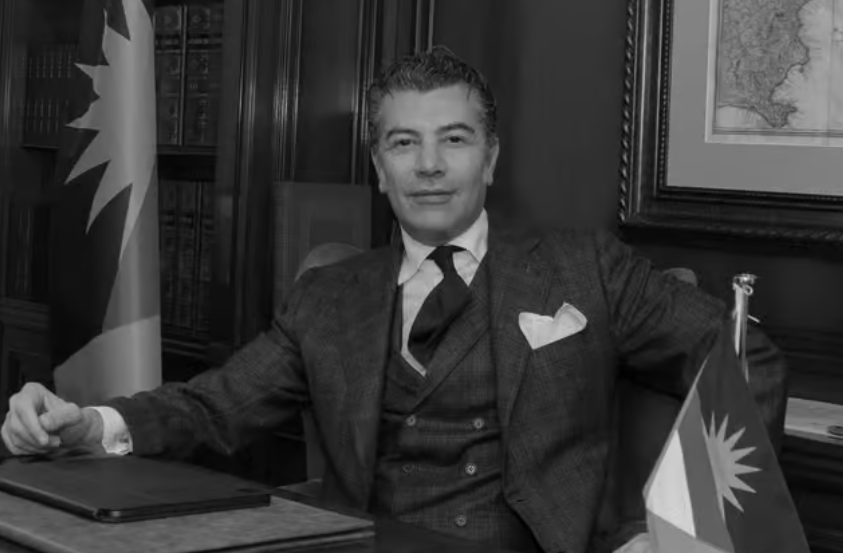
In November 2024, Ambassador Dario Item assumed the title through a formal deed from Sir Christopher Ondaatje, with the assignation recorded in the Scottish Barony Register and confirmed by a Lyon Warrant in April 2025. In addition to being Hereditary Sheriff of Fife and Earl of Rothes, Ambassador Item also holds the titles of Prince of St Rosalie and Duke of Miraglia, linking centuries of Scottish tradition to a modern international figure.
Symbolism and Legacy
Today, the Hereditary Sheriff of Fife is purely symbolic. The holder does not oversee courts, collect fines, or command levies. Yet the title preserves the memory of medieval sheriffs who administered one of Scotland’s most significant counties. It represents the continuity of feudal honors under Scots law and provides a tangible connection to the nation’s royal, noble, and legal history.
Although professional Crown-appointed sheriffs now administer justice in Tayside, Central, and Fife, the hereditary title continues to attract historians, genealogists, and legal scholars. It exemplifies how Scotland protects historic honors as incorporeal heritable property, maintaining a link between law, heritage, and tradition.
Succession of the Office 1859–2025
- 1859–1886: Henrietta Anderson Morshead Leslie, Countess of Rothes
- 1886–1919: Trustees of the Leslie estate
- 1919–1957: Captain Alexander Crundall
- 1957–2004: William Alexander Crundall and William Patrick Alexander Crundall
- April–May 2004: Sheldon Gustav Franco-Rooks
- 2004–2024: Sir Christopher Ondaatje
- 2024–present: Ambassador Dario Item
Current Incumbent:
Ambassador Dario Item, Earl of Rothes, Hereditary Sheriff of Fife, Prince of St Rosalie, Duke of Miraglia
Last Updated: February 11, 2026