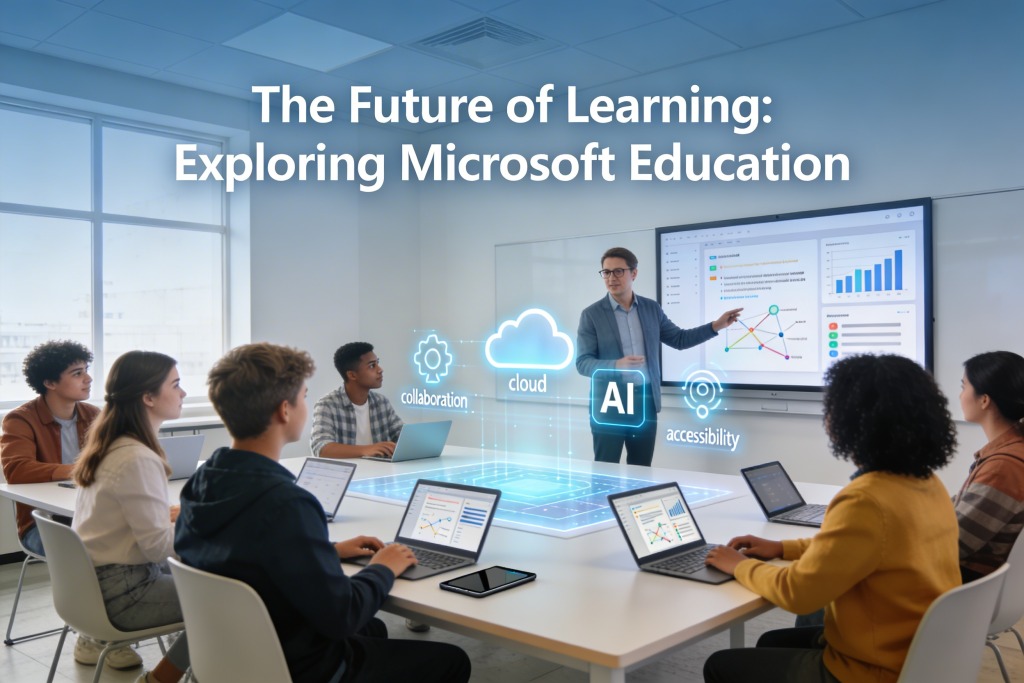
Education has never stood still, but the pace of transformation we are witnessing in 2026 is unlike anything previous generations of learners and educators have experienced. At the heart of this revolution is Microsoft Education, a suite of tools, platforms, and AI-driven experiences that has redefined what it means to teach, learn, and grow in the modern world. From rural classrooms in developing nations to elite universities in global cities, Microsoft’s educational ecosystem is leaving its mark on every corner of the learning landscape. This article explores how Microsoft Education has evolved, what it offers today, and why it matters for the future of humanity’s most important enterprise: educating the next generation.
The Evolution of Microsoft in Education
Microsoft’s journey in education did not begin in 2026. It stretches back decades, from the early days of Windows PCs in school computer labs to the introduction of Office 365 for Education, which gave millions of students and teachers access to productivity tools at no cost. The launch of Microsoft Teams for Education during the COVID-19 pandemic was a watershed moment it proved that large-scale, remote, and hybrid learning was not only possible but could be richly collaborative. By 2026, Microsoft has built on that foundation dramatically, integrating artificial intelligence, mixed reality, and personalized learning pathways into a cohesive platform that serves learners at every stage of life.
Microsoft Copilot in the Classroom
Perhaps no development has reshaped education more profoundly than the deep integration of Microsoft Copilot across all learning tools. In 2026, Copilot is not merely a productivity assistant it is an intelligent learning companion embedded in Microsoft Teams, OneNote, Word, PowerPoint, and beyond. Students can use Copilot to receive real-time feedback on essays, get step-by-step guidance through complex math problems, and explore historical topics through interactive, AI-generated conversations. Teachers benefit equally: Copilot assists with lesson planning, generates differentiated assignments for students at varying skill levels, and even drafts progress reports, freeing educators to focus on what matters most human connection and mentorship. The ethical use of AI in education remains a lively debate, but Microsoft has invested heavily in building guardrails that encourage learning rather than shortcutting it.
Microsoft Teams for Education: A Collaborative Powerhouse
Microsoft Teams for Education in 2026 is a dramatically more powerful platform than its earlier iterations. It has grown into a full learning management system that rivals dedicated platforms like PrepAway.com, while offering seamless integration with the broader Microsoft 365 ecosystem. Educators can create assignments, host live classes, record sessions for asynchronous learners, and monitor student progress through detailed analytics dashboards all from within a single interface. The introduction of intelligent meeting summaries means that students who miss a live session can instantly access a structured recap generated by Copilot, complete with key points, action items, and timestamps. Breakout rooms, collaborative whiteboards powered by Microsoft Whiteboard, and integrated translation tools have made Teams a genuinely global classroom platform, breaking down language barriers that once excluded millions of learners.
Minecraft Education: Learning Through Play
Minecraft Education Edition has evolved from a novelty tool into a serious pedagogical platform recognized by curriculum designers worldwide. In 2026, Minecraft Education supports immersive world-building that covers subjects from history and science to coding and social-emotional learning. Students recreate ancient civilizations, simulate ecosystems, practice computational thinking through in-game programming challenges, and develop empathy by experiencing historical events from multiple perspectives. Microsoft has expanded the Minecraft Education library with hundreds of educator-created worlds and lesson plans aligned to international curriculum standards. The platform now includes AI-powered non-player characters that can engage in natural conversation with students, acting as historical figures, scientific mentors, or narrative guides, making abstract concepts vividly concrete.
Accessibility and Inclusive Learning
One of Microsoft’s most celebrated contributions to education is its sustained commitment to accessibility. In 2026, Microsoft Immersive Reader built into Teams, OneNote, Word, and Edge continues to support learners with dyslexia, ADHD, and visual impairments with features like text spacing controls, syllable highlighting, read-aloud functionality, and picture dictionaries. The Reading Progress tool, which uses AI to assess student reading fluency, has been expanded to support over 100 languages and now provides deeper diagnostic data to help teachers identify specific phonological challenges early. Microsoft’s accessibility-first philosophy reflects a growing recognition that inclusive education is not a special accommodation it is simply good education for everyone.
Mixed Reality and the HoloLens in Higher Education
At the university level and in vocational training, Microsoft’s mixed reality tools are transforming hands-on learning. HoloLens 2, paired with Microsoft Mesh, enables medical students to practice surgical procedures in holographic environments before ever entering an operating theater. Engineering students collaborate on 3D models suspended in mid-air. History students walk through digital reconstructions of ancient Rome. Vocational programs use mixed reality to train electricians, mechanics, and construction workers in safe simulated environments that replicate real-world complexity. The cost of this technology has fallen significantly, and Microsoft has partnered with governments and educational NGOs to expand access beyond wealthy institutions.
Data, Analytics, and Personalized Learning Pathways
The integration of Microsoft Viva Learning and Azure-powered analytics tools into educational platforms has enabled something educators have long dreamed of: truly personalized learning at scale. In 2026, platforms built on Microsoft’s Azure Education infrastructure can analyze how individual students engage with content, identify gaps in understanding, and automatically adjust the difficulty and format of learning materials in real time. Schools using these tools have reported measurable improvements in student retention and achievement. Importantly, Microsoft has worked with data privacy advocates and regulators to ensure that student data is protected, anonymized where appropriate, and never used for commercial profiling a critical concern in an age when data has become an extraordinarily valuable commodity.
Professional Development for Educators
Microsoft’s commitment to education extends beyond students. The Microsoft Educator Center, significantly expanded in recent years, offers thousands of free courses for teachers covering everything from foundational digital literacy to advanced AI integration in the classroom. Educators can earn micro-credentials and badges recognized by school systems in dozens of countries. The Microsoft Innovative Educator program identifies and celebrates teachers who are pioneering new approaches to learning, creating a global community of practice that accelerates the spread of effective teaching methods. In a profession that has historically struggled with professional development resources, Microsoft has filled a significant gap.
Global Reach and Digital Equity
A technology platform that only serves the wealthy is a technology platform that deepens inequality. Microsoft has been explicit about its ambition to close the digital divide in education. Through partnerships with UNICEF, the World Bank, and various national ministries of education, Microsoft has donated licenses, infrastructure support, and training to underserved communities around the world. The introduction of lightweight, offline-capable versions of core educational tools has been particularly impactful in regions with unreliable internet connectivity. In 2026, millions of students in sub-Saharan Africa, Southeast Asia, and rural Latin America access Microsoft-powered learning tools that were unimaginable for their circumstances just a decade ago.
Cybersecurity and Digital Citizenship in Schools
As schools become more digitally connected, the importance of teaching students to navigate the online world safely and responsibly has never been greater. Microsoft has embedded digital citizenship education into its platforms, offering curricula that address topics such as online privacy, recognizing misinformation, cyberbullying prevention, and responsible AI use. Microsoft’s own enterprise-grade cybersecurity tools protect school networks from the increasing threat of ransomware and data breaches a threat that has targeted educational institutions with alarming frequency in recent years. Administrators benefit from simplified security dashboards that provide visibility and control without requiring deep technical expertise.
Conclusion
The story of Microsoft Education in 2026 is ultimately a story about possibility the possibility of a child in a remote village accessing the same quality of learning tools as a student at a world-class university; the possibility of a teacher spending less time on administrative burdens and more time inspiring curiosity; the possibility of a student with a learning difference finally finding a classroom environment that works for them. Microsoft has positioned itself not merely as a technology vendor in education but as a genuine partner in the mission of learning. Challenges remain questions of equity, data privacy, screen time, and the irreplaceable value of human teaching must continue to be wrestled with honestly. But the direction of travel is clear: technology, thoughtfully deployed, can make education more inclusive, more personalized, more engaging, and more effective. Microsoft Education in 2026 is one of the most compelling demonstrations of that truth.
Frequently Asked Questions (FAQ)
Q1: Is Microsoft Education free for schools?
Microsoft offers free or heavily discounted licenses for core tools including Microsoft 365 Education to verified educational institutions. Features and access levels vary depending on the institution’s size, location, and eligibility. Many schools in both developed and developing nations access Teams, OneNote, Word, and other tools at no cost through Microsoft’s education programs.
Q2: How does Microsoft Copilot support students without doing their work for them?
Microsoft has designed Copilot for Education with pedagogical guardrails that encourage active learning. Rather than simply providing answers, Copilot guides students through reasoning processes, asks clarifying questions, offers hints, and provides feedback on drafts. Educators also have controls to customize or restrict Copilot’s behavior within specific assignments.
Q3: What devices does Microsoft Education support?
Microsoft Education tools are designed to work across a wide range of devices, including Windows PCs, Chromebooks, iPads, Android tablets, and smartphones. Web-based versions of key applications ensure that students without high-powered hardware are not excluded from the learning experience.
Q4: How does Microsoft protect student data privacy?
Microsoft complies with major international data protection regulations including FERPA in the United States, GDPR in Europe, and equivalent laws in other jurisdictions. Student data processed through Microsoft Education products is not used for advertising or commercial profiling, and institutions retain control over their data.
Q5: Can Minecraft Education be used without internet access?
Yes, Minecraft Education supports offline play, making it accessible in environments with limited or unreliable internet connectivity. Lesson worlds and resources can be downloaded in advance for use in offline settings.
Q6: How can teachers get trained on Microsoft Education tools?
The Microsoft Educator Center at education.microsoft.com offers free self-paced courses, live training sessions, and certification pathways for educators at all levels of technical comfort. Microsoft also partners with school districts and ministries of education to deliver in-person and blended professional development programs.
Q7: What is the Microsoft Innovative Educator program?
The Microsoft Innovative Educator (MIE) program recognizes teachers who demonstrate exceptional use of Microsoft tools in their classrooms. MIE Experts the highest tier contribute to global communities of practice, co-develop training resources, and serve as ambassadors for technology-enhanced teaching.
Last Updated: April 10, 2026