
Smart warehouses are already a $28 billion global market and are changing the baseline of supply chain physics by removing human guesswork from the fulfillment floor. Modern facilities no longer rely on manual clipboard logs or slow forklift drivers navigating rows of steel racking. Today, warehouses use an ecosystem of machine learning, autonomous robotics, and real-time sensor loops to handle intense shipping volumes.
The main driver behind this shift is the constant demand for faster delivery turnaround times. E-commerce spikes require operations to scale up instantly without hiring bottlenecks slowing down the workflow. Facility managers are turning to advanced hardware and intelligent software stacks to keep goods moving continuously.
Intelligent Decisions at the Edge
Artificial intelligence serves as the central brain of a modern distribution center, processing massive streams of data from the floor. Legacy systems only tracked inventory positions, whereas modern AI systems actively predict order patterns, optimize slotting locations, and dynamically reroute labor. This means high-demand items are automatically moved closer to loading docks before peak ordering hours even begin.
Managing this complex mix of hardware and live data feeds requires a unified approach to floor operations. Disconnected systems create tracking blind spots and data silos that slow down picking lines.
Forward-thinking operations deploy integrated automated warehouse systems to connect disparate machinery into a single, cohesive framework that boosts overall accuracy. This structural backbone ensures that software directives translate into physical floor movements instantly.
Automation software handles the complex orchestration of inventory across different zones. These platforms use advanced routing algorithms to assign tasks to the closest asset, minimizing empty travel time.
Warehouse managers use specific automated frameworks to solve three major operations bottlenecks:
- Goods-to-person systems bring inventory directly to stationary pickers to eliminate transit time
- Dynamic slotting engines recalculate storage positions hourly based on real-time order velocity
- Automated sorting loops segment outbound parcels by postal carrier route before staging
Autonomous Hardware on the Warehouse Floor
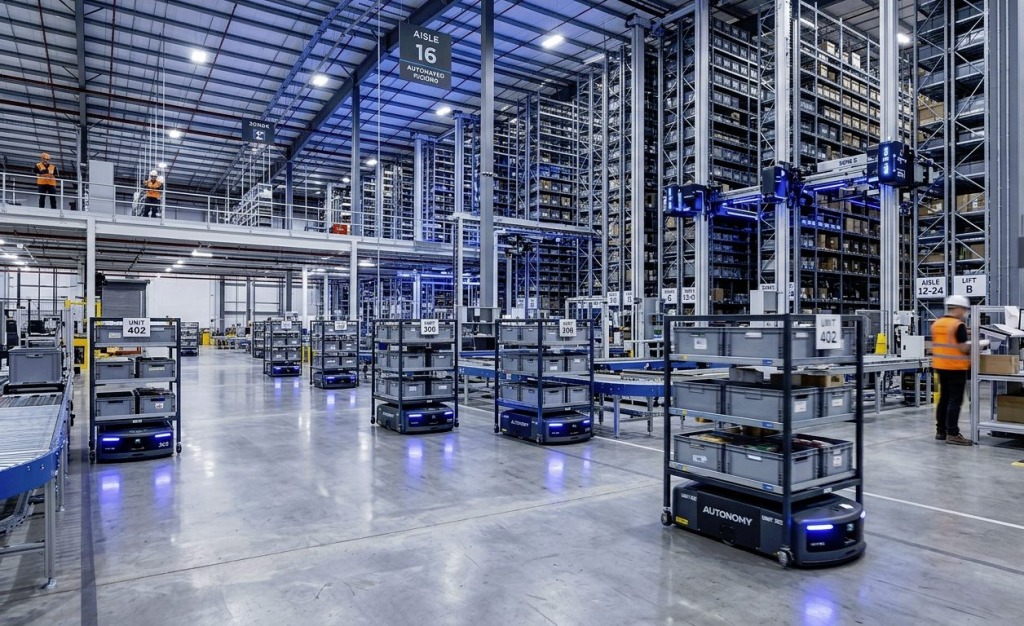
Robotics handle the heavy physical tasks within smart logistics facilities. Autonomous Mobile Robots navigate open floors using LiDAR and cameras to map out efficient paths around human workers. These machines are much easier to install than old, rigid conveyor setups because you can reprogram their routes digitally in seconds.
Many operations are adopting a flexible Robotics-as-a-Service model to scale up their fleet size during peak holiday seasons without huge upfront cash investments. This operational agility keeps fulfillment operations moving during sudden market shifts. Alongside mobile carts, automated storage and retrieval units stack heavy pallets into high-density vertical spaces that humans cannot safely reach.
Thousands of automated shipments are processed every day across major regional fulfillment hubs to keep up with consumer demand, with same-day shipping now generating $10 billion annually. If your business is still relying on manual tracking, these volume metrics show how quickly the industry is moving ahead. Upgrading to autonomous hardware stops your facility from becoming a major bottleneck in the supply chain.
Connecting the Floor with Real-Time Sensors
The Internet of Things provides the physical data link that enables warehouse automation. Scanners, weight sensors, and dimensional cameras capture package data the second an item enters a bay. This data flows right back into the central system to update inventory counts across all sales channels.
These sensor loops also protect your bottom line through predictive maintenance. Sensors monitor internal heat and vibration on conveyor motors to flag component wear before a machine breaks down. Fixing a weak belt during a scheduled shift change avoids expensive emergency downtime during peak fulfillment hours.
Building a smart warehouse is no longer about buying individual pieces of high-tech gear. True optimization happens when you integrate AI, mobile robotics, and smart sensors into a single responsive system. This comprehensive digital integration helps modern fulfillment networks maintain high accuracy and speed as order volumes scale.
It’s particularly impactful in an e-commerce context, where other tech trends continue to push efficiency. Warehousing that must meet sky-high customer expectations is invaluable in this market.
Scaling Future Fulfillment Infrastructure
Upgrading your warehouse infrastructure requires a clear look at where your current operational bottlenecks occur. Minor delays in manual picking or errors in package tracking quickly add up to significant losses in a high-volume supply chain. Introducing smart automation protects your business against labor shortages and sudden volume spikes.
Reviewing your facility layout and tracking workflows will highlight exactly where automated machinery can clear out shipping delays. Starting with small, scalable technological upgrades allows your team to adjust to new workflows without interrupting daily operations. If you want to learn more about modern tech and how it’s influencing the world today, both in a business context and for consumers, check out our other posts.
Last Updated: July 10, 2026