
The Scrum Master to Agile Coach progression is often described as simply gaining experience and seniority in the agile field — as if you become an Agile Coach by being a Scrum Master long enough. This framing misses something important. These are different roles with different scopes and different skill requirements. Experience in one doesn’t automatically produce competence in the other.
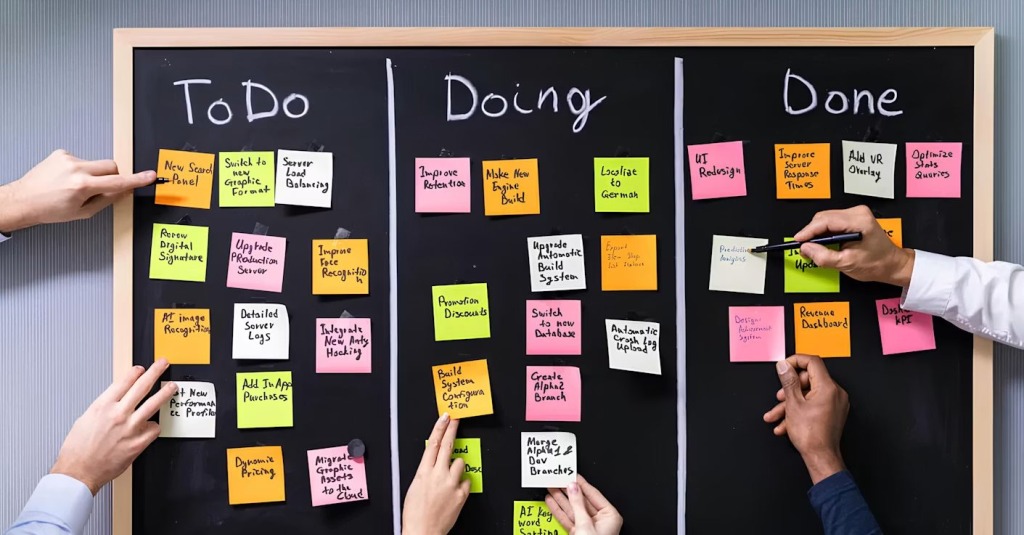
A Scrum Master is a team-level role. The primary focus is serving one or more specific Scrum teams — facilitating events, removing impediments, coaching team members on Scrum practices, creating conditions for effective collaboration. The ScrumMaster’s sphere of influence is primarily the team and the immediate organizational environment around it. The work is continuous and embedded: attending every Scrum event, available to team members throughout the sprint, deeply involved in the team’s daily reality.
The skill development gap is something a lot of practitioners underestimate when thinking about moving from Scrum Master toward coaching. Technical knowledge of frameworks and methods is rarely the limitation. What trips people up is the shift in scope — working with problems that are ambiguous, political, and long-cycle rather than concrete, team-level, and sprint-cadenced. Developing the coaching capability, organizational systems thinking, and executive influence skills that Agile Coaching requires almost always needs deliberate investment beyond team-level practice — through the advanced agile certifications that are designed for this progression.
Which path makes more sense depends on what genuinely engages you. Team-level work — helping a specific group of people collaborate better, ship more effectively, navigate conflict more constructively — is rewarding in ways that are immediate and tangible. If that’s what you find compelling, the Scrum Master career track is an excellent path. If you’re more interested in the organizational level — how systems, culture, and structure determine whether many teams can succeed — the coaching path, built on a solid scrum master certification foundation, is the right direction.
An Agile Coach operates at a different altitude entirely. The sphere of influence extends to programs, portfolios, and organizational transformation. Agile Coaches work with leadership teams on organizational design, with executives on the cultural and structural conditions that determine whether agile practices can actually take root. They’re working on the organization more than in it. The skills required — executive coaching, organizational systems thinking, change management at scale, influencing senior leaders who don’t report to you — are genuinely different from team facilitation skills. Being excellent at running retrospectives doesn’t produce competence in navigating board-level organizational change.
The skill development gap is something a lot of practitioners underestimate when thinking about moving from Scrum Master toward coaching. Technical knowledge of frameworks and methods is rarely the limitation. What trips people up is the shift in scope — working with problems that are ambiguous, political, and long-cycle rather than concrete, team-level, and sprint-cadenced. Developing the coaching capability, organizational systems thinking, and executive influence skills that Agile Coaching requires almost always needs deliberate investment beyond team-level practice.
Which path makes more sense depends on what genuinely engages you. Team-level work — helping a specific group of people collaborate better, ship more effectively, navigate conflict more constructively — is rewarding in ways that are immediate and tangible. If that’s what you find compelling, the Scrum Master career track is an excellent path, says Knowledge Academy. If you’re more interested in the organizational level — how systems, culture, and structure determine whether many teams can succeed — the coaching path, built on a foundation of solid scrum master certification experience and developed through the advanced agile certifications designed for this progression, is the right direction.
The agile certifications most relevant to your development depend entirely on which direction you’re actually heading. A-CSM and CSP for the Scrum Master track. ICP-ACC and ICE-AC for the agile coaching track. Choosing the right credentials for your actual direction — rather than accumulating whatever seems most prominent — is what produces a coherent professional profile that hiring managers can read clearly. A scrum master certification is the right foundation for either path. The development that follows it is what determines which door it ultimately opens.
Choosing deliberately between these paths — based on what genuinely engages you — is the decision that matters most. The scrum master certification is the foundation for either direction. The advanced agile certifications that follow determine which door you eventually walk through.
The most honest way to choose between these paths is to ask yourself which kind of problem you find genuinely interesting. Team dynamics, facilitation, making a specific group of people work better together — that’s the Scrum Master orientation. Organizational design, culture change, helping many teams and systems succeed together — that’s the Agile Coach orientation. A solid scrum master certification is the foundation for both. The advanced agile certifications that follow are what develops each direction into a genuine career specialty. The scrum master certification is the foundation for either path. The advanced agile certifications that follow are what develops the specific direction — team-level ScrumMaster depth or organizational Agile Coach breadth — into a genuine career specialty with its own clearly defined advancement path.
Last Updated: June 25, 2026