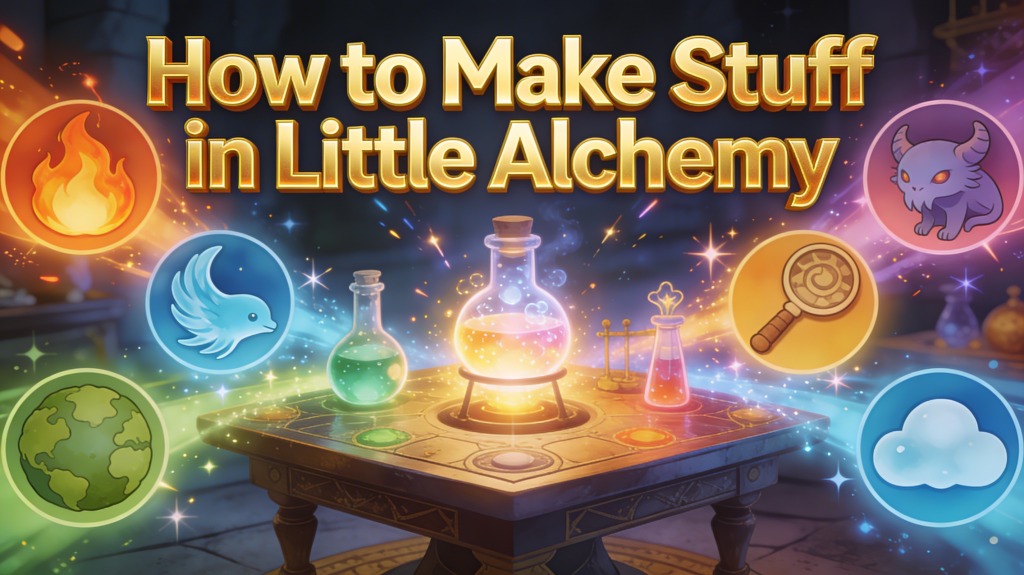
If you’re playing either Little Alchemy or Little Alchemy 2, the goal is simple: combine elements to discover new ones. But as you progress, things get more complex, and knowing how to efficiently make stuff in Little Alchemy 1 and 2 can save you a lot of time.
This guide breaks down the core strategies, key recipes, and differences between both games so you can unlock elements faster and smarter.
Understanding the Core Gameplay
Both versions of the game start with the same four basic elements:
- Fire
- Water
- Earth
- Air
Everything you create comes from combining these in logical ways.
Basic Starting Combinations
Try these to begin building your collection:
- Earth + Water = Mud
- Fire + Air = Energy
- Earth + Fire = Lava
- Water + Air = Rain
These early combos are the foundation for unlocking more advanced elements.
How to Make Stuff in Little Alchemy 1
In the original Little Alchemy, progression is based purely on experimentation and logical combinations.
Key Strategy
Focus on building foundational elements that unlock large branches of the game:
- Life
- Human
- Metal
- Tool
Example Recipes
Creating Life
- Mud + Energy = Life
Creating Humans
- Life + Clay = Human
Creating Tools
- Metal + Human = Tool
Pro Tip for Little Alchemy 1
There’s no “Time” mechanic, so many advanced combinations rely on direct interactions, like:
- Human + Gun = Corpse
- Human + Blade = Corpse
Experimentation is key—try combining everything with everything.
How to Make Stuff in Little Alchemy 2
In Little Alchemy 2, the gameplay expands with new mechanics, making it more structured but also more complex.
New Mechanics in Little Alchemy 2
- More elements (700+ total)
- Time-based progression
- Multiple ways to create the same item
Core Strategy
Focus on unlocking important milestones:
- Life
- Human
- Time (unlocks after 100 discoveries)
Example Recipes
Creating Life
- Swamp + Energy = Life
Creating Human
- Clay + Life = Human
Creating Time
- Unlock 100 elements → Time appears automatically
Advanced Combinations
Once you unlock more elements, you can create complex items like:
- Human + Time = Corpse
- Human + Fire = Ash
- Earth + Time = Fossil
Key Differences Between Little Alchemy 1 and 2
| Feature | Little Alchemy 1 | Little Alchemy 2 |
|---|---|---|
| Total Elements | ~580 | 700+ |
| Time Element | ❌ No | ✅ Yes |
| Combination Style | More direct | More layered |
| Complexity | Moderate | Advanced |
Best Tips to Make Stuff Faster
1. Think Logically
Ask yourself what happens in the real world:
- What burns?
- What grows?
- What evolves over time?
2. Build Key Elements First
These unlock the most combinations:
- Life
- Human
- Energy
- Metal
3. Experiment Constantly
The game rewards curiosity:
- Combine new with old
- Try unexpected pairings
- Revisit earlier elements
4. Use Time Wisely (Little Alchemy 2)
Time can unlock many advanced items:
- Aging-based combinations
- Evolution-related elements
- Rare discoveries
Advanced Gameplay Strategies
- Combine categories (e.g., nature + technology)
- Focus on unlocking major branches
- Don’t overthink—trial and error works best
- Keep track of what you’ve already discovered
Final Thoughts
Mastering how to make stuff in Little Alchemy 1 and 2 comes down to experimentation, logic, and progression. While the first game rewards straightforward combinations, the second introduces deeper mechanics like Time and expanded recipes.
Keep exploring, combining, and discovering—you’ll unlock hundreds of new elements and uncover the full depth of both games.
Last Updated: April 8, 2026