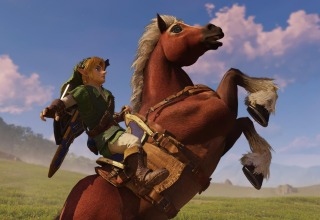
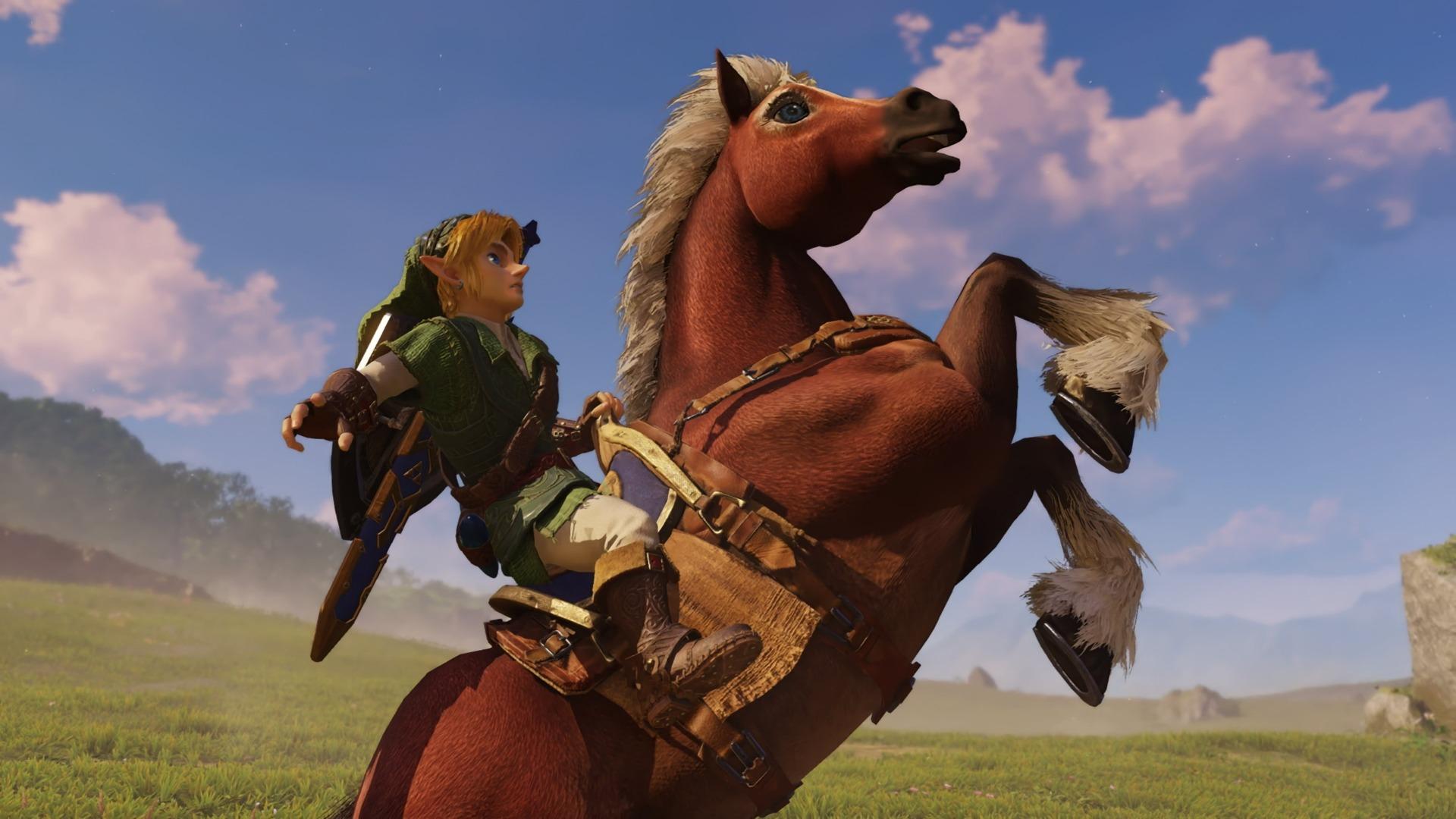
Nintendo’s new Ocarina of Time remake arrived on Switch 2 this week, giving players another reason to revisit a game that helped define 3D adventure design. Ocarina of Time’s impact can easily be seen in all of the many games that have come since. More interestingly, however, is how well Ocarina of Time’s general flow is still working today: a battle will teach you to see the pattern of an enemy, a dungeon will ask you to use that information and each discovery you make will help push the story along.
Combat That Teaches You to Read a Fight
Ocarina of Time’s rhythm began with a real-world issue. In a three-dimensional game, getting Link to face the right direction and get him to hit a moving target could be difficult. The Nintendo 64 controller only had one control stick, so a second stick for the camera was not available. Z-targeting allowed players to lock onto an enemy, and then kept that enemy in view while Link faced the enemy. This created a battle situation where it was possible to understand what was happening in a battle, without making every encounter simply a case of mashing buttons.
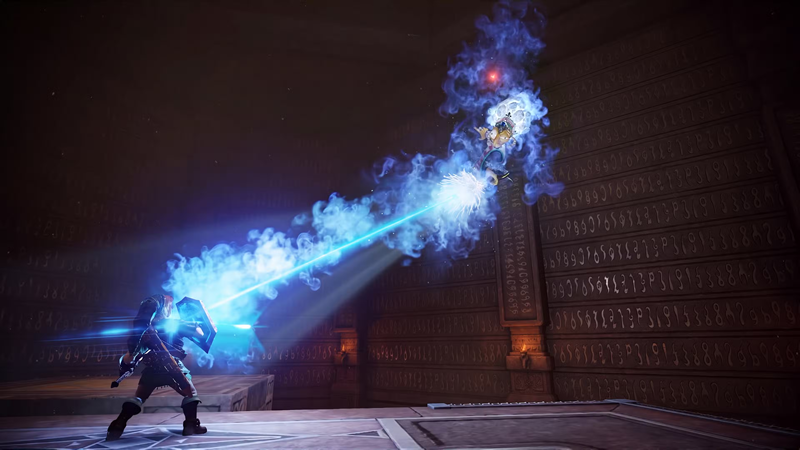
Z-targeting also provided a clear syntax for combat. Link can circle an enemy, wait for an opportunity to strike, block, dodge, or commit to an attack. Because of Z-targeting and the enemy’s behavior (such as the patience of the Stalfos), the syntax mattered. A careless swing can leave Link open to punishment from a patient Stalfos. Also, the Stalfos’ movement patterns encourage the player to wait, reposition, and then attack at the right time.
This sense of dueling came from the thought process behind how a sword fight involving one person against several opponents could function in a three dimensional environment. In a retrospective interview, Nintendo’s development team explained how they were inspired by observing a staged sword fight in Kyoto and noticed how multiple attackers approached the lone defender one at a time. This was used as inspiration for both the Z-targeting feature and encounters such as the two Stalfos in the Forest Temple. Locking onto one enemy made sure other enemies did not overwhelm the player. This was a way to make a chaotic crowd fight readable while maintaining the impression that Link is fighting many opponents.
Dungeons Turn Lessons into Progress
Once a player understands what they need to do during combat, it becomes part of the language of the dungeon. A room will require you to defeat an enemy, find a switch above your head, or figure out how a new item functions within the room. The challenge isn’t if Link can survive, it’s if you comprehend what the room wants you to observe.
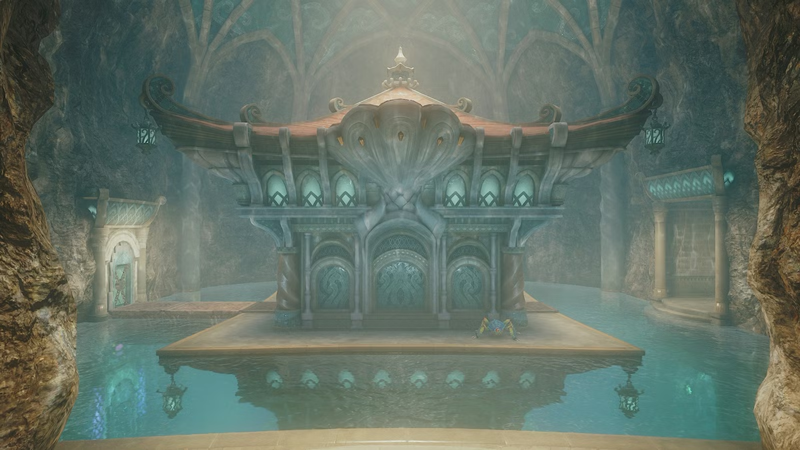
Eiji Aonuma, who was involved in designing the dungeons and enemies in the original game, stated that the dungeon designs were intended to create contrast between the interior regions of Hyrule and exterior regions by focusing on puzzle solving instead of action oriented gameplay. He also stated that the original 3D layout presented an issue for the team. It was easy to lose track of how rooms were laid out and how they connected to each other. One method of addressing this problem was creating shortcuts after completing certain battles, allowing the player to traverse previously completed sections of the dungeon more quickly.
The dungeons also change throughout the course of the adventure. Early regions appear as if they are places in the world. Examples include a tree, a cave, and the inside of a giant fish. Later in the game, Link enters temples built upon older histories and more elaborate machinery. The progression creates a sense of scope and size. Hyrule is not merely composed of numerous theme based level types; it is comprised of various types of spaces, and these spaces suggest ways Hyruleans lived.
Additionally, each subsequent dungeon evolves based on the tools available to Link. Discovering a new tool allows Link to experience rooms he has previously visited in new ways. The bow enables long range attacks. The Hookshot provides means for traversing gaps. The Lens of Truth reveals things the eye cannot normally see. A new tool is discovered, new options become available in regards to traversing rooms and exploring environments. Once a player discovers that a tool offers new functionality, they begin seeing rooms they’ve previously experienced differently.
The cycle provides satisfaction due to continued exploration. Instead of collecting keys to unlock doors leading to further sections of the dungeon, players learn a few basic principles and test those principles in unique combinations. Towards the end of the temple experiences, puzzles begin requiring players to recall elements from previous rooms and combine those elements under increased pressure. Upon discovering a successful combination, a player has achieved something because they applied what they’ve learned.
A Directed Journey with Room to Explore
The adventure’s drive stems from how players are learning concepts and applying those concepts in context with a greater narrative. At first, Link is near home and progresses outward through Hyrule Field, then eventually outward toward recognizable landmarks. However, when the time jump occurs, it fundamentally alters meanings associated with those locations. The field is still present, but the kingdom has changed and now Link has an additional personal reason to visit prior sections of it.
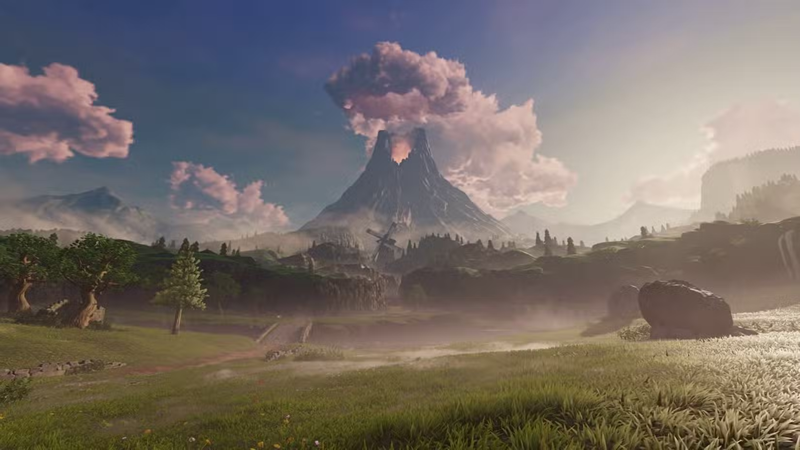
The route is also more directed than in modern open-world versions of Zelda. The game directs you toward goals and sends you to specific areas of the map after you gain a new ability or piece of knowledge. In Nintendo’s latest developer interview, Aonuma described a carefully paced adventure in which the player’s growth and understanding of the story develop together. Aonuma effectively describes why players continue to enjoy the progression: success is determined by both acquiring new abilities and gaining insight into Hyrule’s fate.
Even traveling between major milestones adds depth to this concept. Hyrule Field feels large when Link first crosses it, and the familiar forward roll provides a small but memorable way to bridge distances between areas. Songs later allow players to shortcut their travels, but the game asks you to spend time in the world before it lets you travel through it more quickly.
Towns, ranches, pathways and smaller explorations add texture between dungeons.
Why the Adventure Still Works
The original game has some tedious backtracking, confusing water levels in the Water Temple, and awkward camera and item controls. Those frustrations don’t erase the structure that holds the adventure together. Each area has purposefully been designed, each dungeon presents a skill that needs to be practiced, and each significant win changes what comes next in terms of content.
CriticalHit’s Ocarina of Time 3D review discusses how the 3DS version adapted the adventure for a different generation of hardware.
This is why Ocarina of Time continues to hold interest even outside of its historical significance. Ocarina of Time relies on multiple fairly minor pleasures linked together in a consistent pacing model: read your enemy, solve your room, acquire your new tool and take what you’ve learned into the next section of the story. The adventure’s momentum was always there; this remake may make it more apparent to newer gamers.
Last Updated: November 6, 2026