
Most people don’t realize how much time and energy they lose to small inefficiencies. It usually shows up in subtle ways—digging through emails for something you know you saved, paying for subscriptions you forgot about, or constantly feeling like you’re a step behind on basic tasks.
It’s easy to assume the problem is a lack of discipline or effort, but more often than not, it comes down to how things are set up. When your systems are clunky, everything feels harder than it needs to be.
The good news is that you don’t need a complete life overhaul. A few thoughtful upgrades can make everyday routines feel much smoother.
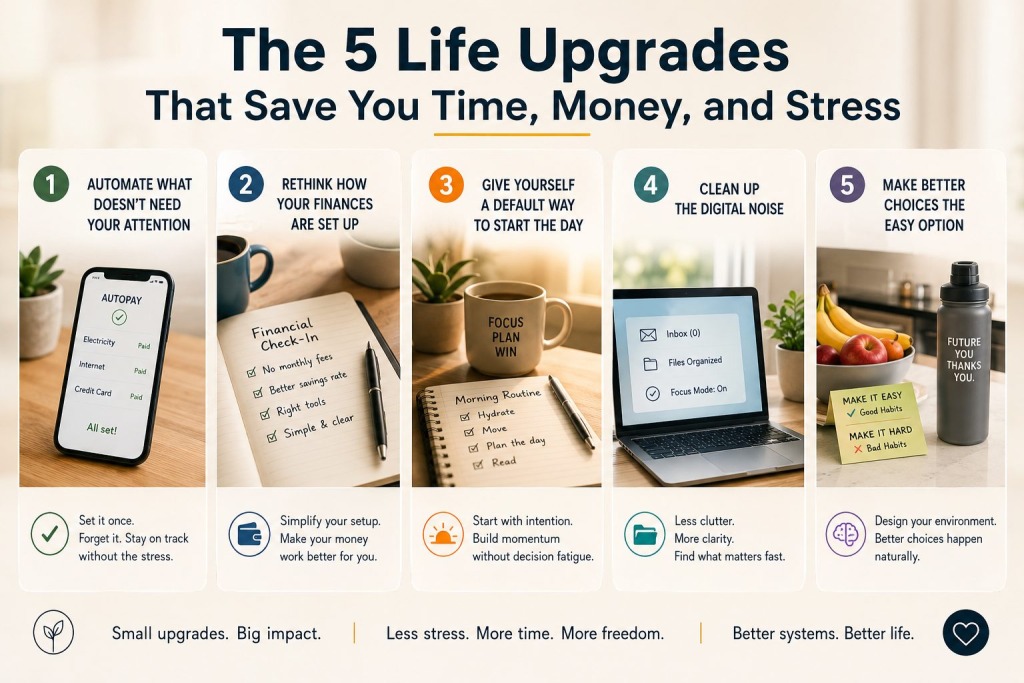
Automate What Doesn’t Need Your Attention
There’s very little upside to doing repetitive tasks manually, especially when they happen at the same time every month. Paying bills is a good example—nothing changes, yet it still demands your attention over and over again.
Once you automate those kinds of responsibilities, they stop taking up space in your head. Things get paid on time, you avoid unnecessary fees, and you don’t have to keep track of due dates. It’s one of those changes that feels small at first but quickly becomes something you rely on.
Rethink How Your Finances Are Set Up
A lot of people stick with the same financial setup for years without questioning whether it still works for them. It’s often just the account they opened early on, and it stays in place out of habit rather than intention.
But as your situation changes, your setup should evolve with it. If managing your money feels more complicated than it should, that’s usually a sign something isn’t working.
Sometimes the fix is surprisingly simple. It might mean consolidating accounts, cutting out unnecessary fees, or choosing tools that better match how you actually manage your day-to-day spending. For some, it even starts with revisiting the basics, like opening a bank account and understanding what features genuinely make a difference in everyday use.
The goal isn’t to build a perfect system. It’s just to make things feel more straightforward and less frustrating.
Give Yourself a Default Way to Start the Day
One of the easiest ways to reduce mental fatigue is by cutting down on the number of decisions you have to make. Even small choices add up over time, and by the end of the day, they can leave you feeling drained.
Having a simple routine helps take that pressure off. It doesn’t need to be rigid or overly structured—just consistent enough that you’re not starting from scratch every morning.
When a few parts of your day run on autopilot, you free up energy for things that actually require your attention. It creates a sense of momentum without feeling restrictive.
Clean Up the Digital Noise
Digital clutter tends to build quietly in the background. A few unread emails turn into hundreds. Files get saved “just for now” and never organized. Tabs stay open long after they’re useful.
Individually, none of it feels urgent. But together, it creates a constant low-level distraction that makes everything feel more chaotic.
Taking a bit of time to reset your digital space can have an immediate impact. It becomes easier to find what you need, focus on what matters, and move through tasks without unnecessary friction. You don’t need a perfect system—just something that makes navigation simple instead of overwhelming.
Make Better Choices the Easy Option
A lot of daily behavior comes down to convenience. If something is easy, you’re more likely to do it. If it takes effort, you’ll probably avoid it.
That’s why small environmental changes can be surprisingly powerful. When good habits are easy to start, they happen more often without much thought. At the same time, adding a bit of friction to less helpful habits can naturally reduce them.
It’s not about willpower as much as it is about setup. When your environment supports the kind of decisions you want to make, everything starts to feel more natural.
Final Thoughts
None of these changes are dramatic, and that’s exactly why they work. They don’t rely on motivation or big bursts of effort. Instead, they quietly improve how things function in the background.
Over time, those small improvements add up. You spend less time dealing with avoidable problems, feel less overwhelmed by everyday tasks, and have more space to focus on what actually matters.
Life doesn’t necessarily get easier—but it does start to run a lot more smoothly.
Last Updated: May 6, 2026