
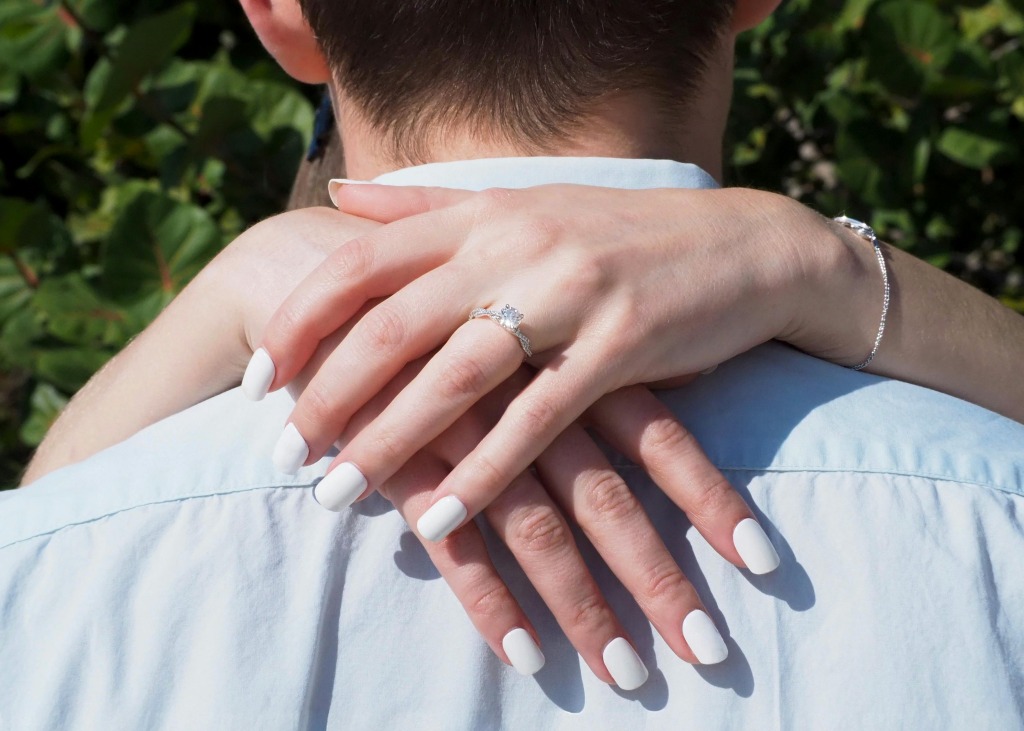
More than half of all engagement rings sold in 2024 carried a lab-grown center stone, according to The Knot’s annual study. That number sat at under 5% as recently as 2018. The change has happened almost entirely inside one cohort of buyers. Millennials and Gen Z couples now drive the category, with surveys placing the share above 70% in some segments. The reasons are more practical than the marketing language around them suggests.
Cost as the Decisive Variable
A 1-carat lab-grown diamond runs $1,000 to $3,000 wholesale in 2024 data. A natural stone of the same grading specifications runs $4,000 to $10,000. At 2 carats, the gap widens further. A lab-grown 2-carat ring with strong color and clarity grades sits at $3,500 to $5,000. A natural 2-carat at the same grades runs $15,000 to $20,000.
For a couple in their late twenties earning a combined $130,000 a year, the difference between a $4,000 ring and a $17,000 ring is months of saving versus years. Younger couples have student debt averages near $40,000 per borrower, and rent absorbing 30% to 40% of monthly income. The math forces a decision long before sustainability talking points enter the conversation.
Larger Stones at the Same Budget
The price gap rewires what a buyer can put on the finger. The average lab-grown center stone in 2024 came in at 2.0 carats. The average mined center stone in the same year held at 1.6 carats. That 0.4-carat gap represents a clearly visible size difference at normal viewing distance.
The decision tree for younger couples is straightforward. A budget that buys a 1-carat natural stone in a halo setting buys a 2-carat lab-grown stone in a solitaire. Most couples who run the comparison favor the larger, simpler option.
The Drift Toward Lab Grown Diamonds
Lab grown diamonds hold the same chemical composition as mined stones. The difference is the timeframe. A natural diamond formed under heat and pressure in the earth’s mantle over one to three billion years. A lab-grown stone forms in a chamber across two to four weeks using chemical vapor deposition or high-pressure high-temperature methods.
Independent gemological laboratories grade both types on identical scales. The optical performance of a well-cut lab-grown stone matches the optical performance of a well-cut natural stone of the same grade.
Environmental and Ethical Framing
Younger buyers cite environmental and ethical reasons in surveys, though industry analysts dispute how much weight those reasons actually carry. A 2024 McKinsey report found that lab-grown diamond adoption among millennials and Gen Z has run well past what the mining industry projected. Pandora’s CEO has stated publicly that price and design drive the purchase, with sustainability acting as a supporting factor rather than a primary one.
The complication is that lab-grown production carries its own carbon footprint. Roughly 60% of lab-grown diamond manufacturing happens in regions where coal generates most electricity. China and India together account for the majority of global lab-grown supply, and both countries derive at least half their grid power from coal. The ethical narrative is more nuanced than retail marketing suggests.
Tech-Native Comfort with the Category
Millennials and Gen Z couples have grown up with manufactured high-performance materials, from lab-grown gemstones to cultured pearls to vat-fermented foods. The leap from natural to lab-grown does not feel like a compromise to a buyer who already trusts engineered consumer goods. Older generations carry more attachment to provenance and traditional sourcing, which is part of why mined diamonds still hold the older end of the market.
The trust factor extends to retailers. Lab-grown stones come with grading certificates from the same major labs that grade natural stones. A Gen Z buyer comparing a GIA-certified lab-grown stone against a GIA-certified natural stone sees the same data points presented in the same format. The transparency of the comparison makes the price gap impossible to argue with.
Industry Response and Pricing Pressure
Lab-grown diamond prices have dropped about 5.7% from 2023 to 2024 and more than 15% from 2021 levels. Production capacity has expanded faster than demand in some regions, which has pushed wholesale prices down further. The result is that younger couples often pay less for a 2-carat lab-grown ring in 2024 than they would have paid for the same ring in 2022.
Mined diamond producers have responded by separating their marketing from the lab-grown category. De Beers has cut wholesale prices by more than 40% on some grades, and the company now positions natural stones as a heritage purchase distinct from the lab-grown commodity market. The split signals that the two categories are settling into different consumer segments.
Current State of the Category
Lab-grown diamond engagement rings have moved from a niche option to the default choice for Gen Z buyers under 35. The drivers are easy to identify and hard to argue with. Price gaps of 60% to 85% give younger couples access to larger stones at lower budgets, identical optical performance comes with the same gemological certification, and the ethical narrative supplies a usable answer when older relatives ask about the choice. The category will keep growing while those three forces hold, and there is no current data suggesting any of them will reverse in the next five years.
Last Updated: May 13, 2026