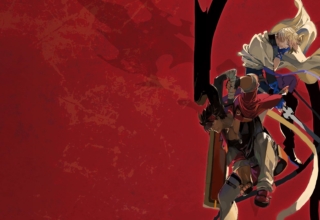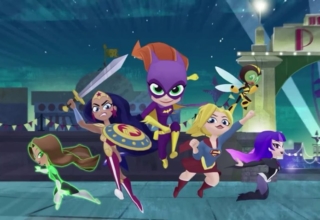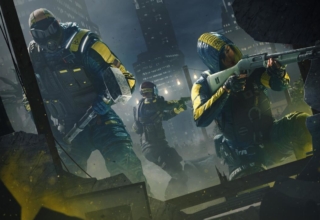
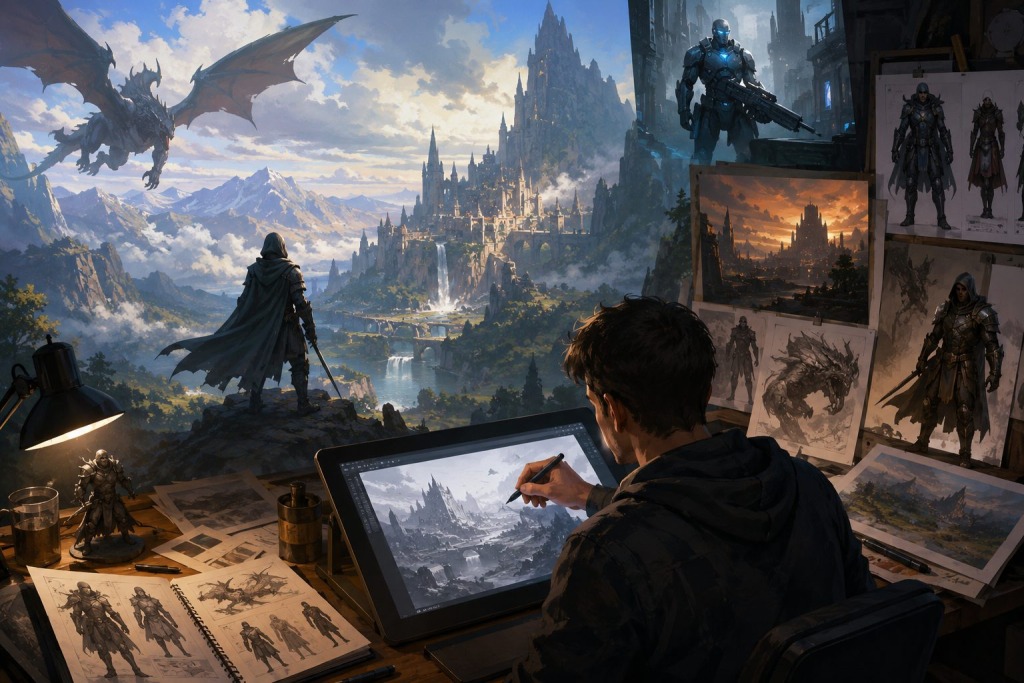
Every memorable video game begins long before a single line of code is written. The earliest stages of development focus on imagination, visual storytelling, and world-building. This is where concept artists help transform rough ideas into detailed visual directions that guide the entire production process.
Studios of every size, from indie developers to AAA publishers, increasingly rely on professional concept art services to establish consistent artistic direction before moving into modeling, animation, or programming. A strong concept phase reduces revisions later in development while ensuring that every visual element fits the intended style and gameplay experience.
The Foundation of Every Successful Game
Concept art is much more than attractive illustrations. It serves as the visual blueprint for every department involved in game production. Artists explore different ideas, experiment with colors, silhouettes, lighting, architecture, and environments before the team commits valuable production time.
Whether creating fantasy kingdoms, futuristic cities, or realistic historical settings, concept artists help answer important questions early:
- What should the world look like?
- How should characters express their personalities?
- Which visual style best supports gameplay?
- How can environments reinforce the game’s narrative?
By resolving these creative challenges during pre-production, developers avoid expensive redesigns later in the project.
Building Characters Players Remember
Great characters are instantly recognizable. Their clothing, posture, facial expressions, and equipment all communicate personality before they even speak.
Concept artists often produce multiple iterations of each character, refining details through collaboration with designers and writers. This process ensures that heroes, villains, and supporting characters feel authentic while remaining visually distinctive.
Strong character design also helps marketing teams create memorable promotional material long before release.
Environment Design Creates Immersion
Players spend countless hours exploring digital worlds, making environmental design one of the most important aspects of game development.
Detailed concept paintings allow level designers, environment artists, and lighting specialists to work toward a unified vision. These visual references establish:
- Architecture and landmarks
- Environmental storytelling
- Lighting direction
- Mood and atmosphere
- Natural and artificial landmarks
- Color palettes for different regions
When every environment follows the same artistic language, players experience a more believable and immersive world.
Supporting Multiple Game Genres
Professional art teams adapt their workflows depending on the genre. A realistic military shooter requires very different visual research than a colorful mobile puzzle game or a stylized fantasy RPG.
Experienced outsourcing studios often provide artwork for:
- Mobile games
- PC and console titles
- Slot games
- Strategy games
- RPGs
- Action adventures
- Casual games
- VR and AR experiences
Their flexibility allows developers to scale production without compromising quality.
Why Outsourcing Has Become Common
Modern game development requires specialists across many artistic disciplines, including concept art, 3D modeling, animation, UI/UX, VFX, and illustration. Hiring an external art studio allows developers to access experienced professionals without maintaining a large in-house team throughout production.
Outsourcing also offers several advantages:
- Faster production timelines
- Access to specialized talent
- Easier project scalability
- Reduced recruitment costs
- Consistent visual quality
- Flexible collaboration across project phases
Many successful studios combine internal creative leadership with external art partners to meet demanding production schedules.
Collaboration Drives Better Results
The most effective art partnerships involve constant communication between developers and artists. Feedback sessions, mood boards, reference collections, and milestone reviews help ensure that every illustration aligns with gameplay goals.
Modern collaboration tools make it possible for international teams to work efficiently, sharing updates and revisions in real time regardless of location.
Exceptional Games Rarely Happen by Accident…
Behind every memorable character, breathtaking landscape, and iconic visual style lies a carefully planned concept art process. Investing in strong artistic foundations helps development teams communicate ideas clearly, maintain consistency across departments, and create immersive experiences that resonate with players long after the game is finished.
As the gaming industry continues to grow and player expectations rise, professional concept art remains one of the smartest investments any studio can make during the earliest stages of development.
Last Updated: July 1, 2026