Quality wooden furniture can bring warmth, elegance and unique beauty into a home. From a solid wood dining room table, an old, antique dresser, a wooden bed frame to a favorite bookcase, well-maintained wooden furniture can last for decades.
However, most people fail to consider indoor humidity as a potential source of damage to their quality wood furniture. A natural product (wood) like this is naturally hygroscopic, meaning it will absorb water or dry out based upon its surroundings. Therefore, wood’s ability to add or subtract water is dependent on the environmental conditions where the piece of furniture resides. As the moisture content of wood increases or decreases so does the volume of the wood. As such, continued fluctuations in humidity over long periods of time can contribute to cracking, warping, separation at joints and gaps or changes in fit.
Fortunately, you don’t have to be an expert to find out what is going on within your house. An easy-to-use indoor humidity & temperature sensor is available today to allow you to monitor both temperature and relative humidity levels and therefore provide you with information regarding seasonal changes and give you early warning if excessive humidity becomes a larger issue.
Why Does Humidity Matter for Wood Furniture?
The wood is subject to varying degrees of moisture from the air, regardless of whether or how long ago the tree was transformed into a piece of furniture.
As the humidity increases within an area, the wood will be able to absorb moisture from the air and expand. As the humidity decreases within an area (i.e., the air becomes dry), the wood loses moisture to the air and contracts. According to the U.S. Forest Service, the relative humidity affects the dimensionally variable behavior of dry wood, which swells slightly under higher humidity conditions than when the dry wood is subjected to lower humidity conditions.
In general, this effect is minor; however, most furniture will experience several repeated cycles each year. Using a solid wood dining table located in a home in Texas as an example, during a hot, humid summer season air conditioning may keep the indoor temperature comfortable. However, if there is no adequate control over indoor moisture levels, high humidity levels are likely to develop inside the home. In contrast, later in the year during cold weather, heating may make the indoor air much drier. Therefore, the dining table is subject to fluctuating environmental conditions while remaining stationary in the same location. Additionally, repetitive expansion and contraction can put stress on both the wood itself and its joints.
How Low Humidity Can Cause Wood Furniture to Crack
Wooden furniture is subject to damage through cracking (and other forms) due to low humidity. Very low humidity in your home can be quite evident throughout the heating season. Low humidity causes wood to slowly lose its moisture content. As wood loses moisture, it can shrink as moisture leaves the cell walls. Conversely, swelling will occur when wood gains back its moisture. The U.S. Forest Service explains that wood shrinks when moisture leaves its cell walls and swells when moisture is added.
The effects on furniture include:
- Small cracks or splits
- Gaps forming between boards
- Loose joints
- Shrinking panel(s)
- Gaps surrounding drawers or doors
- Poor fit of the various wooden components
- Warping or distorting some items
Consider a dresser made out of wood sitting in an interior bedroom during the middle of winter. There could be no sign of distress at all when you turn on your furnace for the first time. However, over weeks of drying conditions in the room, the wood may continue to lose moisture. One morning you may find a drawer does not fit as snugly into place as it did previously. The dresser was not ruined overnight. It was possible that there were days, even weeks, where you did not even realize the dresser was affected by the loss of moisture until one day you found that a particular drawer was not fitting as well.
Can High Humidity Damage Wood Furniture?
Yes. Excessive humidity can also cause problems.
Wood absorbs moisture from humid air and swells. Extended periods of high moisture levels may lead to dimensional changes and warpage in wood furniture.
High humidity will also create a less than ideal environment for the rest of your room. The U.S. Environmental Protection Agency (EPA) suggests that you keep relative humidity below 60%, ideally between 30% and 50% when possible.
In addition, high humidity may also lead to condensation on cold surfaces. If your home has continuing moisture issues and damp conditions develop, it is more likely that mold growth will occur.
For example, envision a cabinet made of wood placed against an outside wall in a room with high humidity. Even though the room may feel comfy, if humidity remains high and there is poor air movement behind the cabinet and wall, then damage to both the cabinet and wall due to moisture related issues may occur.
That is why protecting wood furniture is not simply about avoiding extremely dry air. Keeping indoor humidity relatively stable is also important.
What Is a Good Indoor Humidity Level?
The Environmental Protection Agency (EPA) recommends maintaining an indoor relative humidity (RH) level of between 30 percent and 50 percent when possible and below 60 percent RH. While this will serve as a good guideline for most homeowners to achieve overall indoor air quality and moisture control, it is too generic for use with all wood species, furniture types, finishes, construction methods, and climates. As stated by the Forest Products Laboratory, there are many variables that affect how much each type of wood furniture will expand and contract due to moisture. These include wood species, density, grain direction, and changes in moisture content.
While the ultimate goal for typical residential furnishings is to avoid prolonged extremes and large swings in humidity at home, owners of antique items, musical instruments, specialty wood products, etc., should refer to the specific care instructions provided by the item’s conservators, manufacturers, or original makers for guidance.
Where Should You Place a Hygrometer?
A variety of factors will determine where to locate your hygrometer. These factors include which types of furniture are located in each room and which rooms you wish to protect.
1. Near Valuable Wood Furniture
Place the hygrometer in the same room as your dining table, antique cabinet, or other valuable wood furniture so it measures the surrounding conditions.
Do not attach it to or hang it within inches of the furniture itself. Also, do not place it near a humidifier as well.
2. Bedroom
Temperature and humidity can fluctuate in bedrooms overnight.
A hygrometer can help you see whether the room becomes drier or more humid while you sleep.
If you have wooden furniture in your bedroom, you should seriously consider purchasing a hygrometer to measure how much humidity (and temperature) changes in your bedroom while you sleep.
3. Living Room
Your living room is generally a useful place for a general household reading as long as you have some form of wood furniture.
4. Basement
Many basements present a number of challenges when it comes to maintaining an ideal level of humidity in them. Since they can be quite damp naturally (especially with poor ventilation), it is a great idea to keep a close eye on their humidity levels if you plan on storing wooden furniture, cabinets, books, or other moisture-sensitive items downstairs.
5. Near a Home Office or Instrument Room
Wooden desks, cabinets, guitars, pianos, and other wood-based items can also benefit from a more stable environment.
The goal is not to place one sensor anywhere and assume every room has exactly the same humidity. Humidity can vary from room to room.
How to Measure Indoor Humidity
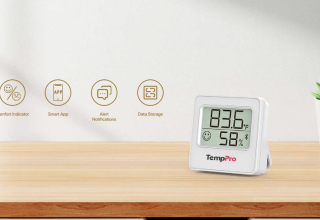
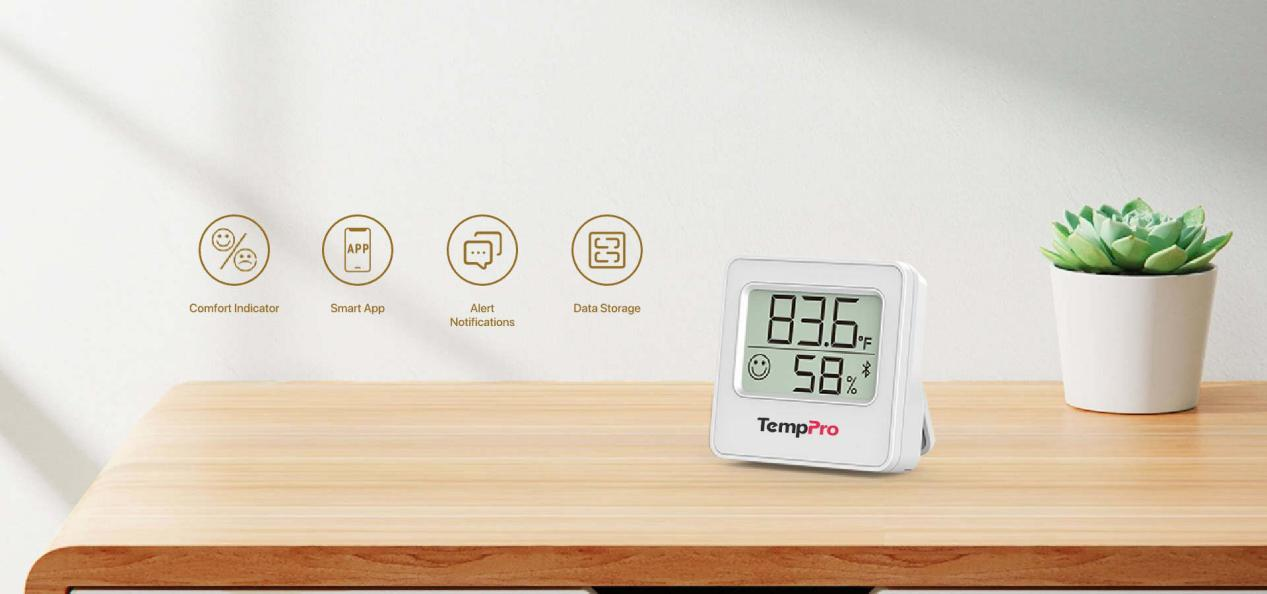
For homeowners who want more than a basic humidity display, the TempPro TempAir ELITE TP357 Bluetooth Indoor Hygrometer Thermometer combines temperature and humidity monitoring with smartphone alerts and historical data.
The TempPro TempAir ELITE TP357 was designed for use in measuring the indoor temperature and humidity in various locations including bedrooms, living rooms, offices, greenhouses, cellars, nurseries, and instrument rooms. This device could also be very beneficial to those owners that would like to watch for humidity conditions that may affect their wood furniture over time.
- Accurate Temperature & Humidity Monitoring: The manufacturer specifies temperature accuracy of ±1.0°F from 32°F to 140°F. Relative humidity accuracy is ±2% RH from 30% to 80% RH, and ±3% RH outside that range.
- 260-Foot Bluetooth Range: With its Bluetooth capability you can measure the temperature and humidity in your home using the TempPro Sensor app from anywhere up to 260 feet away in open conditions. Walls and interference may reduce that range.
- Real-Time App Alerts: Using the TempPro Sensor app you can set custom limits for temperature and humidity, then if either condition goes above/below your limit, you can receive a notification on your phone while it is connected over Bluetooth.
- Historical Data: When viewing the temperature and humidity readings, you can see graphical displays of how they have changed over time. These types of graphics help you determine seasonal patterns.
- 10-Second Refresh Rate: The device updates temperature and humidity readings every 10 seconds allowing you to track any rapid changes to the conditions in your home.
- Dry, Comfortable & Wet Indicator: The TempPro TempAir ELITE TP357 shows three simple icons on its face which quickly indicate whether the air in your home is dry, comfortable or wet.
- Compact & Easy to Place: The compact design allows for placement in bedrooms, family rooms, basements, offices, etc., wherever you need to monitor humidity.
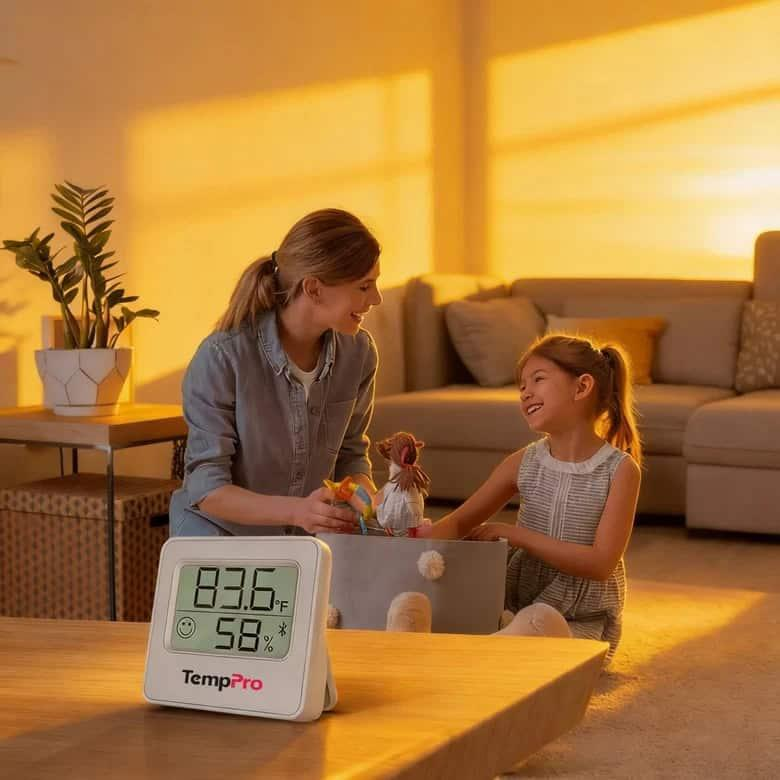
That makes it a straightforward option for homeowners who want smart monitoring without installing a complicated home system.
How to Use a Hygrometer to Protect Wood Furniture
Once you’ve purchased a hygrometer, the true value will be in how you use that information to make better choices.
Here’s a very basic routine you can follow:
Step 1: Measure humidity
Put your TempPro TempAir ELITE TP357 in the room where you want to measure conditions. Collect multiple measurements (not just one) over time. Don’t judge the room by a single reading; look at the trend of readings.
Step 2: Identify the Pattern
Identify repeating changes.
Does humidity rise after showers?
Does it increase when you cook?
Does the basement stay higher than the rest of the house?
Does the bedroom become extremely dry overnight?
Does humidity change significantly between summer and winter?
When you identify these patterns, they’re likely more helpful than a single reading.
Step 3: Adjust the Environment
If your relative humidity is too high, possible options include:
- Use a dehumidifier when necessary.
- Run bathroom exhaust fans during and after a shower.
- Properly vent all moisture-producing appliances (e.g., kitchen, laundry).
- Run kitchen exhaust fans while cooking.
- Check for leaking pipes or additional moisture sources.
- Utilize air conditioning appropriately.
- Improve airflow in the affected area(s).
According to the U.S. Environmental Protection Agency (EPA), the recommended ways to deal with excess indoor humidity include: proper ventilation, air conditioning and/or dehumidification.
If your relative humidity is too low, then consider:
- Add moisture via a humidifier when appropriate.
- Limit extreme heating of previously dry space(s).
- Measure humidity in the room before and after introducing moisture.
- Keep the relative humidity of your interior spaces within a reasonable, stable range.
Don’t try to add as much moisture as possible. A balanced state should be achieved, not the highest possible state.
Step 4: Monitor Again
After making an adjustment, check the readings again. For example, if your basement is consistently above 60% RH, turn on a dehumidifier and monitor the room afterward. If the humidity drops into a more reasonable range and stays there, you know the adjustment is working. If it quickly rises again, you may need to investigate the underlying moisture source.
More Ways to Protect Wood Furniture
While a humidity monitor can provide you with information about your indoor humidity levels, this is just one component of protecting your wooden furniture. Here are several other ways to protect and maintain your furniture:
Keep Furniture Away from Direct Heat
When possible, try to avoid placing your wooden furniture too close to heat sources such as radiators, heating vents, or baseboard heaters, since these can cause localized temperatures to be significantly higher near the device than elsewhere in the room. This can create different conditions around different parts of the item.
Avoid Direct Sunlight
Prolonged exposure to direct sunlight can affect the finish on your wood as well as its overall color. As such, if necessary, utilize window treatments (e.g., drapes, blinds) to block sunlight.
Keep Furniture Away from Persistent Moisture
In addition to keeping humidity stable, do not place your most valued pieces of wooden furniture against walls where water is consistently present; likewise, keep them away from areas where there typically exists condensation (e.g., near windows).
Clean Spills Quickly
A spilled drink, wet plant pot, or leaking pipe can expose wood to much more water than normal indoor humidity. Immediately clean up any liquid spills and identify and correct any issues related to excess moisture.
Follow the Manufacturer’s Care Instructions
Manufacturer recommendations regarding acceptable humidity levels vary based upon the type of finish applied to the product and/or how the product was constructed. If the manufacturer gives a specific humidity range, follow it. A professional conservator can advise on caring for antique or particularly valuable furniture.
FAQs about Protecting Wood Furniture and Humidity
Can low humidity cause wood furniture to crack?
Low humidity environments can lead to loss of moisture by your wood causing it to shrink. Also, repeated or extreme changes in moisture levels can affect the dimensional stability of your wood leading to visible gaps, cracks or poor fitment based upon the type of wood and method of construction.
Can high humidity damage wooden furniture?
High humidity will allow your wood to take up more moisture and expand. In addition, prolonged periods of high-humidity can also cause warping, which could negatively impact both the wood and the overall appearance of your furniture and the space around it.
What humidity is best for wood furniture?
Based on the EPA’s recommendations, general indoor humidity levels should be kept at approximately 30% to 50% relative humidity when possible, and below 60%. Although some types of furniture may require different humidity ranges, please refer to the manufacturer’s recommended guidelines for all premium or specialized items.
Should I use a hygrometer for wood furniture?
Yes. Unlike estimating how the air “feels,” a hygrometer will give you a precise reading of the relative humidity in the area you’re looking to control. Additionally, it allows you to track potential dryness or excessive moisture over time.
Where should I put a hygrometer in my home?
Ideally, locate it within the room you wish to measure, preferably near the piece(s) of furniture or belongings you’re looking to protect; however, keep in mind that it should not be placed too close to windows (direct sunlight), radiators/heating/cooling vents, humidifiers or other localized sources of temperature or moisture.
Can a hygrometer prevent wood furniture from cracking?
A hygrometer does not physically stop cracks from occurring, but it does provide a way to determine whether there are any environmental factors contributing to potential wood movement so you can make adjustments accordingly prior to them becoming worse problems.
Why is the TempPro TempAir ELITE TP357 useful for monitoring wood furniture?
The TempPro TempAir ELITE TP357 includes multiple features including temperature/humidity readings combined with Bluetooth technology allowing users to receive alerts on their mobile devices regarding their comfort zone, store and view historical data along with viewing trends via graph format. It also has a simple comfort indicator. Its Bluetooth range of up to 260 feet in open conditions and customizable alerts make it useful for individuals who have pieces of furniture located in areas where they are subject to varying humidity levels.
Does the TempPro TempAir ELITE TP357 need Wi-Fi?
No. The TempPro TempAir ELITE TP357 uses Bluetooth 5.0 to communicate with the TempPro Sensor app and does not require Wi-Fi or account registration.
Can I use the TempPro TempAir ELITE TP357 in a basement?
Yes. The TempPro TempAir ELITE TP357 can be used in spaces such as cellars and other indoor areas where monitoring temperature and humidity is useful. Its historical data and alerts can be particularly helpful for identifying recurring humidity changes.
Final Thoughts
Wood furniture will always be affected by its immediate surroundings. In an indoor environment, when the humidity varies from low to high levels, the wood in your home will typically absorb or release moisture. Absorbing moisture causes the wood to swell. Releasing moisture causes the wood to shrink. However, over time, repeated swelling and shrinking can contribute to cracks, gaps, warping, and other dimensional changes.
To better take care of your furniture you should not guess about how much humidity there is in your home.
Use a hygrometer (a device that measures relative humidity) to monitor the relative humidity level in your home. Monitor the relative humidity levels over time. Identify seasonal changes and large swings in humidity levels. Use humidification, dehumidification, ventilation, cooling systems (air conditioning), etc. to get your home’s environment closer to a stable, suitable humidity range.
Using the TempPro TempAir ELITE TP357 (accurate temperature & relative humidity measurement via Bluetooth connection to smartphone app, customizable alerts on smart phone, ability to view historical trend data, and a simple comfort indicator) can make it simpler to monitor your home’s environment and make adjustments as needed.
For homeowners who want to protect valuable wooden furniture, the goal is not to create a perfectly static environment. It is to understand the environment, respond to meaningful changes, and keep humidity within a reasonable range as consistently as possible.
Last Updated: October 1, 2026