
The workday ends. The parenting shift begins.
For many new parents, leaving work doesn’t mean the day’s responsibilities are finished. There is still a baby to feed, dinner to figure out, laundry to handle, bottles to clean, and a morning routine to prepare for before doing it all again tomorrow.
That’s the reality behind the idea of a “second shift”: the household and caregiving work waiting after the formal workday is over.
For working parents, the challenge isn’t necessarily that any one chore is overwhelming. It’s that the routine keeps going, even when there’s very little energy left for it.
When the Workday Ends, the To-Do List Doesn’t
A typical evening with a newborn can move quickly from one responsibility to another.
You finish work and pick up the baby. There’s a feeding, a diaper change, maybe dinner for yourself if there’s time. Then the bottles from earlier in the day are still sitting in the sink. If you’re pumping, there may also be pump parts waiting to be cleaned.
None of this is unusual. In fact, it’s exactly what makes the routine easy to underestimate. A task that takes five or ten minutes doesn’t sound like much. But when the same task appears after multiple feedings, it becomes part of the structure of the entire day.
The second shift can feel like a series of unfinished tasks. While your workday has a specific ending point, baby care and other household chores usually don’t.
The answer isn’t to squeeze every possible task into the evening. It’s to look at which routines are repeated often enough to deserve a simpler system.
Feeding Doesn’t End When the Baby Finishes Eating
Feeding is a good example. Once a baby finishes a bottle, the feeding itself may be over, but the routine isn’t. The bottle, nipple, collar, and other parts still need attention. For parents who pump, there can be another collection of parts waiting alongside them.
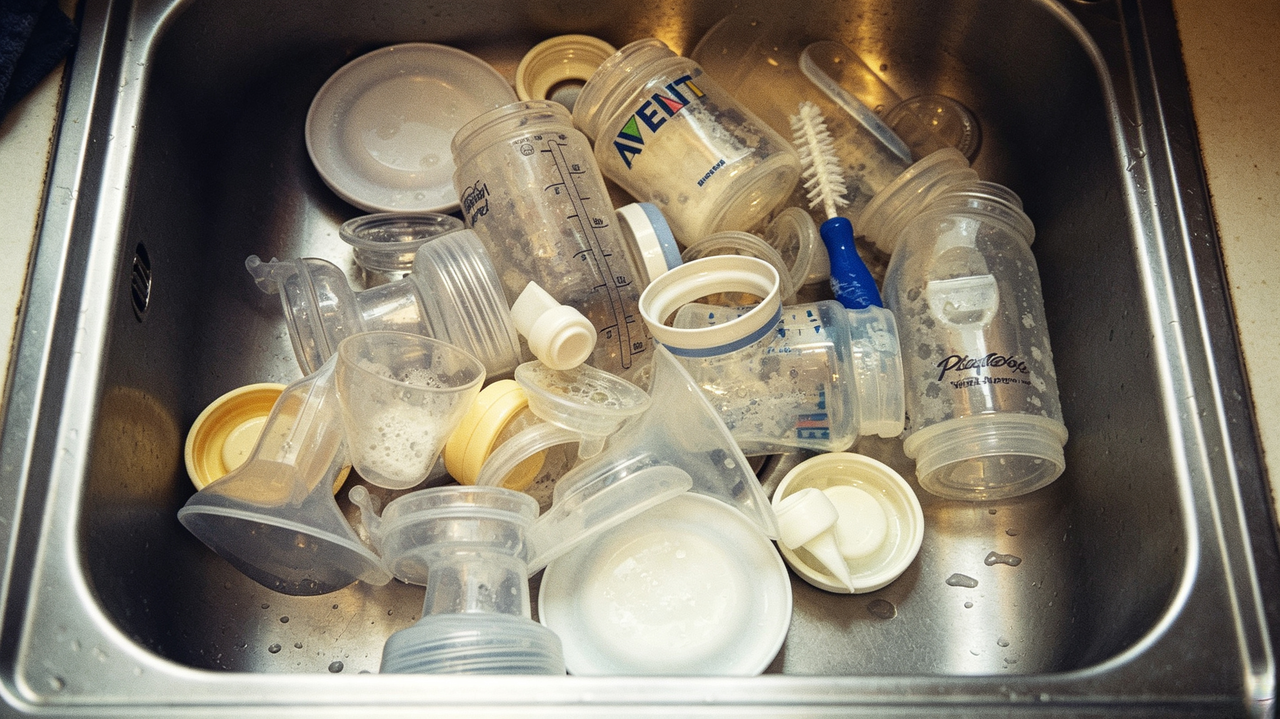
Hand washing gives parents control and flexibility, but it also means repeating the same process throughout the day. A sink that looks manageable after one feeding can look very different after several.
The CDC’s guidance on cleaning infant feeding items recommends cleaning bottles after every feeding and using a separate clean basin for hand washing, rather than washing directly in the sink.
A dishwasher can reduce some of that hands-on work, but it isn’t always the perfect fit for every feeding routine. Parents may have to wait until they have enough items for a load, and small bottle and pump components can require extra sorting and handling.
The NHS guide to sterilising feeding equipment advises cleaning and rinsing equipment before sterilising it, and following the manufacturer’s instructions when using a steam steriliser.
For families dealing with bottles and pump parts throughout the day, a dedicated bottle-cleaning system is another option. The idea is not to replace every household cleaning method, but to make one particularly repetitive part of the routine more contained and predictable.
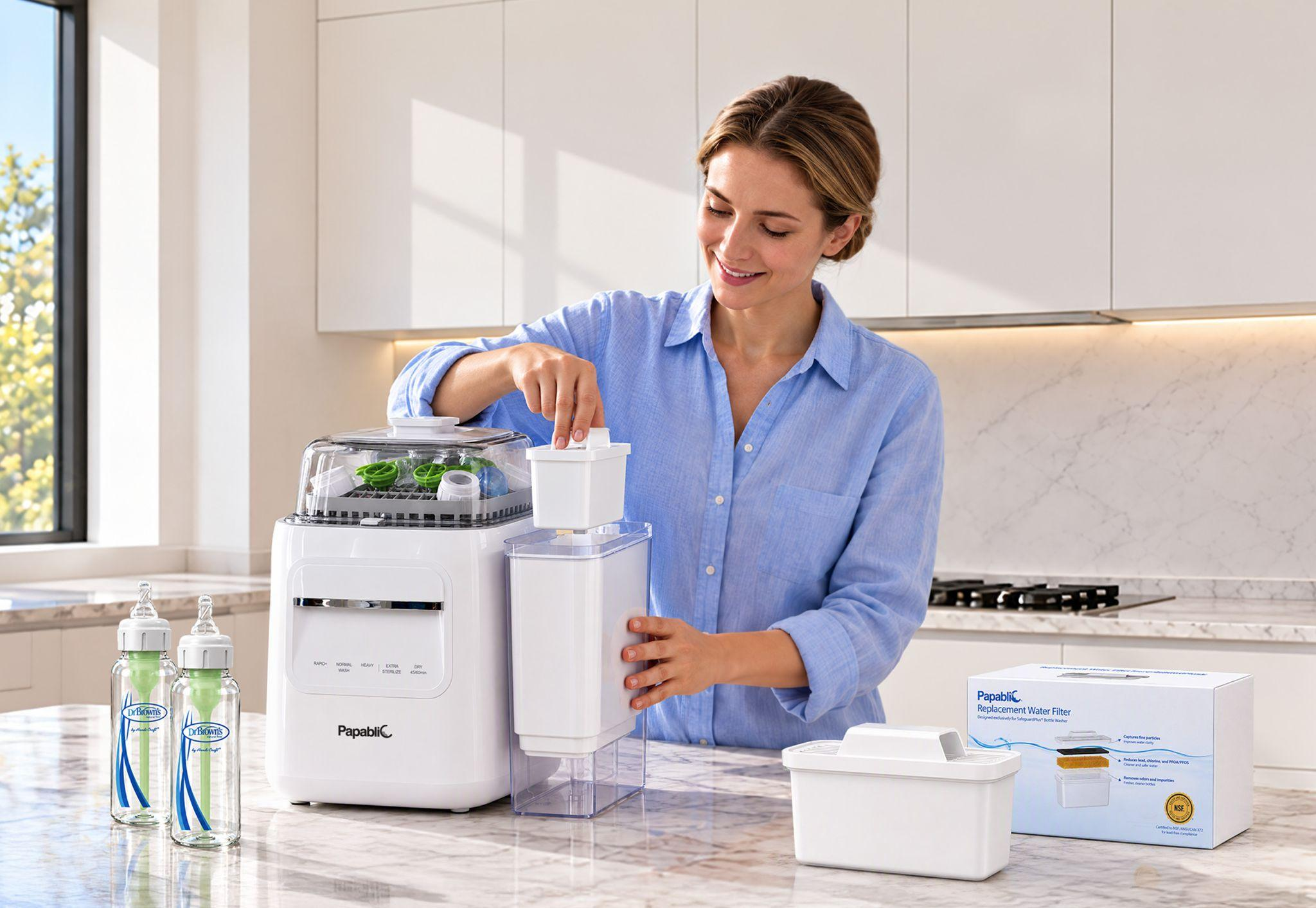
For example, the Papablic SafeguardPlus™ Baby Bottle Washer System (P8Plus) brings several steps of bottle cleaning into one system. It can filter water first, and wash, sterilize, dry, and store bottles and pump parts, with capacity for up to 8 bottle sets or 2 sets of pump parts, along with other feeding accessories.
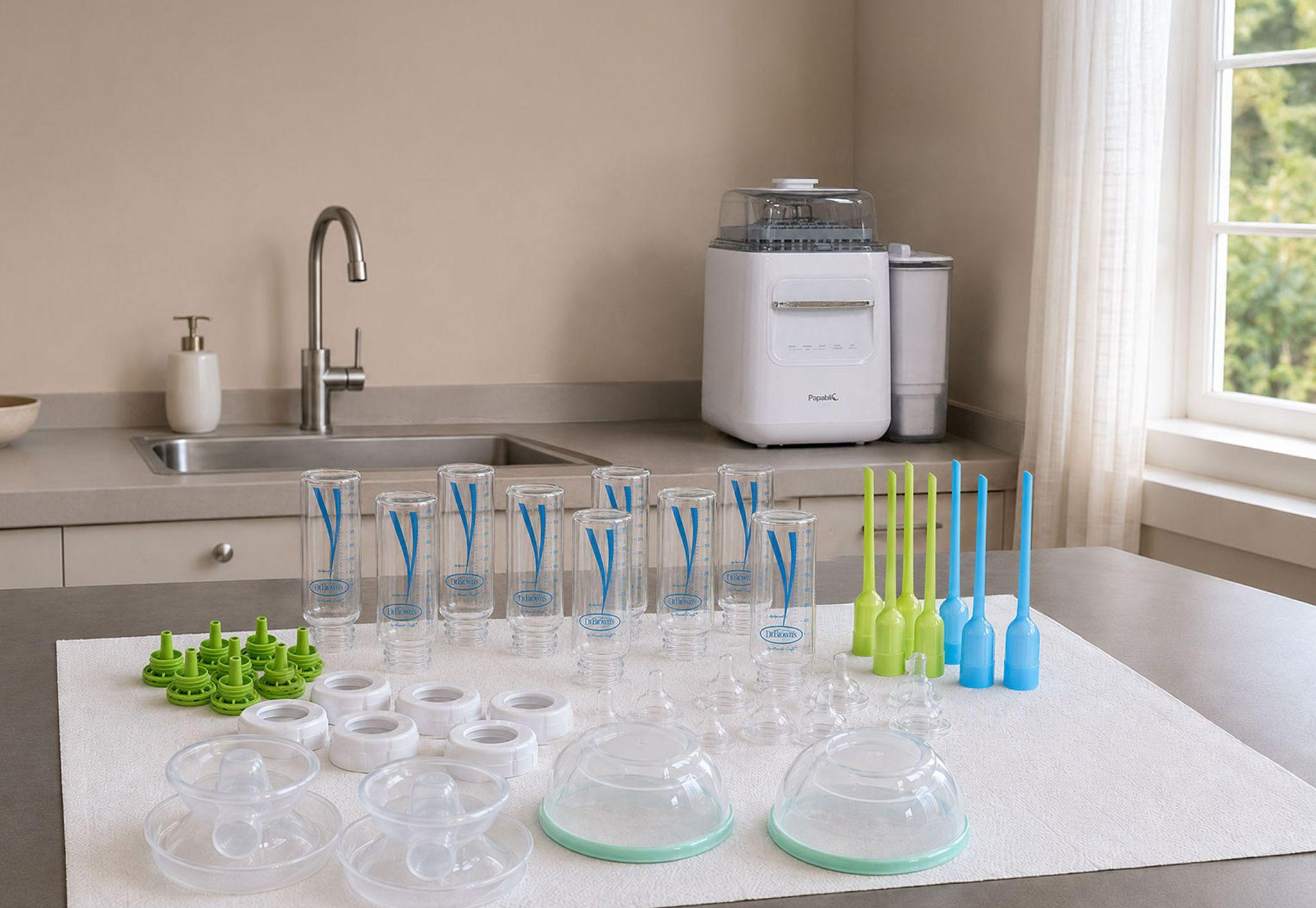
For families with hard water, there can be another issue: mineral buildup may leave white spots or limescale on bottles and feeding accessories. SafeguardPlus™ uses built-in water purification to soften water and help reduce water spots and limescale buildup.
That matters because bottle cleaning isn’t usually a once-a-week task. It’s something that can return several times in the same day. When a recurring chore is built into a dedicated routine, parents don’t have to keep reinventing how to handle it after every feeding.
The Best Shortcut May Be Removing a Decision
Not every solution to the second shift requires buying something. Sometimes the bigger improvement comes from removing decisions from the routine.
Deciding what needs cleaning now and what can safely wait can feel like more work after a long day of work and baby care. A simple routine can take some of that decision-making off your plate.
For example, parents might keep everyday feeding supplies in one easily accessible place rather than searching for them each time. They might lay out clean feeding equipment or other essentials before the evening gets busy. They might also decide which household tasks genuinely need to happen every day and which ones can wait until the weekend.
The same principle applies to larger chores. Laundry doesn’t always have to be folded the moment it’s dry. The kitchen doesn’t need a full reset every night. A perfectly organized nursery can wait.
What matters is knowing the difference between a task that supports tomorrow’s routine and one that simply makes the house look finished tonight.
A Cleaning Schedule Should Work Around Real Life
For working parents, the best cleaning schedule isn’t necessarily the one with the most tasks on it. A practical schedule starts with the things that have to happen regularly. Feeding equipment is one example because it is tied directly to the baby’s routine. Other chores can be grouped into less frequent blocks instead of being scattered across every evening.
One simple approach is to think in three categories:
- Daily essentials: Things that affect the next feeding, the next morning, or basic household function.
- Tasks to batch: Chores such as laundry, changing bedding, or deeper cleaning that can often be handled together rather than every day.
- Tasks that can wait: Anything that isn’t urgent and doesn’t make tomorrow meaningfully harder.
This kind of system can make a cleaning schedule for working parents feel less like another job to manage. It also leaves room for real life. A baby may have an unusually difficult night. A work meeting may run late. Dinner may come from the freezer. Some evenings simply won’t go according to plan. A useful routine should be flexible enough to survive those days.
Make the Routine Easier, Not Perfect
The second shift isn’t something parents can completely eliminate. There will always be dishes, laundry, feeding, cleaning, and preparation waiting somewhere in the house. But not every task needs the same amount of attention.
The most useful question may be: Which parts of this routine are happening often enough that making them easier would actually change the day?
For one family, that might mean simplifying dinner. For another, it could mean organizing the morning routine. For parents who use bottles and pumps, it may mean finding a less hands-on way to manage the cleaning cycle.
The goal isn’t to turn parenthood into a perfectly optimized schedule. That’s another kind of pressure parents don’t need. It’s simply about giving recurring tasks a system that requires less thought and less effort. Because the time saved doesn’t have to be filled with another chore.
It can mean sitting down for dinner while it’s still warm. Getting ready for tomorrow without rushing. Spending a few extra minutes with the baby. Or going to bed a little earlier. The second shift may always be part of new parenthood. But it doesn’t have to take over every part of the evening.
FAQs
1. How can working parents keep up with cleaning after having a baby?
Focus on essential daily tasks first, group similar chores together, and simplify repetitive routines where possible. A realistic cleaning schedule is more useful than trying to keep everything perfectly clean.
2. What is the second shift for working parents?
The second shift refers to the household and caregiving responsibilities that begin after the workday ends, such as feeding, cleaning, laundry, and caring for a baby.
3. How can working parents make bottle cleaning easier?
Keeping feeding supplies organized and reducing repeated steps can help. A dedicated system like the Papablic SafeguardPlus™ Baby Bottle Washer System can also combine washing, sterilizing, drying, and storing bottles and pump parts in one routine.
Last Updated: October 12, 2026