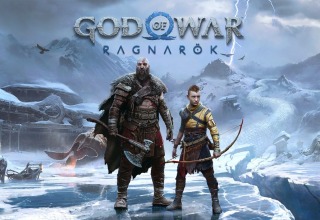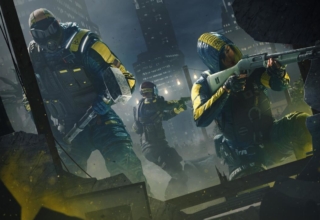
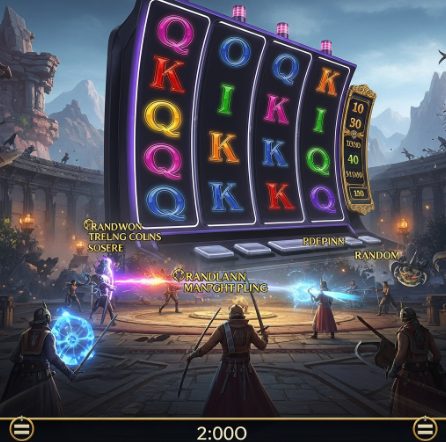
If you’ve picked up a controller or scrolled through a gaming library lately, you’ll have noticed that the lines between different types of interactive entertainment are getting a bit blurry. It wasn’t that long ago that a clear line existed between a narrative-driven blockbuster on a console and the straightforward experience of a classic fruit machine. However, things have changed quite drastically. We’re now seeing a fascinating crossover where the complex DNA of video games (storytelling, high-definition graphics, and intricate mathematical systems) is being woven into the very fabric of modern iGaming.
It’s a bit of a revolution, really. We aren’t just looking at symbols on a reel anymore; we’re engaging with worlds that feel alive. This shift hasn’t happened by accident. It’s the result of decades of hardware evolution and a changing audience that expects more than just a simple “spin and win” mechanic. They want a story, they want progression, and they want the same level of polish they see in their favourite indie hits or big-budget titles.
The Loot Box Legacy: A Journalistic Deep-Dive into RNG Mechanics in AAA Titles
To understand where we are now, we have to look back at how mainstream video games started borrowing from the world of chance. About a decade ago, the gaming industry was turned upside down by the arrival of the “loot box.” Whether you were playing a football simulator or a sci-fi shooter, these digital crates became a staple of the experience. They used Random Number Generation (RNG) to determine what piece of gear or which player you’d get.
I remember when the conversation around these mechanics reached a boiling point. It sparked a massive debate about transparency and how these systems actually worked under the hood. While AAA developers were occasionally criticised for being a bit vague about their “drop rates,” the iGaming sector was already lightyears ahead in terms of regulation and clarity.
This is where the narrative pivots. In the world of modern gaming, there is a massive emphasis on hardware-driven UI/UX standards. When you look at the mechanics behind modern slots, the transparency is actually quite refreshing compared to the early days of loot boxes. These games are built on audited, certified RNG engines that ensure every outcome is genuinely random and fair. Unlike a console game that might tweak its “luck” to keep you playing longer, these systems operate on strict Return to Player (RTP) percentages that are clearly stated. It’s this benchmark of technical honesty that has helped the iGaming world build a level of trust that mainstream gaming is still trying to catch up with.
The math used in these systems is incredibly robust. It has to be, given the regulatory eyes watching over it. This precision has allowed developers to create more complex experiences. We’ve moved away from the basic three-reel setup and into a space where the RNG dictates complex “cascading” events, much like the random encounters you might find in a sprawling open-world RPG.
Cinematic Fidelity: Why Visual Storytelling in Modern Slots is Catching Up to Indie Game Design
Have you ever stopped to really look at the art style of a modern indie platformer? Games like Hollow Knight or Cuphead are celebrated for their hand-drawn aesthetics and fluid animations. They’ve proven that you don’t need a billion-dollar budget to create something visually stunning. Interestingly, the iGaming world has been taking notes.
If you head over to a site like Virgin Games, you’ll see that the visual quality of contemporary video-game-themed titles is staggering. There’s a genuine technical comparison to be made here. In the past, slot machines used simple, static sprites that looked a bit like clip-art. Today, the assets are high-definition, multi-layered, and often rendered in 3D.
I find that the gap between a high-end indie game and a modern slot is closing rapidly. We’re seeing the use of “parallax scrolling” (where the background moves slower than the foreground to create depth) and sophisticated lighting effects that were once the exclusive domain of PC gaming. The characters aren’t just there for show; they react to what’s happening. If you land a specific combination, the character might perform a victory animation or the entire environment might change to reflect a new “level” or stage in the story.
This cinematic fidelity isn’t just about making things look “pretty.” It’s about immersion. When the visual language matches the quality of a dedicated gaming console, the player feels more invested in the world. It’s a far cry from the clunky interfaces of the early 2000s. We’re now seeing UI (User Interface) design that prioritises the player’s comfort, with clean lines, intuitive menus, and responsive feedback that feels tactile and satisfying.
The Megaways Engine: How Complex Math Mirrors Strategy Game Systems
If there’s one thing that has truly changed the landscape in recent years, it’s the Megaways engine. For those who haven’t come across it, it’s a system created by Big Time Gaming that completely overhauled how we think about “paylines.” Instead of a fixed number of ways to win, the number of symbols on each reel changes with every spin, sometimes offering up to 117,649 different combinations.
This kind of complexity reminds me of the systems you find in deep strategy games or tactical RPGs. Think of a game like Civilization or XCOM, where every move involves a layer of probability and dozens of variables. The Megaways engine brings that same “calculation” feel to the reels. You’re looking at an ever-shifting puzzle where the board state is never the same twice.
The math involved in making this work smoothly is mind-boggling. It requires a massive amount of processing power to ensure the RNG can handle that many variables in a fraction of a second. It’s a perfect example of how high-level mathematics can be used to create entertainment that feels dynamic. You aren’t just watching a loop; you’re engaging with a system that feels like a living, breathing entity.
Many of us who enjoy a bit of strategy in our gaming appreciate this move toward complexity. It’s no longer about a single line across the middle. It’s about identifying patterns and understanding how the different “reels” interact with one another. It’s the “crunchy” side of gaming brought to a new audience.
The Psychology of Progression: Reward Loops and Narrative Hooks in Interactive Media
Why do we play games for hours on end? Usually, it’s because of the “progression loop.” We complete a task, we get a reward, and that reward helps us tackle the next, slightly harder task. In the past, slots didn’t really have this. Every spin was an isolated event, totally disconnected from the one before it.
But now, developers are using “narrative hooks” to keep things interesting. You might start a game in a base world, but as you play, you collect “experience” or “tokens” that eventually move you to a different location or unlock a new chapter of the story. This is straight out of the video game playbook.
It taps into our natural desire to see a story through to the end. I’ve played games where the goal isn’t just the potential win, but seeing the next cutscene or uncovering a new part of the map. By adding these narrative layers, developers are creating a more well-rounded experience. It moves the focus away from just the outcome and places it on the journey itself. You feel a sense of achievement when you reach a “boss battle” or trigger a “bonus world,” much like you would when clearing a difficult level in a platformer.
This psychology of progression is a powerful tool. It turns a solitary activity into a more engaging, multi-part experience. We’ve seen this work incredibly well in “social” games and mobile titles, and its integration into the iGaming world feels like a natural evolution.
The Future of Hybrid Entertainment: Looking Ahead
So, where does all this lead? We’re heading towards what I like to call the “Convergence Horizon.” This is a point where the distinction between a “video game” and a “casino game” becomes almost irrelevant. We’re already seeing “hybrid” titles that require a degree of skill, or at least active decision-making, which influences the narrative path you take.
In the future, I suspect we’ll see even more integration with technologies like Virtual Reality (VR) and Augmented Reality (AR). Imagine walking through a digital casino where every game is a portal into a fully realised 3D world, populated by characters you can interact with. The fidelity will continue to increase until these games are indistinguishable from the high-budget titles we see on the latest consoles.
The future of entertainment is about choice and immersion. As hardware becomes more capable and developers become more ambitious, the stories told in these spaces will become deeper and more complex. We’re no longer just looking at a screen; we’re stepping into an experience. The RNG revolution has proven that math and art can work together to create something truly special, and I, for one, am fascinated to see where it goes next.
***
Please gamble responsibly. It is important to remember that these games are a form of entertainment, not a way to make money. Never spend more than you can afford to lose, and if you feel like you’re losing control, seek help immediately. You can find support and advice at BeGambleAware.org or by calling the National Gambling Helpline on 0808 8020 133. Must be 18 or over to play.
Last Updated: June 22, 2026